


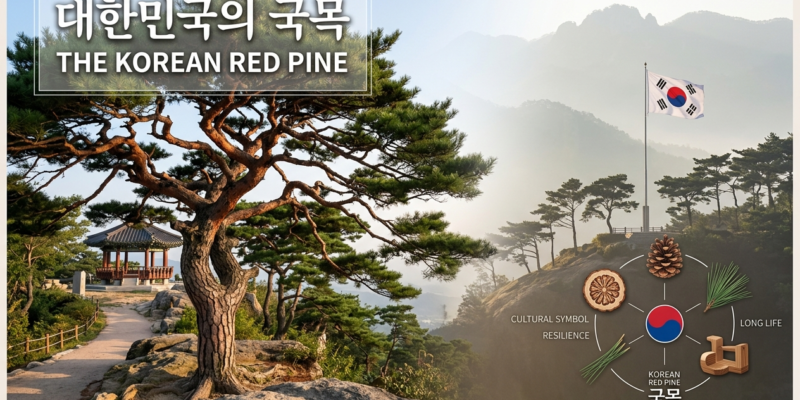
The national tree of South Korea is the Korean red pine, known scientifically as Pinus densiflora. This evergreen tree symbolizes resilience and longevity in Korean culture. International students exploring K-culture often encounter it in traditional landscapes and national parks.
Korean Red Pine: Official National Tree of South Korea
The Korean red pine serves as the unofficial national tree of South Korea, deeply embedded in national identity. Known locally as sonamu, it represents steadfastness against harsh weather, as referenced in the national anthem. Its reddish bark and flexible needles make it a staple in mountainous regions across the peninsula.
This tree connects to broader famous things of South Korea, appearing in poetry, paintings, and temple grounds. For travelers following a South Korea itinerary, spotting these trees enhances nature experiences.
Characteristics of National Tree of South Korea
The national tree of South Korea grows 20-40 meters tall with a broad, umbrella-shaped canopy. Needles measure 7-12 cm in pairs, while cones ripen over two years. It thrives in well-drained, acidic soils and tolerates poor conditions, embodying Korean endurance.
Bark flakes into orange-red scales, providing natural fire resistance. The wood supplies traditional hanok houses and incense. Students studying K-manners learn its role in seasonal festivals and landscape design.
Pinus Densiflora Features
- Height reaches 40 meters at maturity
- Lifespan exceeds 500 years for ancient specimens
- Needles persist year-round as evergreen
- Cones produce winged seeds for propagation
Symbolism of National Tree of South Korea
The Korean red pine symbolizes longevity as one of the Ten Symbols of Longevity in Korean tradition. It stands firm through wind and frost, mirroring national resilience. Historical texts praise its upright form as scholarly dignity.
In student life in South Korea, universities near pine forests use it in campus aesthetics. Indian students can relate it to similar resilient trees back home while pursuing K-courses.
Cultural Significance Details
Pine motifs appear in royal screens and folk art. Festivals celebrate ancient pines as natural monuments. It influences modern reforestation efforts post-Korean War.
Where to See National Tree of South Korea
Prime locations showcase the national tree of South Korea in natural settings. Seoraksan National Park features dense pine forests along hiking trails. Jirisan National Park hosts centuries-old specimens amid biodiversity hotspots.
Namsan Mountain in Seoul offers urban access to prominent pines mentioned in anthems. Travelers budgeting with 1 Indian rupee in South Korea currency knowledge prioritize these free sites.
Top Viewing Locations
| Location | Features | Accessibility |
|---|---|---|
| Seoraksan National Park | Ancient groves, waterfalls | Bus from Seoul, entry fee |
| Jirisan National Park | Oldest pines, wildlife | Train access, multi-day hikes |
| Namsan Park, Seoul | Anthem-inspired trees | Cable car, city center |
| Bukhansan National Park | Riverside pines | Subway nearby |
National Tree of South Korea in Korean History
Pine trees shaped Korean history as shipbuilding timber during the Joseon Dynasty. Post-1945 reforestation planted millions, restoring war-ravaged hills. Today, pine wilt disease prompts conservation matching its symbolic status.
Compare this to 10 differences between North and South Korea, where South Korea’s environmental policies protect such symbols. Universities in South Korea for international students often include forestry programs.
Conservation Efforts for Korean Red Pine
South Korea implements protection for the national tree of South Korea through Natural Monument status for over 100 ancient pines. Reforestation counters pine gall midge and nematodes. Annual planting drives engage communities.
International collaboration aids genetic preservation. Students via jobs in Korea for Indians in environmental sectors contribute to these initiatives.
Protection Measures
- Disease monitoring programs
- Selective breeding for resistance
- Public education campaigns
- Restricted logging in parks
National Tree of South Korea in Modern Culture
Contemporary art and media feature the Korean red pine in films and K-dramas set in mountains. Urban parks plant it for nostalgia. Cherry blossoms may steal spring spotlight, but pines define evergreen heritage.
For study in South Korea after 12th for Indian students, nature walks reveal its ubiquity. Services include guided eco-tours.
Growing National Tree of South Korea
Cultivate Pinus densiflora from seeds sown in spring. Full sun and sandy soil suit it best. Prune young trees for shape. Mature specimens resist urban pollution.
Gardeners mimic natural slopes. It pairs with ginkgo in traditional layouts.
Cultivation Tips
- Sow seeds in acidic medium
- Water sparingly after germination
- Protect from heavy frost first year
- Transplant at 2-3 years
Related Trees in South Korea
While Korean red pine holds national tree of South Korea status, ginkgo and zelkova gain village prominence. Cherry trees symbolize transience. White pine appears in temples.
These enrich about South Korea biodiversity studies.
Frequently Asked Questions About National Tree of South Korea
What is the National Tree of South Korea?
The Korean red pine (Pinus densiflora) represents it unofficially.
Can You Plant National Tree of South Korea at Home?
Yes, seeds grow well in temperate climates with proper care.
Why is Korean Red Pine National Tree of South Korea?
Its resilience matches Korean spirit through history.