


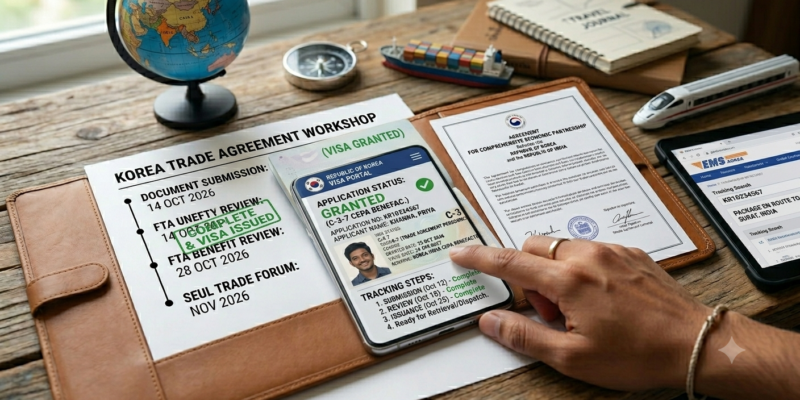
Waiting for a visa decision can be one of the more stressful parts of planning a trip to South Korea, whether you are traveling for tourism, study, or work. Fortunately, the South Korean government provides an online system that allows applicants to monitor their progress without needing to repeatedly contact embassies or visa centers. This guide walks through exactly how south korea visa application tracking works, what each status update means, and how to avoid common mistakes that delay the process.
If you are applying for a student visa specifically, understanding this tracking process is even more important, since timelines often need to align with academic intake dates. Our overview of studying in South Korea after 12th grade explains how visa timing fits into the broader application process for new students.
What Is the Korea Visa Portal
The Korea Visa Portal, officially accessible at visa.go.kr, is the government operated platform used to manage visa applications and status tracking for international applicants. It allows users to check processing status, view results, and print a visa issuance confirmation once approved. This system applies across most visa categories, including tourism, business, family visit, and study visas.
It is worth noting that the system does not replace the actual visa application process itself. It simply provides visibility into where your application currently stands, based on updates submitted by the relevant consular office or visa application center handling your case.
Step by Step Guide to South Korea Visa Application Tracking
Step One: Access the Official Portal
Begin by visiting the Korea Visa Portal directly. If the website loads in Korean by default, use the language selector, usually located in the top corner of the page, to switch the interface to English for easier navigation.
Step Two: Select Check Application Status
On the main menu, look for an option labeled Check Application Status. Within this section, select Check Application Status and Print, which will direct you to the search form used for tracking purposes.
Step Three: Choose the Correct Application Type
This step is often where applicants make mistakes. The portal usually asks you to select the type of application you submitted, such as Diplomatic Office, E-Visa, or Confirmation of Visa Issuance. If you are unsure which category applies to your case, check your original receipt, appointment slip, or confirmation email, since selecting the wrong category will prevent your application from appearing in search results.
Step Four: Enter Your Application Details
You will typically be asked to provide one of the following identifiers depending on your application type: your application number, receipt number, or passport number. Alongside this, you will need to enter your full name exactly as it appears on your passport, along with your date of birth.
Accuracy matters significantly here. Even a small formatting difference, such as a missing hyphen or an extra space in your name, can cause the system to return an error or fail to locate your application.
Step Five: Submit and Review Your Status
After entering your details correctly, click the search button to view your current status. If found, your application details will typically display information including your application number, submission date, visa type, current status, and in some cases your intended length of stay.
Step Six: Download Your Visa Grant Notice if Approved
If your application has been approved, a certificate button will usually appear, allowing you to download and print your Visa Grant Notice. This document is often required when boarding your flight or upon arrival in South Korea, so it is important to keep both a digital and printed copy.
Understanding Each Visa Status Update
One of the most confusing parts of south korea visa application tracking is interpreting what each status label actually means. Here is a breakdown of the most common statuses applicants encounter.
Received or Submitted indicates that your application has been logged into the system and is currently in queue for review. This does not mean processing has started yet, simply that it has been acknowledged.
In Process or Under Review means a visa officer is actively assessing your application, including your supporting documents. This stage can take varying amounts of time depending on visa type, applicant history, and current application volume.
Approved or Issued confirms that your visa has been granted. At this stage, you should be able to access and print your Visa Grant Notice through the portal.
Rejected or Denied indicates that your application was unsuccessful. In most cases, applicants receive an explanation through email or directly from the visa center that processed their application.
Additional Documents Required means the consular office needs further information or paperwork before a final decision can be made. Responding promptly to these requests is critical, since delays here directly extend your overall processing timeline.
Common Issues During South Korea Visa Application Tracking
Status Not Updating Immediately
It is fairly common for the portal to lag slightly behind actual processing progress. If your status remains at Received or Under Review even close to your expected decision date, this does not necessarily indicate a problem. Visa centers have noted that the online system sometimes updates more slowly than the real processing pipeline, particularly during high volume periods.
Entering Incorrect Information
Since the system relies on exact matches for your name, date of birth, and application identifiers, even minor typos can prevent your application from appearing. Double check every field against your passport and original application receipt before submitting your search.
Confusing Application Categories
Many applicants mistakenly select the wrong application type when searching, especially when their visa was processed through a sponsoring institution, such as a school or employer. If you are unsure, contact whoever assisted with your submission, whether that is a visa agency, your educational institution, or a direct consular office.
Tips to Avoid Delays During the Waiting Period
While waiting for your result, avoid purchasing non refundable flights or making firm travel commitments until your visa is confirmed. If the portal requests additional documents, respond as quickly as possible, since processing time typically extends in proportion to how long it takes you to submit the requested materials.
It is also advisable to avoid repeatedly contacting the visa center or embassy if clear online tracking instructions have already been provided, since this can add unnecessary strain to already busy processing teams. Instead, rely on the portal updates and only reach out directly if your status has not changed for an unusually long period relative to standard processing times for your visa category.
Why Accurate Tracking Matters for Student Visa Applicants
For students planning to study in South Korea, visa timing often needs to align closely with semester start dates, accommodation arrangements, and orientation schedules. Delays in tracking or misunderstanding your current status can create unnecessary stress during an already demanding transition period.
If you are preparing for a student visa application, it helps to understand the broader process beyond just tracking. Our detailed guide on universities in South Korea for international students covers how visa timelines typically fit into the overall admission and enrollment process.
How This Connects to Visa Status Checks
Tracking your application is closely related to, but slightly different from, simply checking your current visa status. While tracking generally refers to monitoring progress over time, a status check is often a single point in time confirmation of where things stand. If you want a more focused explanation of how a quick status check works, our companion guide on south korea visa check breaks this down in more detail.
Final Thoughts on South Korea Visa Application Tracking
Successfully navigating south korea visa application tracking comes down to using the official Korea Visa Portal correctly, entering accurate information, and understanding what each status update genuinely means. While the system is generally reliable, it works best when paired with patience and accurate documentation submitted at the time of your original application.
Whether you are applying for tourism, study, or work related reasons, staying informed throughout the process helps you plan your travel or relocation with greater confidence.