


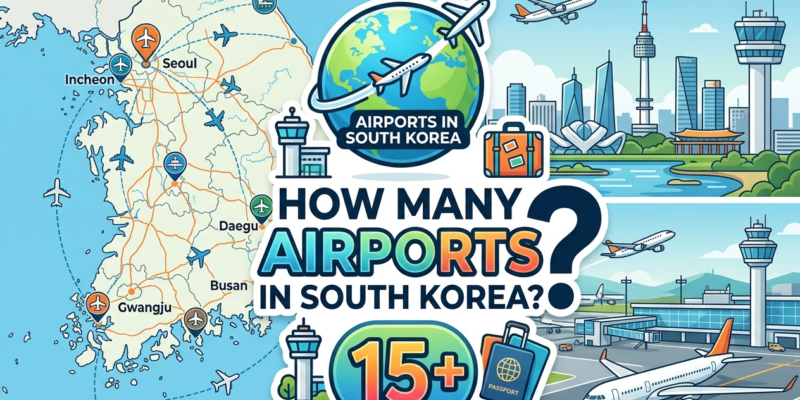
South Korea is one of the most well-connected aviation hubs in Asia, and understanding how many airports in South Korea exist is essential for anyone planning to travel, study, or work in the country. Whether you are an international student, a tourist, or a business traveler, knowing the full list of airports in South Korea helps you plan your journey efficiently. This guide covers every major, regional, and military airport in South Korea along with practical information about routes, terminals, and connections.
How Many Airports Are in South Korea in 2026
South Korea has a total of 15 airports, including both international and domestic airports. Out of these 15 airports, 8 are designated as international airports capable of handling international passenger flights, and the remaining airports primarily serve domestic routes and general aviation purposes. Some airports also serve dual military and civilian functions.
The question of how many airports in South Korea often comes up among Indian students and travelers because the answer varies depending on whether you count military airfields, general aviation facilities, and airports with limited scheduled service. For practical travel planning purposes, there are 8 major airports you need to know about in South Korea.
These airports are spread across the country to ensure that every region has access to air travel. From the world-class Incheon International Airport near Seoul to smaller regional airports in places like Sacheon and Yeosu, South Korea’s aviation infrastructure is designed to support both domestic connectivity and international travel.
If you are planning to study in South Korea after 12th grade as an Indian student, knowing which airport serves your destination city is one of the most practical pieces of information you need before booking your flight.
Incheon International Airport: The Main Gateway to South Korea
Incheon International Airport, officially known as Incheon Gukje Gonghang, is South Korea’s largest and busiest international airport. It is located on Yeongjong Island in Incheon, approximately 52 kilometers west of central Seoul. Incheon International Airport is consistently ranked among the best airports in the world and has won the Airports Council International award for service quality multiple times.
Key Facts About Incheon International Airport
- IATA Code: ICN
- Location: Yeongjong Island, Incheon Metropolitan City
- Distance from Seoul: Approximately 52 kilometers
- Number of Terminals: 2 (Terminal 1 and Terminal 2)
- Annual Passenger Capacity: Over 77 million passengers
- Airlines Served: Over 90 international airlines
- Operating Hours: 24 hours a day, 365 days a year
Incheon International Airport serves as the primary hub for Korean Air and Asiana Airlines, which are South Korea’s two largest full-service carriers. The airport also serves as a major transit hub for travelers connecting between Asia, Europe, and North America.
Terminal 1 vs Terminal 2 at Incheon International Airport
Terminal 1 at Incheon is the original terminal and handles most international carriers other than Korean Air and its SkyTeam alliance partners. Terminal 2 opened in 2018 and was specifically built to accommodate Korean Air and Delta Air Lines among other SkyTeam member airlines. There is a dedicated transit shuttle between the two terminals that operates every five minutes and takes about eighteen minutes to complete the journey.
How to Get from Incheon Airport to Seoul
The most popular and cost-effective way to travel from Incheon International Airport to central Seoul is the AREX, or Airport Railroad Express. The AREX operates two services: the All-Stop train that connects Incheon to various subway stations across Seoul, and the Express Train that runs directly from Incheon to Seoul Station in approximately 43 minutes.
Limousine buses also operate from Incheon Airport and connect directly to major neighborhoods and hotels in Seoul, Suwon, and other cities in the greater Seoul metropolitan area. Taxis, including premium black taxis and standard yellow taxis, are also available at the airport’s ground transportation level.
For Indian students who have received admission to universities near Seoul, arriving at Incheon International Airport is the standard first step. You can explore the top universities in South Korea for international students to determine which institution is nearest to your arrival airport.
Gimpo International Airport: Seoul’s Second Airport
Gimpo International Airport, known in Korean as Gimpo Gukje Gonghang, is the second major airport serving the Seoul metropolitan area. Located in the Gangseo district of western Seoul, Gimpo was South Korea’s primary international airport before Incheon opened in 2001. Today, Gimpo primarily handles domestic routes and limited international flights to nearby countries.
Key Facts About Gimpo International Airport
- IATA Code: GMP
- Location: Gangseo-gu, Seoul
- Distance from Central Seoul: Approximately 18 kilometers
- Primary Function: Domestic flights with limited international service
- International Routes: Tokyo Haneda, Osaka Kansai, Beijing Capital, Shanghai Hongqiao, Taipei Songshan
- Connected to Seoul Subway: Line 5 and AREX
Gimpo Airport is popular among business travelers because of its central location within Seoul and its proximity to the Magok business district. The airport is also significantly closer to Yeouido, Myeongdong, and other central Seoul districts compared to Incheon.
Airlines Operating from Gimpo International Airport
Korean Air, Asiana Airlines, Jin Air, Air Busan, Air Seoul, Jeju Air, and T’way Air all operate domestic routes from Gimpo. For international routes, All Nippon Airways, Japan Airlines, and China Eastern Airlines are among the carriers that operate short-haul international routes from this airport.
Gimhae International Airport: Busan’s Primary Airport
Gimhae International Airport serves Busan, South Korea’s second-largest city and its largest port city. The airport is located in the Gangseo district of Busan, approximately 7 kilometers from Busan’s city center. Gimhae handles both international and domestic flights and is the third busiest airport in South Korea by passenger volume.
Key Facts About Gimhae International Airport
- IATA Code: PUS
- Location: Gangseo-gu, Busan
- Distance from Busan City Center: Approximately 7 kilometers
- International Destinations: Japan, China, Southeast Asia, Hong Kong, Taiwan
- Domestic Routes: Seoul Gimpo, Seoul Incheon, Jeju, Daegu, Cheongju
Busan is a major destination for international students, tourists, and business travelers because of its beaches, seafood culture, and the annual Busan International Film Festival. If you are arriving in Busan for a short visit or for study purposes, Gimhae International Airport is your primary arrival point.
For travelers interested in exploring Korea’s culture more deeply, understanding famous things about South Korea including its culture and food will help you appreciate what Busan and other cities have to offer.
Jeju International Airport: The Busiest Domestic Airport
Jeju International Airport is located on Jeju Island, South Korea’s most popular tourist destination. Although Jeju Island is a relatively small island off the southern coast of the Korean Peninsula, its airport is one of the busiest airports in South Korea due to the massive volume of domestic tourists who visit the island year-round.
Key Facts About Jeju International Airport
- IATA Code: CJU
- Location: Jeju City, Jeju Special Self-Governing Province
- Primary Function: Domestic tourism hub with some international flights
- Domestic Routes: Seoul Gimpo, Seoul Incheon, Busan, Daegu, Gwangju, Cheongju, Daejeon
- International Routes: Japan, China, Hong Kong, Taiwan, Southeast Asia
The Seoul to Jeju route is consistently one of the busiest air routes in the entire world. Millions of domestic Korean tourists and international visitors fly to Jeju every year to enjoy its volcanic landscapes, beaches, seafood, and unique Jeju culture.
A second airport for Jeju Island, known as Jeju Second Airport, has been under planning and development. The new airport is intended to be built near Seongsan in the eastern part of the island to relieve congestion at the existing Jeju International Airport, though the project has faced delays and public debate.
Cheongju International Airport: Central Korea’s Air Hub
Cheongju International Airport serves the central region of South Korea, including Cheongju city and the broader Chungcheong region. The airport is located in North Chungcheong Province and provides an alternative entry point for travelers heading to central Korea who wish to avoid the congestion at Seoul’s airports.
Key Facts About Cheongju International Airport
- IATA Code: CJJ
- Location: Cheongju, North Chungcheong Province
- Primary Function: Domestic and limited international charter flights
- Distance from Cheongju City: Approximately 12 kilometers
Cheongju Airport has benefited from its proximity to Sejong City, South Korea’s administrative capital that was built to decentralize government functions away from Seoul. The airport is also close to several universities in the Chungcheong region, making it a useful option for international students studying in central Korea.
Daegu International Airport: Serving Southeast Korea
Daegu International Airport is the primary airport for South Korea’s fourth-largest city, Daegu. The airport is located within the city limits of Daegu, making it one of the most conveniently situated airports in the country relative to its host city.
Key Facts About Daegu International Airport
- IATA Code: TAE
- Location: Dong-gu, Daegu Metropolitan City
- Primary Routes: Domestic flights to Jeju and Seoul, plus some international charter routes
- Notable Feature: Shares runways with the Republic of Korea Air Force
Daegu is home to several universities and is a significant industrial and medical hub in southeastern Korea. For students at Kyungpook National University, Keimyung University, or other institutions in the Daegu area, this airport offers convenient access without needing to travel all the way to Seoul’s airports.
Muan International Airport: Southwest Korea’s Gateway
Muan International Airport is located in South Jeolla Province in southwestern South Korea and serves as the primary airport for cities including Gwangju, Mokpo, and the broader Honam region. The airport opened in 2007 and replaced the older Gwangju Airport for international flights.
Key Facts About Muan International Airport
- IATA Code: MWX
- Location: Muan-gun, South Jeolla Province
- Primary Function: International and domestic flights for southwestern Korea
- Key Destinations: Jeju, Seoul, Japan, China
Muan Airport has grown in importance as Southwest Korea continues to develop economically and attract tourism related to the Biennale arts festival and the regional food culture, which is considered among the finest in the country.
Yangyang International Airport: The Gangwon Province Airport
Yangyang International Airport serves the Gangwon Province region in northeastern South Korea. The airport is located near the eastern coast and is closest to cities like Sokcho and Yangyang, which are popular destinations for their beaches and proximity to Seoraksan National Park.
Key Facts About Yangyang International Airport
- IATA Code: YNY
- Location: Yangyang-gun, Gangwon Province
- Primary Function: Limited domestic and charter international flights
- Nearby Attractions: Seoraksan National Park, Naksan Beach, Sokcho
Yangyang Airport has historically operated below capacity, but it received renewed attention after the 2018 Pyeongchang Winter Olympics increased tourism to the Gangwon region. The opening of the Gyeonggang high-speed rail line connecting Seoul to Gangwon also affected the airport’s passenger volumes.
Minor and Domestic Airports in South Korea
Beyond the eight major international airports, South Korea has several smaller airports that serve domestic routes and general aviation purposes. These include:
Gunsan Airport serves the Gunsan and Iksan area in North Jeolla Province. It is primarily a military airfield operated by the United States Air Force and the Republic of Korea Air Force, though it has limited civilian domestic service.
Sacheon Airport is located near Jinju and Sacheon in South Gyeongsang Province. The airport serves the southeastern interior of the country and connects to Jeju and Seoul on limited schedules.
Yeosu Airport serves Yeosu and Suncheon in South Jeolla Province. Yeosu is a popular coastal tourist city, and the airport connects it to Jeju and Seoul.
Pohang Airport serves the Pohang area, an important industrial city in North Gyeongsang Province, known for POSCO, one of the world’s largest steel manufacturers.
Ulsan Airport serves Ulsan Metropolitan City, home to Hyundai Motor Company’s primary manufacturing complex and one of South Korea’s most important industrial cities.
Wonju Airport serves Wonju in Gangwon Province and operates limited domestic routes, primarily connecting to Jeju Island.
Which Airport Should Students and Travelers Use
Choosing the right airport in South Korea depends on your final destination within the country. Here is a practical breakdown:
If you are heading to Seoul or any city in Gyeonggi Province, arrive at Incheon International Airport, which is the main international gateway. For budget travelers arriving late at night who want a quicker connection to central Seoul accommodations, Gimpo Airport is also an option if your airline operates from there.
If your destination is Busan or anywhere in southeastern Korea including Gyeonggi Province, Ulsan, or Gyeongju, then Gimhae International Airport in Busan is the most logical choice.
If you are traveling to Jeju Island, the Jeju International Airport is your only significant commercial option. Nearly every domestic airline in South Korea operates multiple daily flights to Jeju from Seoul Gimpo.
If your university or workplace is in the Chungcheong region, Daegu, or the Gyeongsang provinces, evaluate which regional airport offers routes from your departure city to minimize total travel time.
For Indian students planning their arrival in Korea, it is helpful to understand the cost of currency conversion from Indian rupees to Korean won since most airport transactions in Korea are conducted in Korean won.
How to Travel Between Airports in South Korea
If you land at Incheon and need to connect to a domestic flight departing from Gimpo, the AREX train connects both airports in approximately 30 minutes. This is the fastest and most reliable inter-airport transfer option in the Seoul area.
For travel between other cities and their airports, the KTX high-speed rail system often provides a competitive alternative to flying. The Seoul to Busan KTX route, for example, takes approximately two hours and fifteen minutes and departs from central Seoul Station, making it a practical choice compared to flying when you factor in airport check-in and travel time.
Limousine buses connect Incheon Airport directly to many major cities across South Korea, including Daejeon, Daegu, and Busan, though travel times on these buses are considerably longer than flying or taking the KTX.
For students who plan to explore South Korea beyond their university city, a well-planned 7-day South Korea itinerary can help you understand how to combine flights, KTX travel, and local transportation to see the country efficiently.
Frequently Asked Questions About Airports in South Korea
What is the biggest airport in South Korea?
Incheon International Airport is the largest airport in South Korea both in terms of physical size and passenger volume. It handled approximately 71 million passengers in 2024 and is the 12th busiest airport in the world by international passenger traffic.
Is there a direct flight from India to South Korea?
Yes, there are direct flights from several Indian cities to South Korea. Air India, Korean Air, and Asiana Airlines operate direct routes between cities such as Delhi, Mumbai, and Chennai to Incheon International Airport. IndiGo and other low-cost carriers sometimes operate charter or seasonal direct flights as well.
How far is Incheon Airport from Seoul?
Incheon International Airport is approximately 52 kilometers from central Seoul. The journey by AREX Express Train takes about 43 minutes to Seoul Station. By limousine bus, the journey typically takes between 60 and 90 minutes depending on traffic.
Does South Korea have budget airlines?
South Korea has a well-developed low-cost carrier market. Jeju Air, Jin Air, T’way Air, Air Busan, Air Seoul, and Eastar Jet are among the major budget airlines operating domestic and short-haul international routes from South Korean airports.
Can Indian students get jobs in South Korea after graduation?
Yes, Indian graduates from Korean universities can pursue employment in South Korea. If you are considering working in the country after completing your studies, it is worth reading about jobs in South Korea for Indians to understand the visa process, work culture, and employment sectors that welcome international talent.
What is the difference between North and South Korea in terms of airports?
North Korea has very limited commercial aviation infrastructure. Unlike South Korea with its 15 airports and world-class facilities, North Korea has only a handful of airports with limited international service. The most notable is Pyongyang Sunan International Airport. For a deeper understanding of how the two Koreas differ on nearly every level, you can read about the differences between North and South Korea.
Conclusion
South Korea has 15 airports in total, with 8 designated international airports handling the vast majority of passenger traffic. Incheon International Airport stands as the country’s premier aviation hub and one of the finest airports in the world. Gimpo, Gimhae, Jeju, Cheongju, Daegu, Muan, and Yangyang airports serve regional and domestic needs effectively.
Understanding how many airports in South Korea exist and which one serves your specific destination is fundamental to planning a smooth arrival. For Indian students, tourists, and professionals heading to South Korea, this knowledge directly impacts your travel costs, total journey time, and convenience after landing.
If you are preparing for a move to South Korea for education, explore the student life section of our website for practical guides on accommodation, living costs, transportation, and cultural adjustment. You can also learn more about Korean culture and Korean social manners to prepare yourself for daily life in the country from your very first day of arrival.
For personalized guidance on studying in South Korea, including help with university selection, visa applications, and pre-departure planning, visit our contactor explore our full range of services.