


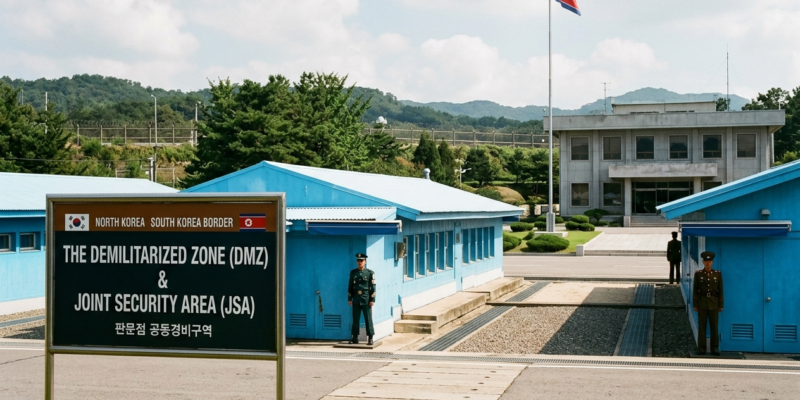
The North Korea South Korea border name refers to the Korean Demilitarized Zone, commonly known as DMZ, which serves as the de facto boundary between the two nations. This heavily fortified strip spans 250 kilometers across the Korean Peninsula near the 38th parallel. Understanding the North Korea South Korea border name helps travelers and students grasp the geopolitical division central to 10 differences between North and South Korea.
Korean Demilitarized Zone: Official North Korea South Korea Border Name
What is the North Korea South Korea Border Name?
The primary North Korea South Korea border name is the Korean Demilitarized Zone or DMZ. Established by the Korean Armistice Agreement on July 27, 1953, the DMZ functions as a buffer zone approximately 4 kilometers wide. The actual de facto border within the DMZ is called the Military Demarcation Line or MDL, which follows the ceasefire line from the Korean War.
This distinction matters for visitors planning South Korea itinerary trips near the border.
Military Demarcation Line vs DMZ Explained
Key Differences Between MDL and DMZ
The MDL runs through the center of the DMZ, making the DMZ the broader North Korea South Korea border name used internationally.
History of North Korea South Korea Border Name and DMZ Creation
Origins of the 38th Parallel Division
The North Korea South Korea border name traces back to World War II when the 38th parallel was selected as a temporary division line. At the Potsdam Conference in 1945, American planners chose this latitude to separate Soviet and US occupation zones in Korea. North of the line fell under Soviet control while south became American territory.
This temporary measure became permanent after the Korean War.
Korean War and DMZ Establishment
The Korean War (1950-1953) solidified the North Korea South Korea border name through combat. North Korean forces crossed the 38th parallel on June 25, 1950, prompting UN intervention. The war ended with an armistice that created the DMZ along the final battle line, slightly north of the original 38th parallel in many areas.
Over three million casualties occurred before the DMZ became the enduring North Korea South Korea border name.
Physical Features of Korean Demilitarized Zone
Geography of North Korea South Korea Border
The DMZ stretches 250 kilometers from the Han River estuary in the west to the Sea of Japan in the east. Despite its name, the zone contains extensive military infrastructure including:
- 1 million landmines
- 20,000+ guard posts
- Extensive tunnel networks
- Heavy artillery positions
The area paradoxically became a nature preserve due to human absence.
Key Landmarks Along the Border
Major DMZ Observation Points
- Dora Observatory: Best North Korea South Korea border viewing platform
- Third Infiltration Tunnel: Discovered North Korean invasion tunnel
- Imjingak Park: Peace memorial site near the DMZ
- Joint Security Area (JSA): Only place where soldiers from both sides stand face-to-face
These sites offer tourists close encounters with the North Korea South Korea border name reality.
DMZ Tours: Visiting North Korea South Korea Border
Popular DMZ Tour Experiences
DMZ tours from Seoul provide access to the North Korea South Korea border name without entering North Korea. Popular itineraries include:
- Panmunjom (JSA) visits when accessible
- Third Tunnel exploration
- Train to nowhere at Dorasan Station
- Peace Train rides through buffer zones
Tours typically last 6-8 hours and cost 50,000-150,000 KRW depending on inclusions. Book through reputable operators for safety.
DMZ Tour Restrictions and Safety
Strict rules apply when visiting the North Korea South Korea border name area:
- No photography in certain zones
- Dress code enforcement (no sandals, ripped jeans)
- Bag inspections required
- North Korean soldiers visible at JSA
Recent incidents like the 2023 soldier crossing highlight ongoing border tensions.
Strategic Importance of North Korea South Korea Border
Military Posture Along the DMZ
Both Koreas maintain massive forces along the North Korea South Korea border name:
| Military Asset | North Korea | South Korea |
|---|---|---|
| Active Troops | 1.2 million | 500,000 |
| Artillery Pieces | 21,000 | 6,000 |
| Guard Posts | 11,000 | 9,000 |
The DMZ contains the world’s highest concentration of military firepower.
Notable DMZ Incidents
Several violent incidents occurred along the North Korea South Korea border name:
- 1976 Axe Murder Incident (2 US officers killed)
- 4 infiltration tunnels discovered (1974-1990)
- 2010 Yeonpyeong shelling
- Regular propaganda loudspeaker battles
These events underscore the DMZ’s volatility despite its demilitarized designation.
DMZ in Korean Culture and Media
Representation in K Culture
The North Korea South Korea border name appears frequently in K-culture through:
- K-dramas showing family separations
- Documentaries about defectors
- Films depicting tunnel infiltrations
- Music referencing division pain
Popular works include “Joint Security Area” and “Welcome to Dongmakgol.”
Tourism Impact on Border Awareness
DMZ tourism educates over 1 million South Korean and foreign visitors annually about the North Korea South Korea border name history. International students studying K-courses often include DMZ visits in their student life itineraries.
Planning Your DMZ Visit: Practical Information
Best Time for North Korea South Korea Border Tours
Seasonal Considerations
| Season | Pros | Cons |
|---|---|---|
| Spring (Apr-May) | Cherry blossoms, mild weather | Crowded tours |
| Autumn (Sep-Oct) | Clear views, foliage | Peak season prices |
| Winter | Snowy landscapes | Cold temperatures |
| Summer | Lush greenery | Hot, humid |
Avoid monsoon season (July-August) due to heavy rains.
Booking and Currency Tips
Check 1 Indian Rupee in South Korea rates before booking expensive JSA-inclusive tours. Student discounts available for universities in South Korea ID holders.
Understanding DMZ Through North-South Differences
Why Border Knowledge Matters for Students
International students planning study in South Korea after 12th benefit from DMZ context. The North Korea South Korea border name represents fundamental ideological differences affecting:
- Internet access
- Economic systems
- Personal freedoms
- Travel policies
Compare these during jobs in Korea for Indians research.
Cultural Etiquette Near the Border
Follow K-manners when visiting DMZ sites. Respect military personnel and avoid provocative gestures toward North Korea. Serious demeanor expected throughout tours.
Frequently Asked Questions About North Korea South Korea Border Name
What is the Exact North Korea South Korea Border Name?
The DMZ is the common North Korea South Korea border name, containing the Military Demarcation Line (MDL) as the actual boundary.
Can Tourists Cross into North Korea from DMZ?
No, DMZ tours stay firmly in South Korean territory. North Korea visits require separate arrangements through approved channels.
How Close Can You Get to North Korean Soldiers?
At Panmunjom JSA, visitors stand within 100 meters of North Korean guards when tours operate.
Is the DMZ Safe to Visit?
Yes, over 35 years without tourist casualties. Military maintains strict safety protocols along the North Korea South Korea border name.
Conclusion: The Enduring North Korea South Korea Border Name
The Korean Demilitarized Zone remains the definitive North Korea South Korea border name, symbolizing division since 1953. DMZ tours offer unique perspectives on Korean history for students and travelers exploring famous things of South Korea. Contact our services team for customized study in South Korea programs including DMZ visits.