


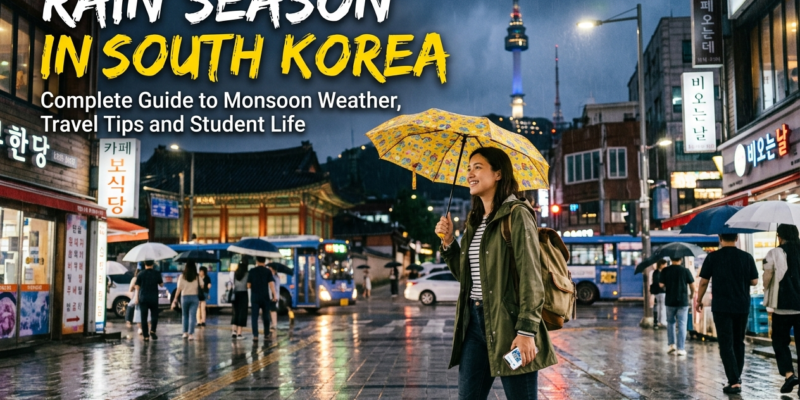
South Korea experiences one of the most dramatic seasonal weather shifts in all of East Asia. The rain season in South Korea, locally known as Jangma (장마), is a defining period in the Korean calendar that affects daily life, agriculture, travel plans, and even cultural habits. Whether you are a tourist planning a summer visit or an international student preparing to study in South Korea, understanding the monsoon season is absolutely essential.
This comprehensive guide covers everything you need to know about the Korean rainy season, from when it starts and ends, to how to prepare, what to wear, where to travel, and how student life adapts during those wet, humid weeks.
What Is the Rain Season in South Korea
The rainy season in South Korea is a monsoon period driven by warm, moisture-laden air masses arriving from the Pacific Ocean and the South China Sea. As these warm air fronts collide with cooler continental air over the Korean Peninsula, the result is sustained rainfall that can last for several weeks at a stretch.
This is not simply a matter of occasional showers. During Jangma, South Korea receives a significant portion of its entire annual rainfall within a compressed window of roughly four to six weeks. Seoul, Busan, Daegu, and other major cities all experience heavy downpours, flooding risks in low-lying areas, and high humidity levels that make the heat feel far more intense than the thermometer suggests.
For students enrolled in Korean university programs and courses, the rainy season typically coincides with the tail end of the spring semester or the beginning of summer activities, making weather awareness a practical necessity.
When Does the Rain Season Start and End in South Korea
The Jangma season in South Korea generally begins in late June and extends through late July or early August. However, exact dates vary from year to year depending on atmospheric conditions across East Asia.
A typical breakdown by region looks like this:
Jeju Island usually receives the first rains, often around mid to late June, as it sits at the southernmost tip of the country and is the first landmass the monsoon front reaches.
Southern regions including Busan and Gwangju typically follow one to two weeks after Jeju, with the rainy season establishing itself by late June.
Seoul and Central Korea usually see peak monsoon conditions from late June through mid-July, with the heaviest rainfall concentrated in this window.
Northern regions near the DMZ tend to receive the tail end of Jangma before drier and hotter summer conditions settle in by August.
It is worth noting that climate variability in recent years has shifted these timelines somewhat. Students and travelers should always check updated Korean Meteorological Administration (KMA) forecasts rather than relying solely on historical averages.
How Much Rain Does South Korea Get During Monsoon Season
South Korea receives approximately 1,200 to 1,500 millimeters of annual precipitation, and a substantial portion of this falls during the Jangma period. Seoul, for instance, can receive around 300 to 400 millimeters of rain just during the peak monsoon weeks of late June and July.
On particularly heavy rain days, daily totals can exceed 100 millimeters, which qualifies as torrential rainfall by meteorological standards. Flash flooding in urban areas, river overflows, and landslides in mountainous regions are genuine risks during these events.
Understanding these figures matters enormously for international students navigating student life in South Korea. Campus buildings can flood, public transport can be delayed, and outdoor activities may need to be postponed at short notice.
Temperature and Humidity During Korean Rainy Season
One of the most challenging aspects of the South Korean monsoon is not merely the rain itself but the combination of heat and humidity that accompanies it. Daytime temperatures during Jangma typically range from 25 to 33 degrees Celsius, but the relative humidity often climbs above 80 to 90 percent.
This creates conditions that feel significantly hotter than the actual temperature. Walking short distances outdoors can leave clothes damp from a combination of rain and perspiration. Air conditioning becomes essential indoors, and the contrast between air-conditioned interiors and the hot, humid outdoor air can be jarring.
Students living in dormitories or shared housing should be aware that poorly ventilated spaces can develop mold problems during extended wet periods. Regular ventilation, moisture absorbers, and keeping windows open during drier interludes all help manage this.
What to Pack and Wear During South Korea Rainy Season
Preparation is the key to staying comfortable and functional during the Korean monsoon. Here is what seasoned residents and experienced travelers recommend:
A sturdy, windproof umbrella is non-negotiable. Korea’s streets can become windy during heavy rain, and cheap fold-up umbrellas frequently invert or break. Investing in a quality umbrella before the season begins is worthwhile. Umbrella stands are present at the entrances of most shops, universities, and government buildings.
Waterproof footwear is equally important. Canvas sneakers and open sandals become useless almost immediately in heavy rain. Rubber rain boots or waterproof leather shoes keep feet dry and prevent the unpleasant experience of walking in soaked socks.
Light, quick-drying fabrics are ideal for clothing. Heavy cotton absorbs moisture and takes a long time to dry, which can be uncomfortable in humid conditions. Synthetic blends or linen materials dry faster and feel more comfortable against the skin.
A compact rain poncho is also useful for students cycling on campus or navigating market areas where an umbrella becomes impractical.
Travel Tips for Visiting South Korea During Monsoon Season
Many travelers wonder whether visiting South Korea during the rainy season is a mistake. The honest answer is that it depends on your priorities and flexibility.
The advantages of visiting during Jangma include fewer crowds at popular tourist sites, lower airfare and hotel prices compared to peak summer, and the dramatic visual beauty of rain-soaked temples, terraced rice paddies, and misty mountain trails. Gyeongbokgung Palace in Seoul and Changdeokgung Palace both take on a particularly atmospheric quality under gray skies and gentle rain.
The disadvantages include reduced visibility at outdoor scenic spots, potential disruption to hiking plans in national parks, and the general discomfort of navigating cities in heavy rainfall.
For travelers interested in blending sightseeing with understanding Korean culture and traditions, the rainy season actually offers unique cultural experiences. Korean street food stalls and pojangmacha tent bars do brisk business during rainy evenings, and Koreans have a cultural tradition of eating pajeon (savory scallion pancakes) and drinking makgeolli (rice wine) when it rains, a pairing so culturally established that the sound of rain is genuinely associated with craving these foods.
Flooding and Safety Risks During Korean Monsoon
South Korea’s government and local authorities take monsoon flooding seriously. The country has invested heavily in urban drainage infrastructure, flood barrier systems along major rivers like the Han River in Seoul, and early warning systems for flash flooding in mountainous areas.
That said, risks remain. Underpasses and low-lying neighborhoods in older parts of cities can flood quickly during extreme rainfall events. The 2022 flooding in Seoul’s Gangnam district, which led to fatalities in semi-basement apartments, highlighted that even well-developed urban areas remain vulnerable during exceptionally heavy rains.
Students and residents should:
Register for local emergency alert notifications on their Korean mobile phones, as the government sends SMS alerts when severe weather warnings are issued.
Avoid walking near swollen streams or rivers during heavy rain, as water levels can rise with startling speed.
Know the location of the nearest elevated ground relative to their accommodation, particularly if living in basement-level or semi-basement housing.
Check the Korea Meteorological Administration website or app daily during the Jangma period for updated forecasts.
How International Students Manage Life During Rainy Season
For the growing community of international students pursuing education in Korea, the rainy season presents logistical challenges that are worth anticipating before they arrive. Most universities in South Korea have well-developed indoor facilities, and campus life largely continues normally despite the weather.
Library study halls, indoor recreation centers, student cafeterias, and campus cafes all remain busy during Jangma. Many students find that the enforced indoors time is actually productive for academic work and building social connections with Korean classmates.
Understanding Korean social customs and manners during this period also matters. Removing wet umbrellas from bags before entering classrooms, shaking off excess water before stepping inside buildings, and using umbrella bags provided at building entrances are all standard courtesies that Koreans observe and appreciate in foreigners as well.
After the Rain: Summer in South Korea
When Jangma finally withdraws, typically by late July or early August, South Korea enters what is often called the hottest and most uncomfortable stretch of summer. Temperatures regularly exceed 35 degrees Celsius, and the humidity remains high even without the rain.
This post-monsoon period is also when typhoon season begins in earnest for the Korean Peninsula. Late July through September can see tropical cyclones tracking northward from the Philippines Sea, occasionally making landfall or passing close enough to South Korea to bring renewed heavy rainfall and strong winds.
Students and residents should remain attentive to weather forecasts through this extended period rather than assuming the end of Jangma means all weather risks have passed.
Planning Your Year Around Korean Weather
If you are considering relocating to South Korea for academic or professional purposes, understanding the full seasonal weather calendar helps you plan more effectively. Spring (March to May) and autumn (September to November) are widely regarded as the most comfortable and scenic seasons. Winter brings cold, dry conditions with occasional heavy snowfall in mountainous regions and the northern provinces.
The rain season, while challenging, is also a genuinely interesting cultural and meteorological experience. Those who prepare adequately find that Jangma need not disrupt their plans significantly and can even add a memorable dimension to their time in Korea.
For those exploring educational opportunities, our services for studying in South Korea include guidance on all practical aspects of Korean life, including seasonal preparation, accommodation choices, and acclimatization support.
Final Thoughts on South Korea Rainy Season
The rain season in South Korea is an integral part of the country’s identity, shaping its agriculture, cuisine, architecture, and daily rhythms. For international visitors and students alike, approaching Jangma with preparation rather than avoidance makes the experience manageable and even rewarding.
Pack the right gear, stay informed about weather alerts, embrace the local tradition of pajeon and makgeolli on rainy evenings, and know that after every monsoon comes the vibrant energy of a Korean summer.
To learn more about living, studying, and thriving in South Korea year-round, visit Study in South Korea for comprehensive guides, program listings, and personalized support.