


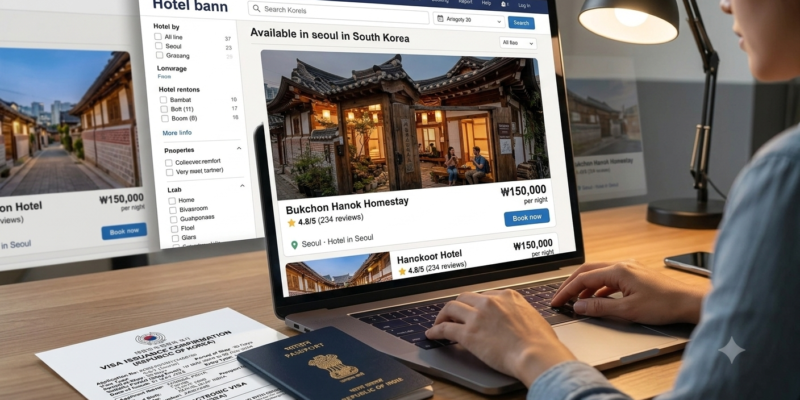
South Korea is one of Asia’s most visited destinations in 2026, and for good reason. From the electric energy of Seoul to the coastal beauty of Busan and the volcanic landscapes of Jeju Island, Korea offers travelers an extraordinary range of experiences. Getting your accommodation right is the foundation of making the most of that experience.
This complete guide to South Korea hotel booking covers everything from luxury five-star properties and boutique design hotels to budget-friendly options and practical tips that save both money and frustration.
Why South Korea Hotel Booking Requires Special Attention in 2026
The Korean hotel market has evolved significantly in recent years. International chains have expanded their presence, boutique hotels have emerged in neighborhoods that were previously overlooked by accommodation providers, and capsule hotels and digital nomad-friendly properties have added new categories to the mix.
At the same time, demand for hotels in South Korea continues to grow. The Hallyu wave has driven tourism from across Asia, the Middle East, and increasingly from India and Europe. This means that popular hotels in central Seoul, beachside Busan, and Jeju resort areas can book up weeks in advance during peak seasons.
Understanding when to book, which neighborhoods to prioritize, and which platforms offer the best rates is essential knowledge for anyone planning a Korean trip or relocation.
If you are planning to study in South Korea and need short-term hotel accommodation before moving into longer-term housing, the same principles apply, and this guide will help you navigate your options efficiently.
Types of Hotels Available for Booking in South Korea
The Korean accommodation market is more varied than many travelers realize. Before making any booking, understanding the categories available helps you match your needs with the right type of property.
Five-Star Luxury Hotels
Seoul, Busan, and Jeju Island are home to some genuinely exceptional luxury hotels. Properties like the Lotte Hotel Seoul, The Shilla Seoul, Four Seasons Seoul, and Park Hyatt Seoul offer world-class service, stunning city views, and facilities that include rooftop pools, high-end restaurants, and business centers with cutting-edge technology.
Rates at these properties start at around 300,000 Won per night and can reach several million Won for premium suites. These hotels are particularly well-suited for business travelers, honeymoon couples, and visitors who want the reassurance of internationally standardized service.
International Mid-Range Chains
Brands like Marriott, Hilton, Ibis, Novotel, and Best Western operate numerous properties across South Korea. These hotels offer reliable standards, English-speaking staff, and loyalty program benefits. They typically fall in the 100,000 to 250,000 Won per night range and represent excellent value, particularly when booked through loyalty programs or during promotional periods.
Korean Boutique Hotels
One of the most exciting developments in Korean hospitality in recent years is the rise of boutique hotels. These independently operated properties, often housed in renovated buildings or purpose-designed spaces, offer design sensibilities that international chains cannot match. Neighborhoods like Ikseon-dong in Seoul, the old town area of Jeonju, and the Gamcheon district of Busan now have boutique hotel options that double as genuine cultural experiences.
Business Hotels
Korean business hotels are a category in their own right. Designed for domestic business travelers, they offer clean, compact, well-equipped rooms at prices significantly below international chain rates. Many include excellent breakfast options, fast internet, and proximity to subway stations. For travelers on a budget who need private rooms with reliable facilities, Korean business hotels frequently offer the best value in the market.
Capsule Hotels
Capsule hotels, modeled on the Japanese original but with Korean design touches, have expanded significantly in Seoul and other major cities. They offer individual sleeping pods with privacy screens, personal lighting and entertainment controls, and shared facilities at prices typically between 25,000 and 50,000 Won per night. They are excellent for solo travelers and those who need short-stay accommodation near airports or transportation hubs.
Jjimjilbang (Korean Spa Sleeping)
Jjimjilbang are Korean public bath and spa complexes that operate 24 hours a day. For a fee of roughly 10,000 to 15,000 Won, visitors can use all facilities and sleep in communal rest areas. While not a hotel in the conventional sense, jjimjilbang represent a deeply authentic Korean experience and are genuinely practical for budget travelers who need a clean, safe place to spend the night.
Understanding these options is valuable whether you are booking for a holiday trip or researching accommodation during your transition into Korean student life.
Best Areas for Hotel Booking in Seoul
Seoul is a sprawling city of 10 million people, and where you choose to stay has a profound effect on your overall experience. Different neighborhoods suit different types of travelers.
Myeongdong and Jung-gu
Myeongdong is Seoul’s premier shopping and beauty district. Hotels here put you within walking distance of Namdaemun Market, Gyeongbokgung Palace, and the streets packed with street food vendors and cosmetics shops that have become iconic images of modern Seoul. This is one of the most popular areas for first-time visitors and is well served by the subway.
Gangnam
Gangnam-gu is Seoul’s most affluent district and home to several of the city’s finest hotels. Staying here puts you in the heart of Seoul’s financial and entertainment center, with excellent access to the COEX convention center, Samsung headquarters area, and some of the best restaurants and rooftop bars in the city.
Jongno and Insadong
For travelers interested in history and traditional Korean culture, this area of central Seoul offers hotels and guesthouses within walking distance of the main palace complexes, Bukchon Hanok Village, and the galleries and tea houses of Insadong. It is a quieter neighborhood than Myeongdong and suits travelers who want a more contemplative Seoul experience.
Hongdae and Mapo-gu
Hongdae is the university district of Seoul and one of the most vibrant creative neighborhoods in Asia. Hotels here are varied in price and style, ranging from international chains to independently designed boutique properties. The neighborhood is best experienced on foot, and the local street food, independent music venues, and art spaces make it a genuine cultural destination.
Itaewon and Hanam
Itaewon is Seoul’s most internationally diverse neighborhood and a comfortable base for visitors who want a gentle introduction to Korea before venturing deeper into Korean-language areas. It has a high concentration of international restaurants and English-speaking businesses.
The right neighborhood for your hotel booking depends on your primary purpose. Students researching Korean university courses will find university districts most practical, while cultural tourists tend to gravitate toward Jongno and Insadong.
Hotel Booking in Busan: South Korea’s Coastal Capital
Busan is South Korea’s second largest city and one of the most distinctive cities in Asia. Its combination of mountains, sea, beaches, and urban energy gives it a character quite unlike Seoul.
Hotel accommodation in Busan clusters around several key areas.
Haeundae Beach is Busan’s most famous stretch of sand and home to some of the city’s most luxurious hotels, including the Paradise Hotel, Signiel Busan, and Marriott Resort. Staying here is ideal for travelers who want beach access combined with Busan’s vibrant summer festival scene.
Gwangalli Beach is less commercialized than Haeundae and offers a more local atmosphere, with hotels and guesthouses looking out over the illuminated Gwangan Bridge. The neighborhood has excellent seafood restaurants and a lively bar scene.
Seomyeon is Busan’s commercial center, the equivalent of Seoul’s Gangnam. Business hotels here are plentiful and well-priced, and the area is centrally located for exploring the rest of the city.
Gamcheon Culture Village, built into a hillside in a riot of color and street art, does not have large hotels but does offer guesthouses and boutique rooms that are genuinely unique. Staying here means waking up inside one of Korea’s most photographed artistic communities.
Hotel Booking for Jeju Island: Korea’s Top Holiday Destination
Jeju Island is South Korea’s premier domestic holiday destination and also attracts significant numbers of international visitors. The island has a distinct climate, landscape, and dialect from the mainland, and its volcanic topography produces scenery of extraordinary drama.
Hotel booking for Jeju requires more forward planning than mainland Korean cities. Peak season runs from June through August and again in October when the autumn foliage is spectacular. During these periods, hotels and resorts book up weeks in advance.
The island’s main hotel zones are concentrated around Jeju City in the north, Seogwipo in the south, and the resort strip of Jungmun, which is home to properties like the Lotte Hotel Jeju, Hyatt Regency Jeju, and Shilla Stay Jeju.
For travelers with rental cars, the island also has a strong network of pension-style guesthouses and boutique hotels in rural areas, which offer proximity to natural attractions like Hallasan National Park, Cheonjiyeon Waterfall, and the dramatic basalt coastline of Jusangjeolli Cliff.
Best Platforms for South Korea Hotel Booking in 2026
Several platforms dominate the Korean hotel booking market in 2026.
Booking.com remains the most widely used international platform and carries the broadest selection of Korean properties with verified guest reviews. Its free cancellation options and price match guarantee make it a safe default choice.
Agoda is particularly strong in the Korean market and often offers rates that are meaningfully lower than other platforms for the same properties. It is worth checking Agoda specifically for mid-range and budget Korean hotels.
Hotels.com allows points accumulation toward free nights and is well-suited for travelers who visit Korea regularly.
Naver and Yeogi are Korean-language platforms that are used heavily by domestic Korean travelers. Rates on these platforms can be significantly lower than international platforms for the same properties, particularly for business hotels and Korean chains. Using a VPN set to a Korean location and a translation tool can give international travelers access to these rates.
Direct booking through hotel websites is always worth checking, particularly for luxury properties and boutique hotels that may offer exclusive rates, room upgrades, or breakfast inclusions not available through third-party platforms.
Understanding how the Korean currency works and current exchange rates before completing any booking helps you accurately budget your accommodation costs.
When to Book: Peak Season and Off-Season in South Korea
Timing your booking correctly can save a significant amount of money and guarantee availability at your preferred property.
Spring, from March through May, is widely considered the most beautiful season in Korea. Cherry blossoms draw enormous numbers of domestic and international visitors, and popular hotels book up quickly. Book at least four to six weeks in advance for spring visits.
Summer, from June through August, is beach season and peak season for Jeju Island and the coastal cities. Urban hotels in Seoul are somewhat less pressured during summer but still fill up quickly around major K-pop concerts and sporting events.
Autumn, from September through November, is another peak season due to the extraordinary autumn foliage. Gyeongju, Seoraksan, and mountain areas near Seoul are particularly popular, and nearby hotels can be difficult to find without advance booking.
Winter, from December through February, is generally the quietest period for tourism and offers the best hotel rates of the year. Major exceptions include the Christmas and New Year period and the Lunar New Year holiday, when domestic travel surges and hotels along popular routes fill completely.
Students arriving for the March or September academic intake should note that these periods coincide with peak travel seasons and should book short-term accommodation well in advance. Understanding the timeline of Korean university enrollment helps with planning accommodation around academic schedules.
Tips for Getting the Best Rates on South Korean Hotels
A few practical strategies consistently deliver better hotel rates for Korea.
Booking midweek consistently delivers lower rates than weekend bookings, even in the same property. If your schedule allows flexibility, shifting your arrival to a Tuesday or Wednesday can produce meaningful savings.
Signing up for hotel chain loyalty programs before booking often unlocks member-only rates that are lower than publicly advertised prices. Even entry-level membership in Marriott Bonvoy, World of Hyatt, or Hilton Honors provides immediate discounts at Korean properties.
Monitoring rates after booking is worthwhile if you used a free cancellation rate. Hotel prices in Korea fluctuate and sometimes drop closer to the arrival date. If you booked a cancellable rate, checking back occasionally and rebooking at a lower price when it appears is a legitimate money-saving strategy.
Staying slightly outside the most central neighborhoods often produces significant savings with minimal impact on convenience, since Seoul’s subway system is so efficient that a 10-minute additional commute costs almost nothing in time.
Hotel Amenities to Look For When Booking in South Korea
Korean hotels, particularly those targeting international guests, have invested heavily in facilities in recent years. Several amenities are worth specifically seeking when making your booking.
Fast and reliable internet is non-negotiable. Most Korean hotels in urban areas offer genuinely fast broadband, but always check guest reviews for specific properties if this is a priority.
Breakfast inclusion significantly affects the value calculation of any booking. A Korean hotel breakfast typically includes rice, soups, banchan side dishes, eggs, and fresh fruit alongside Western options. Factor this into your cost comparison when choosing between hotels.
Proximity to a subway station is often more valuable in Seoul than any particular amenity within the hotel itself. Check the walking distance to the nearest station before confirming any booking.
Airport limousine bus stops are worth noting for hotels outside the immediate city center. The Korean airport limousine bus service is efficient, affordable, and covers most major hotel zones in Seoul, Busan, and other major cities.
Understanding Korean Hotel Check-in and Checkout Practices
Korean hotel procedures are professional and efficient, but a few practices differ from what Western travelers may be accustomed to.
A credit card is required at check-in for a deposit or pre-authorization at most Korean hotels. If you are traveling with a debit card only, confirm the hotel’s policy in advance.
Check-in times at Korean hotels are typically 3:00 PM, and checkout is usually 11:00 AM or noon. Early check-in and late checkout can often be arranged in advance for a fee, or sometimes complimentary if the hotel is not at full occupancy.
Many Korean hotels offer a room selection feature during online check-in, allowing you to choose your floor and room location before arrival. Using this feature is worth the few extra minutes it takes.
Korean hotel staff are generally highly professional and helpful. If you are a first-time visitor, do not hesitate to ask for restaurant recommendations, directions, or help booking local transportation. Most hotels can also assist with purchasing transportation cards for the subway system.
Being familiar with basic Korean social etiquette before you arrive makes hotel interactions more comfortable and is generally appreciated by Korean staff.
Hotel Booking for Indian Travelers: Specific Tips for South Korea
The volume of Indian travelers visiting South Korea has grown significantly in recent years, and Korean hotels have increasingly adapted to serve this audience. Several practical considerations are worth noting for Indian travelers specifically.
Vegetarian and Jain food options are available at a growing number of Korean hotels, particularly in Seoul. Confirming dietary requirements when making your booking, rather than at check-in, gives the hotel maximum opportunity to accommodate your needs.
The Korean Won-to-Indian Rupee exchange rate is a significant factor in budget planning. Understanding this currency relationship in detail before finalizing your hotel budget helps avoid unpleasant surprises.
Indian students coming to Korea for degree programs and needing short-term hotel accommodation should explore properties near their target university campus. Many Korean universities also maintain lists of approved nearby accommodation options that offer student rates.
Conclusion: Making Your South Korea Hotel Booking Count
South Korea offers hotel accommodation across every price range, style, and neighborhood type that a traveler could want. Getting your booking right means matching your specific needs, budget, and travel purpose to the remarkable variety that the Korean market offers.
Book early for peak seasons, use multiple platforms to compare rates, prioritize subway proximity, and do not underestimate the value of neighborhood choice. A hotel in the right part of the city dramatically expands your access to the famous sights, cultural experiences, and social scenes that make South Korea one of the world’s most compelling travel destinations.
Whether you are visiting for a week, spending a semester studying, or making a longer-term move to pursue career opportunities in Korea, getting your hotel booking right is the first practical step toward making your Korean experience everything you want it to be.