


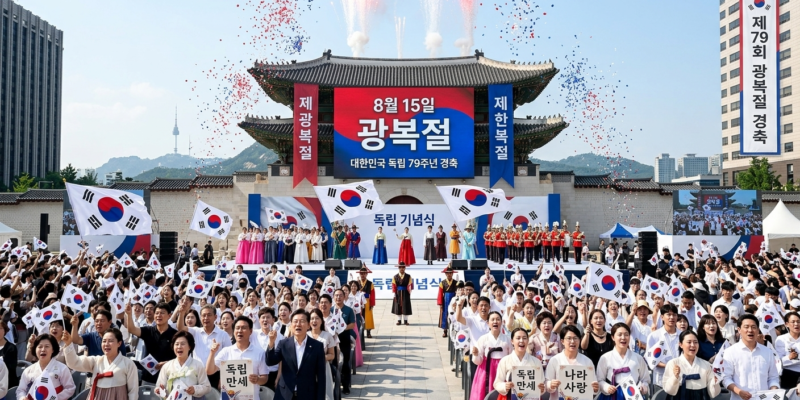
South Korea’s Independence Day, known in Korean as Gwangbokjeol, is one of the most significant national holidays in the country’s calendar. Understanding when it falls, what it commemorates, and how Korean people observe it gives both visitors and students a profound window into Korean national identity and historical consciousness.
This complete guide covers the date, the history behind the holiday, how celebrations are organized across the country in 2026, and what the day means in the broader context of Korean society.
South Korea Independence Day Date: When Is Gwangbokjeol
South Korea’s Independence Day falls on August 15 every year. This date is fixed and does not shift based on the day of the week. In 2026, August 15 falls on a Saturday, making it a significant three-day weekend when combined with the surrounding days.
The holiday is officially titled Gwangbokjeol, which translates literally as National Liberation Day of Korea or, more poetically, Day the Light Returned. The name refers both to the liberation of Korea from Japanese colonial rule and to the restoration of Korean sovereignty and national identity.
August 15 was chosen because it marks the date in 1945 when Japan formally announced its surrender at the end of the Second World War, ending 35 years of Japanese colonial rule over the Korean peninsula.
It is worth noting that August 15 is also a significant date for North Korea, which observes the same liberation from Japanese colonization on this day. This shared historical reference point is one of the many complex threads connecting the two Koreas, which are otherwise separated by one of the most militarized borders in the world. For a detailed understanding of how the two Koreas differ today, exploring the differences between North and South Korea provides essential context.
The Historical Background of South Korea Independence Day
To understand why Gwangbokjeol carries such emotional weight for Korean people, it is necessary to understand the history it commemorates.
Japanese Colonization of Korea: 1910 to 1945
Japan formally annexed Korea on August 29, 1910, after a period of increasing Japanese political and military dominance over the Korean peninsula that had begun in the late 19th century. The annexation was the culmination of a process that Korean historians universally describe as forced and illegitimate, a view that has been the source of ongoing diplomatic tension between Korea and Japan throughout the modern era.
During 35 years of colonial rule, Japan implemented policies designed to systematically suppress Korean language, culture, and national identity. Korean people were required to adopt Japanese names, speak Japanese in schools and public settings, and pay homage to the Japanese emperor. Korean historical documents, artworks, and cultural artifacts were taken to Japan, many of which have never been returned.
Korean resistance to Japanese colonization was continuous throughout this period. The March 1st Movement of 1919, known in Korean as the Samil Movement, was a nationwide series of demonstrations calling for Korean independence that were brutally suppressed by Japanese colonial authorities. Historians estimate that thousands of Koreans were killed in the suppression of these protests. The March 1st Movement is now observed as another major Korean national holiday, March 1st Day, which falls on March 1 every year.
Korean independence activists operated both within the peninsula and abroad, particularly in Shanghai where the Provisional Government of the Republic of Korea was established in exile. Key figures including Kim Ku, Ahn Chang-ho, and Yun Bong-gil became national heroes whose memory is actively maintained in Korean public culture today.
Liberation on August 15, 1945
Japan’s announcement of surrender came on August 15, 1945, following the American atomic bombings of Hiroshima and Nagasaki and the Soviet Union’s entry into the Pacific War. The news reached Korea that same day, and the celebration that erupted throughout the Korean peninsula was unlike anything the country had experienced in a generation.
However, the joy of liberation was rapidly complicated by geopolitical realities. The United States and the Soviet Union divided the peninsula at the 38th parallel for the purpose of accepting Japanese surrender, with Soviet forces in the north and American forces in the south. This division, intended as a temporary administrative arrangement, hardened into a permanent political division that would eventually produce two entirely separate Korean states: the Republic of Korea in the south and the Democratic People’s Republic of Korea in the north.
The formal establishment of the Republic of Korea took place on August 15, 1948, exactly three years after liberation. This is the second historical event that Gwangbokjeol commemorates: the founding of the South Korean state.
Gwangbokjeol 2026: What to Expect on South Korea Independence Day
Gwangbokjeol in 2026 will be observed on Saturday, August 15. The central ceremony takes place at the Sejong Center for the Performing Arts in central Seoul and is attended by the President of the Republic of Korea, senior government officials, foreign diplomatic representatives, and invited guests including descendants of independence activists.
The ceremony begins in the morning and includes a formal address by the President, a recitation of the Korean Declaration of Independence, and the singing of the national anthem Aegukga. Large screens outside the venue broadcast the ceremony live to crowds gathered on the surrounding streets.
National Flag Display
One of the most distinctive visual features of Gwangbokjeol is the display of the Korean national flag, the Taegukgi, throughout the country. Korean households are officially encouraged to display the national flag on this day, and many government buildings, shops, and residential areas are transformed by the sight of thousands of flags displayed together. For visitors unfamiliar with the Taegukgi’s design, this is an excellent opportunity to see Korean national symbols explained in public exhibition materials.
Fireworks and Public Celebrations
Many cities across South Korea organize evening fireworks displays on or around August 15. Seoul’s Han River parks are particularly popular gathering points, where families and groups of friends spread out picnic mats and enjoy the celebrations. The atmosphere combines genuine patriotic feeling with the relaxed joy of a summer holiday weekend.
Cultural Events and Historical Exhibitions
The days around Gwangbokjeol typically see a significant increase in attendance at historical museums, independence memorials, and cultural exhibitions. The Independence Hall of Korea in Cheonan, South Chungcheong Province, is the most significant institution dedicated to the history of Korean independence and is one of the most visited sites in the country on and around this day.
Understanding how Korean culture commemorates its history gives visitors a much richer experience of these celebrations than simply observing them from the outside.
Key Sites to Visit on South Korea Independence Day
Several historical sites in South Korea are particularly meaningful to visit on or around Gwangbokjeol.
Independence Hall of Korea, Cheonan
The Independence Hall of Korea is the country’s most comprehensive museum dedicated to the history of Korean independence movements and resistance to Japanese colonial rule. The complex includes seven exhibition halls covering different aspects of Korean history from the 19th century through the 1940s, extensive outdoor monuments and sculptures, and a theater showing documentary films about the independence movement.
Visiting on Gwangbokjeol requires advance planning as attendance surges dramatically. Arriving early in the morning and purchasing tickets in advance is strongly recommended.
Seodaemun Prison History Hall, Seoul
Seodaemun Prison was built by Japanese colonial authorities in 1908 and used throughout the colonial period to imprison and torture Korean independence activists. Today it operates as a museum and memorial site that provides an unflinching account of what Korean independence fighters endured.
The site includes preserved prison cells, torture chambers, and execution grounds, alongside exhibitions on specific independence activists who were held or executed there. It is a deeply moving site that draws large crowds on Gwangbokjeol as Korean families bring children to learn about this history.
Deoksugung Palace and the March 1st Movement Memorial, Seoul
Deoksugung Palace in central Seoul was the seat of the Korean royal court during the late Joseon Dynasty and witnessed many of the events that led up to Japanese annexation. The surrounding streets are directly connected to the March 1st Movement of 1919, and historical markers throughout the area help visitors trace the path of the independence demonstrations.
Tapgol Park, Seoul
Tapgol Park in Jongno is historically significant as the location where the March 1st Declaration of Independence was first read publicly in 1919. A bronze relief depicting the events of that day stands in the park, and on Gwangbokjeol the site is typically the location of historical reenactments and public commemorations.
Hyochang Park, Seoul
Hyochang Park contains the tombs of several major Korean independence activists, including Yun Bong-gil, Lee Bong-chang, and Baek Jeong-gi, who were executed by Japanese colonial authorities. The park is a place of genuine pilgrimage on Gwangbokjeol.
For students spending time in Korea, visiting these sites provides historical depth that makes the academic and cultural experience of living in South Korea far richer.
The Significance of Gwangbokjeol in Modern Korean Society
Gwangbokjeol is not simply a historical commemoration. It is a living part of South Korean national identity that continues to shape contemporary politics, culture, and international relations.
Korea-Japan Relations
The history of Japanese colonization remains one of the most sensitive and contested areas in modern Korean-Japanese relations. Disputes over historical recognition, compensation for forced labor and wartime comfort women, and the ownership of cultural artifacts that were removed from Korea during the colonial period continue to create diplomatic friction between the two countries.
Gwangbokjeol often coincides with public debate in South Korea about these unresolved historical issues. Politicians, civil society organizations, and academic institutions use the occasion to renew calls for what they describe as genuine historical reconciliation based on honest acknowledgment of the colonial period.
Youth and Historical Memory
A significant challenge for Korean society today is ensuring that younger generations maintain a genuine understanding of and connection to this history. Korean schools include the independence movement in their curriculum, and school trips to sites like the Independence Hall and Seodaemun Prison are standard parts of Korean children’s education.
The relationship between historical memory and national identity is something that comes through vividly in Korean film and cultural production. Many of the most celebrated Korean films of the past two decades engage directly or indirectly with themes of colonization, national division, and the weight of historical trauma on personal identity.
The National Anthem and Flag
Gwangbokjeol is one of the days when Korean national symbols receive their most public display and reverence. For visitors who have not previously encountered the Taegukgi or heard Aegukga performed in its full ceremonial context, experiencing these symbols on Independence Day is genuinely moving.
Practical Information for Visitors During Gwangbokjeol
If you are in South Korea on or around August 15, 2026, several practical considerations affect your experience.
Public Holidays and Business Hours
August 15 is a national public holiday, which means government offices, banks, and many businesses will be closed. Major shopping centers, tourist attractions, and restaurants will typically remain open and may actually be busier than usual as Korean families enjoy the holiday weekend. Convenience stores operate normally.
Transportation
Public transportation operates on a holiday schedule on Gwangbokjeol, which in practice means frequencies are slightly reduced but the system remains fully operational. Major tourist sites near subway stations are easily accessible. If you are planning to visit sites outside Seoul, trains and intercity buses run but advance booking is strongly recommended as they fill quickly on holiday weekends.
Hotel Booking Considerations
If your trip to South Korea includes August 15, book your accommodation well in advance. Hotels in Seoul, particularly near popular sites like Gyeongbokgung Palace and Myeongdong, experience surge demand around national holidays. For detailed guidance on booking hotels in South Korea during busy periods, planning ahead makes a significant difference.
Dress and Conduct
If you attend formal commemorations or visit historical memorial sites on Gwangbokjeol, dressing respectfully is appropriate. Loud or disruptive behavior near memorial sites or during public ceremonies is considered seriously disrespectful.
Understanding Korean etiquette in public settings is covered in detail through Korean social customs and manners, which is worth reviewing before visiting historical or ceremonial sites.
Other Major Korean National Holidays: Context for Gwangbokjeol
Understanding Gwangbokjeol is easier when you see it alongside Korea’s other major national holidays, each of which marks a significant moment in Korean history or culture.
March 1st Day (Samil-jeol) on March 1
This holiday commemorates the March 1st Independence Movement of 1919, the nationwide uprising against Japanese colonial rule. It is one of the most solemn of Korea’s national holidays and is observed with formal ceremonies at major sites throughout the country.
Constitutional Day (Je-heon-jeol) on July 17
This holiday marks the promulgation of the Constitution of the Republic of Korea on July 17, 1948, just one month before the formal establishment of the state on August 15, 1948. It is observed more quietly than Gwangbokjeol but is an important date in the Korean legal and political calendar.
National Foundation Day (Gaecheon-jeol) on October 3
This holiday commemorates the legendary founding of the first Korean kingdom by the mythical figure Dangun in 2333 BCE. It is the oldest national holiday in Korea’s calendar and reflects the deep pride Korean people take in what they regard as one of the world’s oldest continuous civilizations.
Hangul Day (Hangul-nal) on October 9
This holiday celebrates the creation of the Korean alphabet, Hangul, by King Sejong the Great during the Joseon Dynasty in the 15th century. It is a unique holiday that has no direct equivalent in most other countries and reflects the profound importance Koreans place on their language as a marker of national identity.
For students enrolled in or considering Korean language courses and degree programs, understanding the significance of Hangul to Korean cultural identity is genuinely helpful context.
Gwangbokjeol and the Broader Story of Korean National Identity
South Korea’s Independence Day is ultimately about more than a single date or a single historical event. It is an annual opportunity for Korean society to collectively reflect on the journey from colonial subjugation to the establishment of one of Asia’s most dynamic democracies and one of the world’s most influential cultural forces.
The country that celebrates Gwangbokjeol in 2026 is almost unrecognizable compared to the devastated nation that began rebuilding after liberation and then endured a devastating civil war in the early 1950s. South Korea’s transformation from one of the world’s poorest countries to one of its most innovative economies represents one of the most remarkable national achievements of the 20th century.
This transformation is the background against which international students choose to study in South Korea and against which Korean universities have built globally competitive research and academic programs. It is the context in which Korean cultural exports from cinema to K-pop to food have captured the imagination of the world. And it is the foundation on which Korean national pride rests whenever August 15 comes around each year.
Conclusion: Why South Korea Independence Day Matters to Everyone in Korea
Whether you are a Korean citizen, an international student, a traveler, or a researcher trying to understand this remarkable country, August 15 and the history it represents are essential to making sense of modern South Korea.
Gwangbokjeol is not simply a public holiday. It is the annual expression of a national story that encompasses colonization, resistance, liberation, division, war, reconstruction, and eventual emergence as one of the most culturally influential nations in the world.
Experiencing this day in South Korea, whether by attending a formal ceremony, visiting a historical memorial, or simply watching families display their national flags and gather in public parks, gives you access to something that no classroom or guidebook can fully convey: a living sense of what Korea has been through and what it has become.
For those planning a longer stay in Korea for educational or professional purposes, connecting with resources about working in Korea and daily life as an international resident helps make that connection not just a one-day experience but an ongoing part of understanding the country you are living in.