


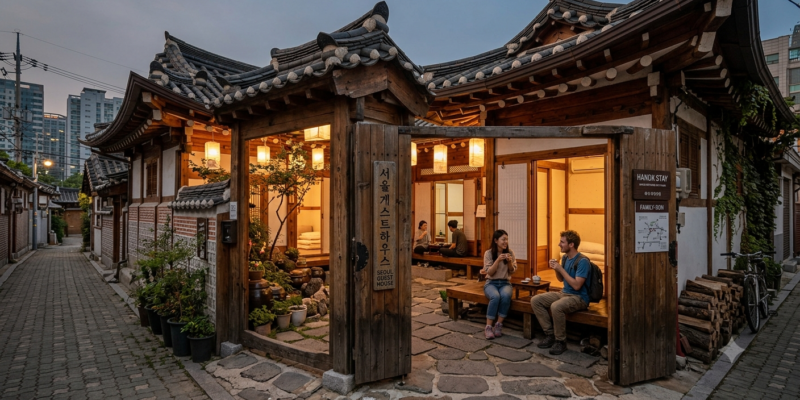
Finding the right place to stay in South Korea can make or break your entire trip or study experience. While hotels and serviced apartments get a lot of attention, the South Korea guest house scene offers something far more valuable for students, budget travelers, and cultural explorers: genuine connection to local life, affordable pricing, and a level of warmth that a large chain hotel simply cannot replicate.
This complete guide covers everything you need to know about staying in a Korean guesthouse in 2026, from what to expect when you arrive to which cities offer the best options for different kinds of travelers.
What Is a South Korea Guest House and How Is It Different from a Hotel
A guest house in South Korea, often called a guesthouse or minbak, is a privately operated accommodation that typically offers both private rooms and dormitory-style shared rooms. The most distinguishing feature of Korean guesthouses is the personal hospitality. Many are run by individuals or families who take genuine pride in helping guests navigate the neighborhood, recommend local restaurants, and share insights about Korean culture that no guidebook can capture.
Unlike a hotel, a Korean guesthouse often comes with a shared kitchen, common living areas, and a communal atmosphere that encourages interaction between guests from different countries. This is one reason guesthouses are particularly popular among solo travelers and international students who arrive in Korea without an existing social network.
The pricing structure is also significantly different. A guesthouse dormitory bed in Seoul can cost as little as 15,000 to 25,000 Korean Won per night, which is a fraction of what even a budget hotel charges. Private rooms in quality guesthouses typically range from 40,000 to 80,000 Won per night, still far below the average hotel rate.
If you are thinking about studying in South Korea and need short-term accommodation while you sort out longer-term arrangements, a guesthouse is almost always the smartest first choice.
Types of Korean Guesthouses: Understanding Your Options
Not all Korean guesthouses are the same. Understanding the different types helps you choose the right one for your specific situation.
Traditional Hanok Guesthouses
Hanok guesthouses are accommodations built in or converted from traditional Korean architecture. Staying in a hanok means sleeping on a floor mat called a yo on heated ondol floors, experiencing paper-screened windows called hanji, and waking up in a space that feels genuinely connected to Korea’s cultural heritage.
Hanok guesthouses are concentrated in areas like Bukchon Hanok Village in Seoul, Jeonju Hanok Village, and Gyeongju. Prices are slightly higher than standard guesthouses, but the experience is unique and deeply representative of authentic Korean culture.
Backpacker Hostels and Party Guesthouses
In areas like Hongdae, Itaewon, and Sinchon in Seoul, there is a strong concentration of guesthouses oriented toward younger international travelers. These tend to have active common areas, organized group activities, and connections to nearby nightlife. They are excellent for social travelers but not ideal if you need quiet study time.
Family-Run Guesthouses
These are perhaps the most authentic Korean guesthouse experience. Run by Korean families in residential neighborhoods, they often include a home-cooked breakfast, the chance to learn a few words of Korean from your hosts, and an introduction to daily Korean life that goes far beyond what tourist attractions can offer.
International Student Guesthouses
Several guesthouses in university districts like Sinchon, Anam, and Gwanak-gu specifically cater to international students. They often offer weekly and monthly rates, laundry facilities, and common areas designed for studying. These are natural gathering points for students attending nearby universities in South Korea.
Best Areas to Find a South Korea Guest House in Seoul
Seoul is a vast city and the area where you choose to stay has a significant impact on your overall experience. Here is a breakdown of the best neighborhoods for guesthouses.
Insadong and Bukchon
This area in central Seoul is home to the highest concentration of hanok guesthouses. The neighborhood is walkable, lined with tea houses, traditional craft shops, and gallery spaces. It is ideal for travelers who want cultural immersion and easy access to major historical sites like Gyeongbokgung Palace and Changdeokgung Palace.
Hongdae
Hongdae is the creative heart of Seoul, a university neighborhood that pulses with street art, live music, independent cafes, and fashion boutiques. Guesthouses here are plentiful and affordable, and the area is well connected by subway to the rest of the city. It is particularly popular with students and young travelers.
Itaewon and Hanam
Itaewon is Seoul’s most internationally diverse neighborhood. Guesthouses here tend to attract long-term travelers and expats, and the area offers an extraordinary range of international restaurants. It is particularly comfortable for first-time visitors to Korea who want a gentle introduction before diving deeper into Korean-language neighborhoods.
Gangnam
Gangnam guesthouses are less common but do exist. Staying here puts you in Seoul’s most modern and upscale district, which can be exciting but also more expensive than other neighborhoods.
Mapo and Sinchon
This area near Yonsei University and Ewha Womans University is dense with student-oriented guesthouses. Public transportation connections are excellent, and the neighborhood has a lively but academic atmosphere that suits students well.
Understanding where to stay in Seoul is closely connected to why you are visiting. Those focused on Korean courses and academic programs will find university districts most practical, while cultural explorers will feel most at home in Insadong and Bukchon.
South Korea Guest House Options Beyond Seoul
While Seoul dominates discussions of Korean accommodation, several other cities offer exceptional guesthouse experiences that are worth planning your journey around.
Busan
South Korea’s second city is a coastal metropolis with a completely different energy from Seoul. Guesthouses in Busan cluster around Haeundae Beach, Gwangalli Beach, Gamcheon Culture Village, and the Jagalchi Fish Market area. The city’s relaxed seaside atmosphere makes it a favorite for travelers who want to experience a different side of Korean urban life.
Gyeongju
Known as the museum without walls, Gyeongju is filled with ancient Silla Kingdom burial mounds, temples, and pagodas. Guesthouses here tend to be smaller and quieter than those in Seoul or Busan, and many offer bicycle rental, which is the ideal way to explore the city’s many historical sites spread across the surrounding countryside.
Jeonju
Jeonju is famous throughout Korea for its food, particularly bibimbap, and its beautifully preserved Hanok Village. The guesthouses in Jeonju’s Hanok Village district are among the most atmospheric in all of Korea. Many visitors come for a weekend and end up staying for a week.
Jeju Island
Jeju is Korea’s premier holiday destination, and guesthouses here tend to fill up quickly during peak season. The island’s volcanic landscape, dramatic coastal cliffs, and relaxed pace of life make it a remarkable contrast to the intensity of mainland Korean urban life.
Sokcho
Sokcho is the gateway city to Seoraksan National Park, one of the most stunning natural landscapes in Korea. Guesthouses here cater primarily to hikers and nature lovers, and the fresh seafood from the local fish market is outstanding.
What to Expect at a Korean Guesthouse: Practical Information for First-Time Guests
Arriving at a Korean guesthouse for the first time can involve some surprises if you are not prepared. Here is what to expect.
Shoes Off at the Door
This is not optional. Removing your shoes at the entrance is a deeply ingrained Korean social norm, and guesthouses are no exception. Most guesthouses will have indoor slippers available for guests.
Ondol Heating
Traditional Korean homes and many guesthouses use ondol floor heating, where heat circulates through pipes beneath the floor. If you are sleeping on a traditional mat rather than a bed, you may find the floor surprisingly warm. This is intentional and is considered very healthy in Korean tradition.
Shared Facilities
In most budget guesthouses, bathrooms, showers, and kitchens are shared. Korean guesthouse guests generally maintain a high standard of cleanliness in shared spaces, and this expectation applies to you as well. Understanding basic Korean manners and social etiquette before you arrive makes shared living much smoother.
Check-in Times
Korean guesthouses typically have a check-in time of 2:00 PM or 3:00 PM and check-out by 11:00 AM. Arriving early without advance notice and expecting immediate access is considered poor manners.
Communication
English proficiency among guesthouse owners varies widely. In tourist-heavy areas and university districts, communication in English is generally straightforward. In smaller towns and residential neighborhoods, basic Korean phrases go a long way in building goodwill with your hosts.
Cost of Staying at a South Korea Guest House: What Your Budget Gets You
Understanding the cost structure of Korean guesthouses helps you plan your trip more accurately.
Dormitory beds in basic guesthouses in Seoul typically cost between 15,000 and 30,000 Won per night. In premium locations or hanok properties, dormitory beds can reach 40,000 to 50,000 Won per night.
Private rooms in standard guesthouses range from 40,000 to 80,000 Won per night. Hanok private rooms are typically 80,000 to 150,000 Won per night and sometimes higher during holiday weekends.
Weekly and monthly rates are almost always available and represent significant savings for students and long-stay travelers. Many guesthouses in university districts will negotiate monthly rates that work out to roughly 500,000 to 800,000 Won per month for a private room, which is competitive even against studio apartment rentals.
It is worth understanding currency exchange rates for travelers from India before finalizing your accommodation budget, as the Won-to-Rupee rate has a significant impact on what feels affordable.
How to Book a South Korea Guest House: Best Platforms and Tips
Booking a Korean guesthouse in 2026 is straightforward through several well-established platforms.
Booking.com and Agoda both carry extensive listings for Korean guesthouses and offer reliable reviews from previous guests. Hostelworld specializes specifically in hostels and guesthouses and often has the most complete listings for budget options.
Airbnb operates in Korea and is a good source for private room rentals in residential neighborhoods that are not listed on traditional hostel platforms.
For hanok guesthouses specifically, the Korean Tourism Organization’s website and local tourism boards often maintain curated lists with direct booking options.
A few booking tips: always read recent reviews carefully rather than relying on the overall rating. Pay attention to comments about noise levels, cleanliness of shared bathrooms, and the helpfulness of staff. Book well in advance for visits during Korean public holidays and festivals, when guesthouses fill up extremely quickly.
Guest House Etiquette in South Korea: How to Be a Respectful Guest
Staying in a Korean guesthouse means living in close proximity to other guests and often to your hosts. A few basic principles of Korean social etiquette apply directly to guesthouse living.
Keep noise to a minimum after 10:00 PM. Korean guesthouses are residential in atmosphere, and late-night noise in common areas or hallways is considered seriously inconsiderate.
Clean up after yourself in shared kitchens and bathrooms. This is expected without exception.
Return borrowed items, including keycards, maps, and bicycle locks, promptly and in good condition.
Express appreciation to your hosts. A genuine thank-you, even in broken Korean, is always warmly received and reflects well on you as a guest.
If you receive advice or recommendations from your guesthouse hosts, following through and reporting back on your experience is something Korean hosts genuinely appreciate. It transforms a transaction into a relationship, which is something Korean hospitality culture deeply values.
South Korea Guest House vs Hotel: Which Is Right for You
The choice between a guesthouse and a hotel in South Korea comes down to what you want from your stay.
If you are traveling solo and want to meet other travelers, share experiences, and get genuine local recommendations, a guesthouse is almost always the better choice.
If you are traveling for business, attending a formal academic conference, or need consistent internet speed and private workspace, a hotel offers reliability that guesthouses do not always provide.
If you are a student arriving in Korea for the first time and need a comfortable, affordable base while you arrange longer-term accommodation, a guesthouse in a university district is practically ideal.
If experiencing authentic Korean culture is your primary motivation, a hanok guesthouse is a once-in-a-lifetime experience that no chain hotel can replicate.
Conclusion: South Korea Guest House Culture Is Worth Experiencing
The South Korea guest house scene in 2026 is diverse, affordable, and deeply connected to what makes Korean hospitality so memorable. Whether you choose a traditional hanok in Jeonju, a student-focused guesthouse in Seoul’s Sinchon district, or a beachside hostel in Busan, you will find accommodation that does far more than simply give you a place to sleep.
A Korean guesthouse gives you a community, a window into daily Korean life, and the kind of human warmth that makes travel genuinely transformative.
For students considering making the move to Korea for education, exploring guesthouse accommodation as your first stop is a practical and culturally enriching way to begin. You can learn more about life in South Korea for international students to prepare yourself for what lies ahead.