


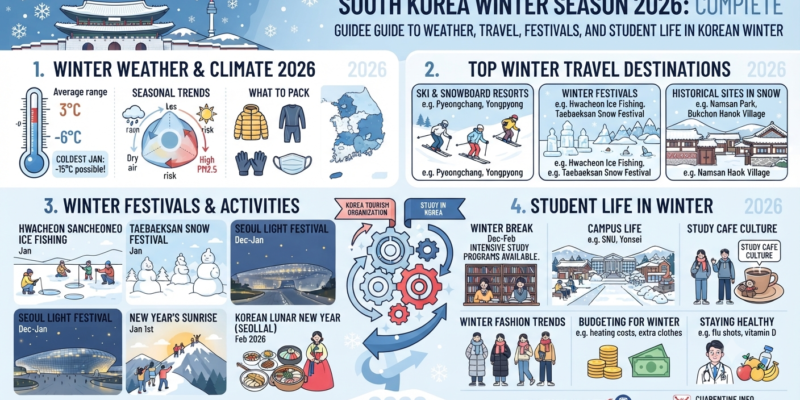
South Korea winters are one of the most defining and memorable experiences for anyone who visits or lives in the country. The cold, crisp air, snow-covered mountains, glowing street food stalls, and vibrant winter festivals make the season both challenging and deeply rewarding. Whether you are a first-time tourist planning a winter holiday, an Indian student who has just arrived for the academic year, or someone considering relocating for study or work, understanding the South Korea winter season thoroughly will help you prepare, adapt, and enjoy every aspect of it.
This guide covers everything from monthly temperature breakdowns and regional weather differences to the best winter destinations, food to eat, festivals to attend, and practical tips for surviving and thriving through Korean winter.
When Does Winter Start and End in South Korea
South Korea experiences a distinctly continental climate with four well-defined seasons. Winter officially begins in December and extends through February, though the cold can arrive as early as late November and linger into early March in northern regions.
The coldest period is typically January, when temperatures in Seoul drop to their lowest and snowfall is most frequent. By late February, the first hints of warming begin to appear, and early spring flowers like forsythia start to bloom in the southern parts of the country.
For students planning their arrival to begin studies at Korean universities, most spring semesters start in early March, meaning new international students often experience the final weeks of winter upon arrival. Understanding the South Korea student visa timeline and arrival planning relative to the academic calendar is therefore essential.
South Korea Winter Temperature by Region
South Korea is a relatively small country but has considerable regional climate variation due to its mountainous terrain and proximity to the sea.
Seoul and the Capital Region
Seoul, the capital and home to many major universities, experiences winter temperatures ranging from minus 12 degrees Celsius at the coldest to around 4 degrees Celsius on milder winter days. The average January temperature in Seoul is approximately minus 5 degrees Celsius. Snowfall occurs several times throughout the season, and the city transforms into a beautifully lit winter landscape.
Gangwon Province and the Ski Resorts
Gangwon Province in the northeastern part of South Korea is significantly colder than Seoul. This region is home to Korea’s most popular ski resorts including Yongpyong, High1, and Elysian Gangchon. Temperatures here regularly fall to minus 15 or minus 20 degrees Celsius in mid-January, and snow is abundant and reliable from December through March. This is the area that hosted the 2018 PyeongChang Winter Olympics.
Busan and the Southern Coast
Busan, South Korea’s second-largest city located on the southeastern coast, has noticeably milder winters. Temperatures rarely fall below minus 5 degrees Celsius even in January, and snowfall is infrequent. Busan’s coastal location moderates the temperature, making it a popular winter destination for those who want cooler weather without the extreme cold of Seoul or Gangwon.
Jeju Island
Jeju Island, located to the south of the Korean mainland, has the warmest winter climate in the country. Average temperatures in January hover around 5 to 8 degrees Celsius, though the island can experience heavy snowfall at Hallasan Mountain due to its volcanic geography. Jeju is a popular winter retreat for mainland Koreans seeking a milder escape.
What to Expect Weather-Wise Month by Month
November (Pre-Winter Transition)
November marks the end of autumn and the beginning of the cold transition. Temperatures in Seoul drop from highs of around 12 degrees to lows of 2 or 3 degrees Celsius by the end of the month. The foliage is at its most spectacular in early November before falling, making it one of the most photographed times of year.
December (Early Winter)
December brings the first significant cold spells and occasional snowfall to central and northern Korea. Average temperatures in Seoul range between minus 4 and 5 degrees Celsius. The city comes alive with Christmas and New Year decorations, creating a warm and festive atmosphere despite the cold. Shopping districts like Myeongdong, Insadong, and Hongdae are especially vibrant during this period.
January (Peak Winter)
January is the coldest month across most of South Korea. Snowfall is frequent in Seoul and heavy in mountainous regions. This is the best time for skiing and snowboarding, and ski resorts are at peak capacity. The wind chill can make temperatures feel significantly colder than the actual reading, so layering is essential.
February (Late Winter)
February remains cold but begins to show the first signs of softening. By the end of February, early spring blossoms sometimes begin appearing in the southern cities. The Lunar New Year holiday (Seollal) typically falls in January or February and is one of the most important cultural celebrations in South Korea, during which families reunite and many businesses temporarily close.
Best Places to Visit in South Korea During Winter
Pyeongchang Ski Resorts
The ski resorts of Gangwon Province are the top winter destination in South Korea. Yongpyong Ski Resort, known globally from the 2018 Winter Olympics, offers world-class slopes for all skill levels. High1 Resort in Jeongseon is another excellent option with extended ski terrain and scenic mountain views. Many resorts offer rental equipment, ski schools for beginners, and lodging options ranging from budget to luxury.
Nami Island in Winter
Nami Island (Namiseom) near Chuncheon is famous year-round but takes on a magical quality in winter when snow blankets its iconic tree-lined paths. The island gained international recognition from the Korean drama Winter Sonata and continues to attract visitors who want to experience its romantic, snow-covered landscape. It is accessible by ferry from Gapyeong.
Seoul’s Winter Markets and Palaces
Seoul becomes a city of lights and markets during winter. Gyeongbokgung Palace and Changdeokgung Palace are dramatically beautiful under snow and are popular for photography. Lotte World Tower’s sky deck observation platform offers panoramic views of a snow-dusted Seoul skyline. The city’s traditional markets like Gwangjang Market and Namdaemun Market are at their most atmospheric in winter, filled with steaming street food and seasonal produce.
Busan’s Haeundae Beach in Winter
Busan’s famous Haeundae Beach has a very different character in winter compared to summer. The beach is quiet and uncrowded, the sea air is refreshing, and the Haeundae sand festival and various cultural events take place during the colder months. The seafood in Busan is exceptional year-round, and the winter version of hoe (raw fish) and hot haemultang (spicy seafood stew) is particularly satisfying after a cold walk by the shore.
Jeju Island Winter Retreat
Jeju Island is an excellent choice for travelers who want to experience Korean winter without extreme cold. Hallasan National Park offers winter hiking through snow-dusted volcanic trails with stunning panoramic views. The island’s tangerine orchards are at peak harvest in winter, and the local food scene reflects the season beautifully.
South Korea Winter Festivals and Cultural Events
Hwacheon Sancheoneo Ice Festival
The Hwacheon Sancheoneo Ice Festival is one of South Korea’s most beloved winter events. Held each January in the mountain city of Hwacheon in Gangwon Province, it draws over a million visitors annually. The centerpiece is ice fishing on the frozen Hwacheon Stream, where participants drill holes in the ice and try to catch mountain trout with their bare hands or using rods. There are also ice sculptures, sledding, and outdoor winter activities spread across a large festival ground.
Taebaek Snow Festival
The Taebaek Snow Festival takes place in the mountain city of Taebaek and features enormous snow and ice sculptures, snow slides, and winter-themed activities for families. The city’s high elevation ensures reliable snow throughout the festival period.
Seoul Lantern Festival (Late Autumn to Early Winter)
While technically extending from autumn into early winter, the Seoul Lantern Festival along Cheonggyecheon Stream fills the waterway with thousands of intricately designed lanterns, creating a dreamlike atmosphere in the heart of the city.
Seollal (Lunar New Year)
Seollal is the most culturally significant holiday of the Korean winter. It falls on the first day of the lunar calendar year, typically in late January or early February. Koreans observe Seollal by returning to their hometowns, performing ancestral rites called jesa, wearing hanbok (traditional clothing), and eating tteokguk (rice cake soup). For international students and travelers, experiencing Seollal provides a deeply authentic window into Korean family culture and tradition.
Korean Winter Food You Must Try
Korean cuisine adapts beautifully to the cold season and offers a range of hearty, warming dishes that become cultural staples of winter.
Hotteok is a sweet filled pancake fried on a griddle and sold at street stalls across the country. The filling typically consists of brown sugar, cinnamon, and nuts, and it is eaten hot from the pan on cold days.
Odeng (Fish Cake Skewers) are another ubiquitous winter street food. The fish cakes are skewered on sticks and simmered in a light broth that is served free of charge at most stalls. Drinking the hot broth while standing at an outdoor stall is a quintessential Korean winter experience.
Samgyetang (Ginseng Chicken Soup) is a restorative soup eaten for its warming and health-boosting properties. A whole young chicken stuffed with rice, ginseng, jujubes, and garlic is simmered for hours to produce a rich, medicinal broth.
Kimchi Jjigae (Kimchi Stew) is one of the most comforting Korean dishes and is especially popular in winter. The fermented kimchi gives the stew a deep, complex flavor that pairs perfectly with rice on a cold day.
Bingsu (Shaved Ice Dessert) is technically a summer dish but modern heated bingsu cafes have made it a year-round option, with winter versions featuring warm toppings and hot sauces.
What to Pack for South Korea Winter: Complete Clothing Guide
Packing correctly for Korean winter is essential, especially for travelers coming from warmer countries like India. The cold in Seoul and Gangwon can be intense, particularly when combined with the dry, biting wind.
Thermal innerwear forms the foundation of any winter wardrobe in Korea. Merino wool or synthetic base layers should cover the full body. Over this, a mid-layer of fleece or down provides insulation. A heavy outer jacket rated for temperatures below minus 10 degrees Celsius is necessary for Seoul and essential for ski resort areas. Many Koreans favor long padded coats known as “puffer coats” that extend below the knee for maximum warmth.
Accessories including gloves, scarves, ear muffs or wool hats, and thick socks are indispensable. Waterproof and insulated boots are strongly recommended for walking on snowy or icy surfaces. Hand warmers (chemical heat packs) are inexpensive and available everywhere in Korea, and they are a practical solution for particularly cold days.
Student Life in South Korea During Winter
For Indian students studying at universities in South Korea, winter brings a combination of academic intensity and cultural exploration. Most Korean universities operate on a semester system with exams and project deadlines falling in December, making the first half of winter a high-stress academic period.
After exams, many universities organize year-end gatherings and international student events during December and January. University dormitories and student facilities are generally well-heated, but understanding how to manage heating bills in off-campus accommodation is something international students should plan for in advance.
The cost of living in South Korea typically increases slightly in winter due to higher heating costs, additional clothing purchases, and the tendency to eat out more frequently to escape the cold. Budgeting for winter specifically is a practical skill that helps students avoid financial stress.
Travel within Korea is easier and more affordable during winter for students compared to peak summer months. KTX bullet trains, buses, and subway systems operate efficiently and are fully heated, making day trips to places like Gyeongju, Jeonju, or Busan very accessible on student budgets.
Health and Safety Tips for South Korea Winter
The cold and dry air of Korean winter can pose health challenges, particularly for those unaccustomed to such conditions. Skin becomes dry rapidly, and lip balm, moisturizer, and hand cream should be part of every daily routine.
Respiratory illnesses are more common in winter, and Korean pharmacies (yak-guk) are well-stocked with over-the-counter remedies. For more serious health concerns, South Korea’s healthcare system is excellent and affordable by international standards.
The Lunar New Year period sees many shops, restaurants, and services temporarily close for several days, so stocking up on essentials beforehand is advisable. Roads can become icy, particularly in early morning, so pedestrians should wear appropriate footwear and exercise caution.
Getting Around South Korea in Winter
South Korea’s public transportation network is one of the best in the world and functions reliably through winter weather. The Seoul Metropolitan Subway operates 24 hours on weekends during peak periods and keeps normal schedules on weekdays. Buses are heated and frequent, and the intercity bus network connects all major cities reliably.
For getting to ski resorts, dedicated shuttle buses operate from Seoul’s main transportation hubs such as Dong Seoul Bus Terminal and Cheongnyangni Station to major resort areas. KTX trains connect Seoul to Gangneung in Gangwon Province in under two hours, making the ski resort region very accessible for weekend trips.
For travelers arriving at Incheon Airport in winter, the Airport Railroad Express (AREX) provides a heated, comfortable ride directly into Seoul in approximately 43 minutes. Booking flights from India to South Korea during winter months can yield better prices compared to peak summer travel if booked in advance.
South Korea Winter vs Summer: Which Season Is Better for Visiting
Both seasons have their appeal, and the right choice depends entirely on your interests and tolerance for weather extremes. Summer in South Korea brings warmth, outdoor festivals, and beach culture but also the rainy monsoon season and high tourist demand. Winter brings snow, skiing, unique festivals, and a more intimate travel atmosphere with fewer tourists at most non-ski destinations.
For Indian students arriving to begin their studies, winter arrival means adjusting quickly to cold weather, which can be a significant change from the Indian climate. However, the adjustment period is manageable with proper preparation, and most students come to appreciate the beauty and energy of Korean winter deeply once they settle in.
Conclusion
South Korea winter is a season of contrasts and rewards. The cold is real and must be respected, but the country’s infrastructure, cultural richness, food scene, and festival calendar make it one of the most engaging winter travel and living destinations in Asia. Whether you come to ski, to study, to explore palaces under snow, or to sit in a warm noraebangs (singing room) with friends on a cold night, winter in Korea will leave a lasting impression.
For everything related to student life, visa guidance, university admissions, and settling into Korean society, visit Study in South Korea your trusted guide to building a life and career in the Republic of Korea.