


Spring in South Korea is widely regarded as the most beautiful season in the country. The transformation from the grey cold of winter to the vivid colors of spring happens rapidly and dramatically, with pink cherry blossoms, yellow forsythia, and white magnolia flowers bursting across cities, parks, and mountain valleys within a matter of days. For travelers, students, and residents alike, spring is a season of renewal, celebration, and extraordinary natural beauty.
This comprehensive guide covers every aspect of spring in South Korea, from month-by-month weather breakdowns and cherry blossom viewing guides to cultural festivals, seasonal food, student life, and practical travel planning tips for those coming from India and other South Asian countries.
When Is Spring in South Korea
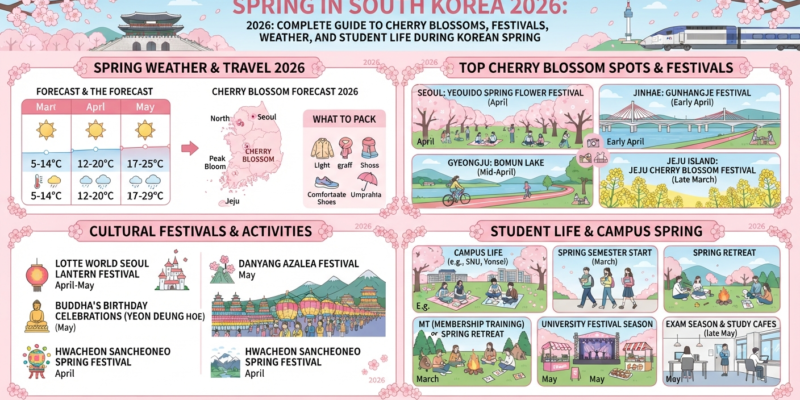
Spring in South Korea runs from early March through the end of May. It is characterized by rapidly rising temperatures, blooming flowers, and the beginning of the academic year at Korean universities. The season is divided into three distinct phases: early spring in March, peak spring in April, and late spring in May.
Each phase brings a different set of experiences and natural highlights. Understanding the seasonal progression helps travelers and students plan their activities, outings, and travel more effectively.
Most Korean universities begin their spring semester in early March, which is also when Indian students studying in South Korea typically arrive to begin their academic journey. This timing means new students get to experience spring arrival in Korea, which many describe as one of the most welcoming introductions to Korean culture and landscape.
Month by Month Spring Weather in South Korea
March: Early Spring Arrival
March is the transition month from winter to spring. Temperatures in Seoul begin the month around 3 to 7 degrees Celsius and rise gradually to around 10 to 14 degrees Celsius by the end of March. The weather is unpredictable and can shift between cold winter-like days and surprisingly warm sunny afternoons within the same week.
Yellow forsythia flowers are the first to bloom in March, appearing on hillsides and along roadsides across the country. Magnolia trees also bloom in mid to late March, adding white and purple blooms to the landscape before their leaves appear. March in the southern city of Busan and on Jeju Island sees warmer temperatures and earlier flower blooms compared to Seoul.
Students beginning the spring semester should prepare for variable weather and pack layers that can be added or removed as temperatures shift throughout the day.
April: Peak Spring and Cherry Blossom Season
April is the most celebrated month of the Korean spring calendar. Cherry blossoms, known in Korean as beot-kkot, typically reach peak bloom in Seoul during the first or second week of April, though the exact timing varies by a few days each year depending on temperature patterns.
Average temperatures in Seoul in April range from 8 to 18 degrees Celsius, making it ideal for outdoor activities and sightseeing. Rainfall increases slightly compared to March as the spring weather system becomes more established, but showers are typically brief and do not significantly disrupt outdoor plans.
April is the month when Korean parks, campuses, and riverbanks become crowded with families, couples, and tourists enjoying the blossoms. University campuses are particularly beautiful during this time, as many of South Korea’s leading universities have mature cherry blossom trees planted across their grounds.
May: Late Spring and the Green Season
By May, the cherry blossoms have faded and the country transforms into a rich, lush green landscape. Temperatures climb steadily toward summer levels, with Seoul reaching highs of 23 to 25 degrees Celsius by the end of May. The days are longer, the air is warm, and outdoor life becomes central to Korean social culture.
May is also a month packed with national holidays. Children’s Day on the 5th of May, Buddha’s Birthday (a national holiday with spectacular lotus lantern festivals), and Memorial Day on the 6th of June create extended holiday periods that are excellent for travel within Korea.
Cherry Blossom Season in South Korea: Everything You Need to Know
The cherry blossom season in South Korea is one of the most photographed and anticipated natural events in all of Asia. The blossoms typically last for only one to two weeks at full peak before falling, creating urgency and a special sense of fleeting beauty that Koreans describe through the philosophical concept of ephemeral enjoyment.
When and Where Cherry Blossoms Bloom
The blooming sequence moves from south to north across the country. Jeju Island typically sees the first cherry blossoms in late March. Busan and the southern coastal cities follow in early April. Seoul and the central regions reach peak bloom in the first or second week of April. Gangwon Province in the mountains may not reach peak bloom until mid-April.
Best Cherry Blossom Viewing Spots in Seoul
Yeouido Hangang Park hosts the annual Seoul Cherry Blossom Festival along the Han River and is one of the most iconic spring viewing locations in the country. The park fills with food stalls, live performances, and thousands of visitors during the peak bloom period.
Gyeongbokgung Palace with the iconic backdrop of Bugaksan Mountain creates one of the most photographed scenes in Korean spring. The traditional architecture surrounded by blooming trees is a combination found nowhere else in the world.
Namsan Mountain and the paths leading to N Seoul Tower are lined with cherry and plum trees that bloom beautifully in April. A walk up the mountain during blossom season is an experience that international students and first-time visitors consistently describe as unforgettable.
Bukhansan National Park’s lower trails offer a combination of spring blossoms, early green foliage, and mountain scenery that is spectacular on clear spring days.
Best Cherry Blossom Locations Outside Seoul
Jinhae in South Gyeongsang Province is widely considered to have the most impressive cherry blossom concentration in all of South Korea. The city’s streets, particularly around Yeojwa Stream and the Naval Base area, are lined with thousands of cherry trees that create tunnel effects of pink and white blossoms. The Jinhae Gunhangje Festival draws millions of visitors each April.
Gyeongju, the ancient capital of the Silla Kingdom, offers a historically unique setting for spring blossom viewing. The flowering trees around Bomun Lake and along the Gyeongju Bulguksa Temple area combine natural beauty with UNESCO World Heritage cultural landmarks.
Boseong Green Tea Fields in South Jeolla Province are not cherry blossoms, but the surrounding hillsides in spring are covered with fresh green tea plants and wildflowers that create a stunning pastoral landscape.
Spring Festivals in South Korea
Jinhae Cherry Blossom Festival (Gunhangje)
The Jinhae Gunhangje Festival is the largest spring festival in South Korea and one of the biggest cherry blossom celebrations in Asia. Held annually in early April, the festival features naval parades, cultural performances, traditional food markets, and evening light shows that illuminate the blossom-covered streets after dark. Accommodation in Jinhae books out months in advance during the festival period.
Jeju Canola Flower Festival
Jeju Island hosts its canola flower festival in late March and early April, when the island’s fields turn vivid yellow with blooming canola plants. Combined with the backdrop of Hallasan Mountain and the island’s dramatic coastline, the canola fields create a landscape that feels almost unreal in its beauty.
Lotus Lantern Festival (Yeondeunghoe)
The Lotus Lantern Festival held in Seoul to celebrate Buddha’s Birthday is a UNESCO Intangible Cultural Heritage event and one of the most visually spectacular events in the Korean calendar. Hundreds of thousands of colorful lotus lanterns illuminate the streets between Dongdaemun and Jogyesa Temple during the evening parade. The festival celebrates hope, light, and the arrival of spring and is open to people of all faiths and backgrounds.
Tulip Festival at Everland
Everland, South Korea’s largest theme park located in Gyeonggi Province near Seoul, hosts a spectacular spring tulip festival each April featuring hundreds of thousands of tulips planted in elaborate displays across the park. This is especially popular with families and younger visitors.
Boseong Tea Festival
The Boseong Green Tea Festival held in late April celebrates the spring harvest of green tea leaves from the region’s famous hillside tea plantations. Visitors can participate in tea picking, tea ceremony workshops, and enjoy local cuisine centered around green tea.
Spring Food Culture in South Korea
Korean cuisine has a strong seasonal character, and spring brings a distinctive range of fresh ingredients and dishes that are eagerly anticipated after the heavier foods of winter.
Bibimbap with Spring Greens
Spring is when bibimbap reaches its most vibrant form, with fresh seasonal namul (seasoned vegetable greens) including fernbrake, bellflower root, and spinach topping the rice bowl alongside a fried egg and gochujang sauce. The freshness of spring vegetables elevates this everyday dish into something special.
Japchae
Japchae, a stir-fried glass noodle dish with colorful vegetables, mushrooms, and protein, is a spring and festival staple. It appears at holiday tables and spring picnics and represents the abundance of fresh ingredients available during the season.
Fresh Strawberries and Seasonal Fruit
Spring strawberry season in South Korea is a major culinary event. Korean strawberries, particularly the Seolhyang variety, are remarkably sweet and juicy. Strawberry picking at farms in Gyeonggi Province and South Chungcheong Province is a popular spring activity for families and university students. Strawberry-flavored everything, from latte drinks to ice cream and cakes, dominates Korean cafes during spring.
Doenjang Jjigae with Spring Vegetables
Doenjang jjigae (fermented soybean paste stew) made with fresh spring zucchini and mushrooms is a warming dish that bridges the transition from winter to warmer weather. It is a staple of home cooking and restaurant menus throughout the season.
Ssambap (Wrapped Rice with Fresh Leaves)
Spring is the season when fresh lettuce, perilla leaves, and other leafy vegetables appear at markets. Ssambap, which involves wrapping seasoned rice and grilled meat or other fillings in fresh leaves, is a quintessential spring dining experience.
What to Wear During Spring in South Korea
Spring weather in Korea is beautiful but unpredictable, and dressing appropriately requires a strategic approach. The temperature difference between morning and evening can be as much as 10 to 12 degrees Celsius in early spring, making layering essential.
In March and early April, a light to medium weight jacket over a comfortable mid-layer is appropriate during the day. Evenings still require something warmer. Jeans, comfortable walking shoes, and layers that can be tied around the waist or stored in a bag are practical for full-day outings.
By late April and May, the weather is warm enough for lighter clothing during the day, though a light jacket or cardigan is still useful for evenings. Rain in spring can arrive suddenly, and a compact folding umbrella is worth carrying on any outdoor excursion.
Spring Travel Tips for Visitors and Indian Students
Spring is the most popular season for tourism in South Korea, which means popular destinations can be very crowded during peak blossom weeks. Planning accommodation and transportation in advance is critical, particularly for the Jinhae festival period and Golden Week holidays in early May.
For Indian students who arrive in Korea to begin their spring semester at Korean universities, the first weeks of March can feel overwhelming due to the combined pressure of settling into a new country, navigating university orientation, and adjusting to weather that may still be quite cold by Indian standards.
The cost of living in South Korea is important to understand before arrival. Spring often brings additional expenses as students purchase summer and light clothing, make housing deposits, and pay for academic materials at the start of the semester.
Exploring the best places in Seoul during spring is one of the great pleasures available to international students. The combination of low class loads at the very start of semester and perfect outdoor weather makes spring the ideal time for city exploration.
Spring Hiking in South Korea
South Korea has an exceptional network of national parks and hiking trails, and spring transforms these into extraordinarily beautiful environments. The combination of blooming wildflowers, fresh green foliage, and cool mountain air makes spring hiking a beloved national pastime.
Bukhansan National Park in northern Seoul is accessible by subway and offers trails ranging from easy walks to challenging peak climbs. The Baegundae peak trail rewards hikers with panoramic views of Seoul surrounded by spring greenery.
Jirisan National Park in southern Korea is one of the largest and most spectacular national parks in the country. Spring hiking here involves massive azalea blooms on the mountain slopes in late April and early May, creating a carpet of pink and red color visible for kilometers.
Seoraksan National Park in Gangwon Province, known for its dramatic granite peaks, is equally beautiful in spring as it is during the famous autumn foliage season. The lower valleys bloom with wildflowers while snow may still linger on the higher peaks in early spring.
For students living near Seoul who want to experience Korean nature, the must-see places in South Korea list includes several national parks that are easily accessible by public transportation for affordable day trips throughout the spring season.
Spring Accommodation Guide for Travelers and Students
Accommodation costs in South Korea typically rise during peak spring travel seasons, particularly the cherry blossom weeks in early to mid-April. Booking well in advance is strongly recommended for budget and mid-range options in popular areas.
For travelers, guesthouses and hostels offer affordable options in central locations. Korean guesthouses often called minbak or goshiwon provide basic accommodation with shared facilities at low cost. South Korea guesthouses are particularly popular with international students and budget travelers and can be found in all major cities.
Mid-range hotels are abundant in Seoul and Busan and offer excellent value compared to equivalent hotels in European or North American cities. The hotel booking process in South Korea is straightforward with many international booking platforms available, though Korean platforms like Yeogi Eottae and Yanolja often offer better rates for domestically booked accommodation.
University Life in Spring: A Guide for International Students
For international students at Korean universities, spring semester is arguably the most socially active academic period. University clubs, sports teams, and cultural organizations are most active in the spring, and the mild weather encourages outdoor events, sports days, and social gatherings on campus.
Korean universities typically hold their spring orientation festivals called OT (orientation) and MT (membership training, essentially a group retreat) during March and April. These events are excellent opportunities for international students to make Korean friends and integrate into campus social life.
Academic workload is generally heaviest in the middle of the semester around May, so planning spring travel and exploration during March, April, and the holidays in May is wise. Studying in South Korea after 12th grade and understanding the Korean academic calendar helps Indian students plan their first spring semester more effectively.
Conclusion
Spring in South Korea is an experience that combines natural beauty, cultural depth, social energy, and academic renewal in a way that is genuinely unique among Asian destinations. The cherry blossom season alone draws visitors from across the world, but the full richness of Korean spring extends far beyond any single event or attraction.
For Indian students and travelers considering South Korea as a destination, spring represents the ideal season to arrive, explore, and begin building a life in one of Asia’s most dynamic and welcoming countries. From the moment the first forsythia flowers appear in March to the warm green days of late May, Korean spring rewards those who experience it with memories that last a lifetime.
Visit Study in South Korea for comprehensive guidance on university admissions, student visa applications, accommodation, and everything you need to make the most of your life in South Korea across every season.