

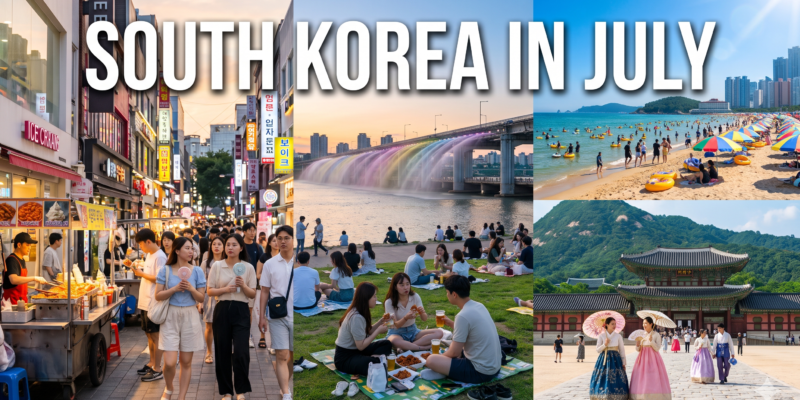
Planning a trip to South Korea in July means planning around the jangma monsoon, not just around sightseeing. July sits at the peak of Korean summer, bringing heat, humidity, and the country’s heaviest seasonal rainfall, but it is also one of the liveliest months on the calendar for beach trips, mud festivals, and school-holiday energy in every major city. This guide covers exactly what to expect from South Korea weather in July, where to go, what to pack, and how to build an itinerary that works around the rain instead of getting ruined by it.
South Korea Weather in July: What to Actually Expect
South Korea in July sits inside the jangma monsoon, which typically runs from late June through most of July. Expect daytime highs around 29 to 31 degrees Celsius (84 to 88 degrees Fahrenheit), overnight lows that rarely dip below 22 degrees Celsius (72 degrees Fahrenheit), and total monthly rainfall in the range of 250 to 400 mm depending on the region. Humidity stays high throughout, so the heat feels more intense than the raw temperature numbers suggest.
Rain in July is rarely an all-day event. It tends to arrive as heavy, sudden downpours followed by stretches of sun, so travelers who pack for both extremes get the most out of each day. Readers comparing seasons can also check South Korea’s winter season guide or the spring cherry blossom guide to decide whether another month fits their plans better.
Regional Weather Differences in July
- Seoul and central Korea: hot, humid, and the wettest stretch of the monsoon, with frequent afternoon thunderstorms.
- Busan and the southeast coast: slightly drier pockets between rain bands, with strong beach tourism despite the weather.
- Gangwon and the east coast: a touch cooler than the interior, popular for travelers trying to dodge the worst of the humidity.
- Jeju Island: hot and humid with its own monsoon pattern, plus the start of typhoon risk later in the month.
Typhoon Season Overlap
July marks the early edge of South Korea’s typhoon season, which typically runs from July through September. Direct hits in July are less common than in August or September, but travelers should still check forecasts in the days before departure and build a flexible itinerary, especially for coastal and island destinations like Jeju.
Is July a Good Time to Visit South Korea?
July is not the easiest month to visit South Korea, but it is far from the worst. The trade-off is simple: heavier rain and humidity in exchange for lower crowd pressure than cherry blossom season, summer festival energy, and lush green scenery across the countryside. For travelers who build in flexibility and focus on a mix of indoor and outdoor plans, South Korea in July can still deliver a strong trip. Those weighing broader timing questions may also want to read how many days to spend in South Korea before locking in dates.
Best Places to Visit in South Korea in July
Busan
Busan is the most popular July destination in South Korea, thanks to its string of public beaches and a slightly milder rain pattern than Seoul. Haeundae and Gwangalli beaches draw the biggest summer crowds, and the city’s covered markets and aquariums give travelers an easy backup plan on rainy afternoons. Pair a beach day with a look at the best hotels in Busan to lock in a coastal base.
Gangneung and the East Coast
Gangneung and the broader Gangwon coastline run slightly cooler and drier than inland Korea in July, making this stretch a favorite for travelers chasing sunrise views and quieter beaches outside the Busan crowds.
Seoul
Seoul in July is hot, humid, and rainy, but it compensates with indoor attractions, covered shopping districts, and landmark sights that work regardless of weather. A rainy afternoon is a good time to head up N Seoul Tower or explore COEX in Seoul for shopping and aquarium time under one roof.
Jeju Island
Jeju in July is hot, humid, and the most exposed to early typhoon activity, but it remains a strong pick for waterfalls, hiking trails that run fuller thanks to the rain, and a slower island pace than the mainland cities.
Festivals and Events in South Korea in July
Boryeong Mud Festival
The biggest event on the July calendar is the Boryeong Mud Festival, held on Daecheon Beach roughly two hours south of Seoul. The festival runs mud slides, mud wrestling, and beach parties, and it has become one of the most recognizable summer events in the country for both domestic and international visitors. Readers planning a trip around the festival can check the South Korea mud festival guide for dates, tickets, and travel logistics.
School Holidays and Family Travel
South Korean school summer vacation begins in July, which means amusement parks, aquariums, and family attractions get noticeably busier, particularly in the back half of the month. Travelers who want quieter attractions should aim for the first two weeks of July where possible.
What to Pack for South Korea in July
- Lightweight, breathable, quick-dry clothing suited to high humidity
- A compact umbrella and a packable rain jacket for sudden downpours
- Comfortable waterproof or quick-dry footwear
- Sunscreen and a hat for the sunny stretches between rain
- Insect repellent, since mosquitoes are active in the humid conditions
- A portable phone charger and offline maps for navigating around weather disruptions
South Korea in July: Costs and Crowds
Prices in July sit in the shoulder-season range, below the peak charged during cherry blossom season in April and autumn foliage in October, but above the quieter winter months. Crowds are described as manageable overall, busier in beach towns and amusement parks but not overwhelming in most inland cities. Budget-conscious travelers comparing options can check the South Korea hotel booking guide for seasonal rate guidance.
Planning Your Trip to South Korea in July
Flights and Entry
Travelers flying from India should check current India to South Korea ticket prices and confirm South Korea visa requirements for Indian passport holders well before departure, since July’s school holiday season can push up both fares and visa-processing demand.
For Students Considering Summer Travel
International students weighing a July trip alongside academic plans may also want to review how studying in South Korea timelines line up with summer break, since many programs schedule orientation and campus visits around this period.
Frequently Asked Questions
Is July a good time to visit South Korea? July is monsoon season in South Korea, with hot, humid weather and heavy rainfall, but it still works for travelers who plan around the showers and focus on coastal towns, festivals, and indoor attractions.
What is the weather like in South Korea in July? Daytime highs sit around 29 to 31 degrees Celsius with high humidity, overnight lows rarely drop below 22 degrees Celsius, and the jangma monsoon brings frequent rain through most of the month.
What should I pack for South Korea in July? Pack light breathable clothing, a compact umbrella or rain jacket, quick-dry shoes, insect repellent, and sunscreen, since conditions swing between sudden downpours and strong sun on the same day.
What festivals happen in South Korea in July? The Boryeong Mud Festival on the west coast is the best known July event, alongside smaller regional food and beach festivals that run through the month.
Is July typhoon season in South Korea? July marks the start of typhoon season, which runs through September, though direct typhoon hits are less common in July than later in the season.