

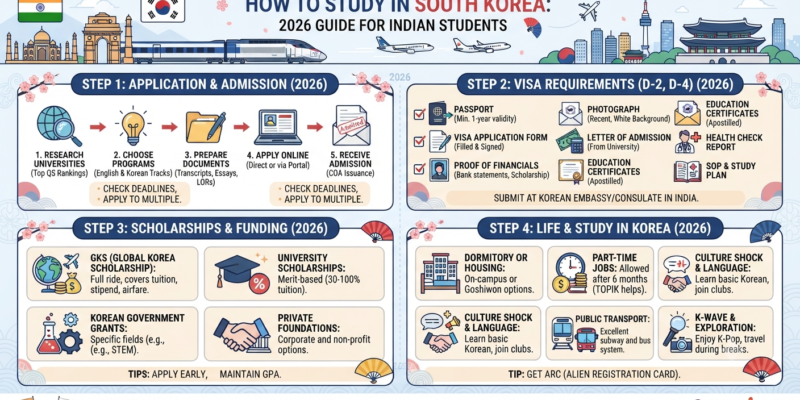
South Korea has become one of the most preferred study abroad destinations for Indian students. Between world class universities, growing scholarship programs, an affordable cost of living compared to the West and a fast growing job market in technology, engineering and business, Korea offers a strong return on investment for anyone planning to study overseas.
This guide walks you through everything you need to know about how to study in South Korea, from choosing the right course to applying for your student visa, understanding your budget and settling into student life after you land.
Why Indian Students Are Choosing South Korea
South Korea has moved beyond K-pop and K-dramas to become a genuine academic and economic powerhouse in Asia. The country is home to globally ranked universities, a strong research culture and a government that actively encourages international students through scholarships and post study work options.
Some of the biggest reasons Indian students choose Korea include lower tuition fees compared to the United States, United Kingdom or Australia, part time work permission for students, a safe and technologically advanced environment, and strong placement opportunities with Korean multinational companies such as Samsung, LG, Hyundai and SK Group.
If you are also comparing Korea with its neighbor, understanding the broader region helps. You can read more about how South Korea differs from its neighbor in this breakdown of differences between North and South Korea, which is useful background before you apply for a student visa.
Choosing the Right Course and University
Before applying, you need to decide what you want to study and where. South Korea has a wide mix of government universities, private universities and specialized technical institutes. Seoul remains the top choice for international students because of its concentration of top ranked institutions, but cities like Busan, Daegu and Incheon are also gaining popularity for their lower cost of living.
If Seoul is on your shortlist, it helps to compare institutions properly. This detailed list of top colleges in Seoul breaks down rankings, courses and admission requirements, while this guide to colleges in Seoul covers a broader list of options across disciplines.
For a nationwide view rather than just Seoul, this resource on universities in South Korea for international students is a good starting point to shortlist institutions based on your field of study, budget and language preference.
Korea also offers specialized language and cultural preparation courses before your degree begins. You can explore structured programs through our K Courses section, which covers everything from Korean language training to pre university foundation programs.
Eligibility Requirements After 12th Grade
Many Indian students want to begin their South Korea journey immediately after finishing school. The good news is that undergraduate admission after 12th grade is very much possible, provided you meet the academic and language requirements set by individual universities.
Generally, universities look at your class 12 marks, English proficiency scores such as IELTS or TOEFL, and in some cases a Korean language proficiency test known as TOPIK. Some universities also offer English medium programs that do not require Korean language skills at the undergraduate level, though basic Korean is always an advantage for daily life and part time work.
For a complete breakdown of eligibility, application timelines and required documents, read this dedicated guide on how to study in South Korea after 12th for Indian students.
Understanding the Student Visa Process
Once you have an offer letter from a recognized Korean university, the next step is applying for your student visa, commonly known as the D-2 visa for degree programs or D-4 visa for language courses. The process includes document verification, financial proof, health checks and an interview at the Korean embassy or consulate in India.
The visa process has become more structured in 2026, with clearer timelines and digital tracking systems introduced by Korean immigration authorities. If you want a step by step breakdown of documents, fees and processing time, this guide on the South Korea student visa process for Indian students covers everything in detail.
There is also a more detailed version aimed specifically at students and their parents, covering financial documentation and sponsor requirements, available in this South Korea study visa guide.
Once your visa is approved, it is worth tracking your application status closely, especially during peak intake seasons. This walkthrough on visa application tracking explains how to monitor your application at every stage so there are no last minute surprises.
Planning Your Budget and Cost of Living
One of the biggest advantages of studying in South Korea is affordability compared to Western countries. Tuition fees at public universities are generally lower than private ones, and many scholarships can significantly reduce your overall cost.
Beyond tuition, you also need to plan for accommodation, food, transport, health insurance and personal expenses. Costs vary depending on the city, with Seoul being the most expensive and smaller cities offering more budget friendly options.
For a full monthly breakdown covering rent, groceries, transport and utilities, this guide on the cost of living in South Korea per month is essential reading before you finalize your budget.
Accommodation is another major factor. If you are not staying in a university dormitory, guesthouses are a popular and affordable alternative for new students. Learn more about your options in this guide to affordable guesthouses in Korea for students.
Currency and Managing Your Money
Before you travel, it is important to understand how the Korean Won works and how much your Indian Rupees will actually be worth once converted. Exchange rates fluctuate, and knowing the current conversion helps you plan tuition payments, monthly budgets and emergency funds.
You can check a full explanation of the currency system and current conversion trends in this guide comparing South Korea currency with Indian currency. It is a good idea to bookmark this and revisit it periodically as rates change throughout the academic year.
Booking Flights and Planning Your Travel
Once your visa is stamped, the next big step is booking your flight to South Korea. Ticket prices vary depending on your departure city, the airline, layovers and how early you book. Most Indian students fly out of major hubs like Delhi, Mumbai, Bangalore or Hyderabad, with either direct or one stop connections to Seoul’s Incheon International Airport.
It is worth comparing prices well in advance, since fares tend to rise closer to the academic intake dates in March and September. Understanding airport infrastructure also helps if you are transiting through Korea. This guide on how many airports are in South Korea is useful if your flight involves a domestic connection after landing.
Adjusting to Student Life in Korea
Moving to a new country involves more than academics. Understanding local etiquette, food culture and daily habits will help you settle in faster and avoid unnecessary cultural friction. Korean society places a strong emphasis on respect, punctuality and hierarchy, especially in academic and workplace settings.
Our dedicated sections on K Culture and K Manners cover practical etiquette tips, from how to greet professors to dining customs, which are extremely helpful during your first few months.
For a broader look at daily routines, part time work, socializing and managing homesickness, our Student Life section shares real experiences and practical advice from students already living in Korea.
Career and Job Opportunities After Graduation
South Korea offers strong post study work opportunities, particularly for graduates in engineering, IT, business and life sciences. Many international students transition into full time roles with Korean companies or global firms operating in Korea, thanks to the country’s D-10 job seeker visa and various employment permit pathways.
If you are already thinking ahead to your career, this guide on jobs in Korea for Indians explains the most in demand sectors and how to transition from a student visa to a work visa.
You can also explore a wider list of best jobs in South Korea for foreign workers, which covers salary expectations and required qualifications across different industries.
Final Thoughts
Studying in South Korea in 2026 is a realistic and rewarding goal for Indian students, provided you plan carefully around university selection, visa documentation, budgeting and cultural preparation. Start early, compare universities honestly based on your field of interest rather than just rankings, and use every resource available to make an informed decision.
If you need personalized guidance on university shortlisting, visa documentation or scholarship applications, our team can help you at every step.