


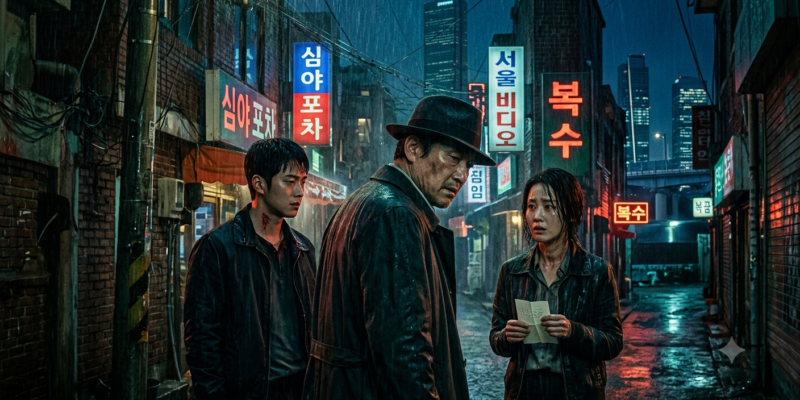
South Korea has become one of the most influential forces in global cinema. From the Oscar-winning masterpiece by Bong Joon-ho to dark psychological thrillers that leave international audiences speechless, Korean cinema has carved a permanent place in film history. If you are someone who wants to understand what makes South Korea film culture so powerful, this guide walks you through everything you need to know in 2026.
Why South Korea Film Industry Stands Apart from the Rest of the World
The Korean film industry did not rise overnight. Decades of creative investment, strong government support for the arts, and a culture that deeply values storytelling have together produced some of the most technically brilliant and emotionally complex films ever made.
Korean filmmakers are known for blending genres in ways that Hollywood rarely attempts. A single Korean film can shift from dark comedy to psychological thriller to social commentary within one scene, and do it seamlessly. This fearless approach to genre-mixing is one reason Korean movies consistently win at prestigious international film festivals.
The Korean Film Council, known as KOFIC, plays a central role in funding and promoting films both domestically and internationally. This institutional support has allowed independent directors to take risks that mainstream studios would never allow.
If you are planning to study in South Korea or simply want to understand its culture better, exploring Korean cinema is one of the most rewarding paths you can take.
A Brief History of Korean Cinema: From the 1900s to the Global Stage
Korean cinema traces its roots back to the Japanese colonial era in the early 20th century. The first Korean-made films appeared in the 1920s, though many of these early works were either lost or heavily censored under Japanese rule.
After Korea’s liberation in 1945 and the devastating Korean War of the 1950s, the film industry slowly rebuilt itself. The 1960s and 1970s saw a wave of melodramas and action films that captured the anxieties of a nation rebuilding from ruins.
The 1980s brought political censorship under military governments, which paradoxically led many filmmakers to develop subtle, allegorical storytelling techniques that would later become hallmarks of Korean culture in general.
The real turning point came in the late 1990s when the screen quota system was introduced, requiring Korean cinemas to screen domestic films for a minimum number of days each year. This policy protected Korean films from being overwhelmed by Hollywood imports and gave local talent space to grow.
By the 2000s, directors like Park Chan-wook, Kim Jee-woon, and Bong Joon-ho were already gaining international recognition. The rest, as they say, is history.
Top Korean Film Directors You Must Know in 2026
Bong Joon-ho
No conversation about South Korea film is complete without mentioning Bong Joon-ho. His film Parasite made history in 2020 by becoming the first non-English language film to win the Academy Award for Best Picture. Bong’s body of work, which includes Memories of Murder, The Host, and Okja, is defined by sharp class critique wrapped inside thrilling narratives.
Park Chan-wook
Park Chan-wook is one of the most visually inventive directors working anywhere in the world today. His Vengeance Trilogy, which includes Oldboy, is studied in film schools across the globe. His meticulous attention to visual composition combined with morally complex characters makes his work both disturbing and unforgettable.
Lee Chang-dong
Lee Chang-dong brings a quieter, more literary style to Korean cinema. Films like Poetry and Burning explore grief, memory, and social alienation with extraordinary restraint. Burning, released in 2018, was shortlisted for the Academy Award for Best International Feature Film.
Kim Jee-woon
Kim Jee-woon works confidently across multiple genres. His horror film A Tale of Two Sisters, his action thriller I Saw the Devil, and his period Western The Good, the Bad, the Weird demonstrate a filmmaker who refuses to be boxed into a single style.
Hong Sang-soo
Hong Sang-soo occupies a completely different space in Korean cinema. His low-budget, dialogue-driven films explore relationships, regret, and chance encounters with a minimalist style that has earned him a devoted international following among cinephiles.
Award-Winning Korean Movies That Changed World Cinema
The global reputation of South Korea film rests on a handful of films that genuinely changed what international audiences expect from cinema.
Parasite (2019) by Bong Joon-ho is the obvious starting point. This class satire about two families, one rich and one poor, becoming dangerously entangled won four Academy Awards and sparked a massive surge of interest in Korean films worldwide.
Oldboy (2003) by Park Chan-wook is still considered one of the most shocking and technically accomplished films of the 21st century. It won the Grand Prix at the Cannes Film Festival and introduced Western audiences to the raw intensity of Korean genre filmmaking.
A Tale of Two Sisters (2003) by Kim Jee-woon is one of the highest-grossing Korean horror films ever made and was remade in Hollywood as The Uninvited.
Spring, Summer, Fall, Winter and Spring (2003) by Kim Ki-duk is a meditative film set in a floating monastery that uses the cycle of seasons to explore Buddhist philosophy, guilt, and redemption.
Burning (2018) by Lee Chang-dong is a slow-burn mystery adapted from a Haruki Murakami short story. It was named the best-reviewed film of 2018 by Metacritic and has only grown in stature since.
Understanding why these films resonate can actually help you understand Korean student life and values, because Korean cinema is deeply rooted in the social pressures and historical memory that shape everyday Korean life.
The Korean New Wave: Understanding the Movement That Shaped Modern Cinema
Film scholars use the term Korean New Wave to describe the creative explosion in Korean cinema that began in the late 1990s and continued through the 2000s. During this period, a generation of filmmakers who had studied both Korean literary tradition and European art cinema began making films that defied easy categorization.
These directors shared certain characteristics. They were willing to portray violence without glamorizing it. They used genre conventions as a vehicle for social commentary. They trusted audiences to sit with ambiguity and moral complexity without demanding resolution.
The Korean New Wave was also deeply connected to the trauma of Korea’s 20th-century history, including Japanese colonization, the division of the peninsula, and the authoritarian governments of the 1970s and 1980s. These historical wounds appear again and again in Korean films, sometimes directly and sometimes through metaphor.
For those interested in the differences between North and South Korea, Korean cinema is one of the most illuminating ways to understand how the division of the peninsula continues to haunt the South Korean national psyche.
Korean Film Festivals: Where to Watch Korean Cinema
South Korea hosts several film festivals that are essential events in the global film calendar.
The Busan International Film Festival, known as BIFF, is the most important film festival in Asia. Founded in 1996, BIFF has been instrumental in introducing Korean films to international distributors and critics. It takes place every October and attracts filmmakers and industry professionals from around the world.
The Jeonju International Film Festival focuses specifically on independent and art-house cinema and has a reputation for championing experimental filmmakers.
The Bucheon International Fantastic Film Festival, or BIFAN, specializes in horror, fantasy, and science fiction films and has helped establish South Korea’s reputation as a leading producer of genre cinema.
If you are already in Korea or thinking about studying there, attending one of these festivals is an experience that goes far beyond watching films. These events are deeply embedded in Korean cultural life.
How Korean Streaming Has Changed the Way the World Watches Korean Films
The rise of Netflix and other streaming platforms has transformed the reach of South Korea film. Korean films that previously required art-house cinema screenings or DVD imports are now immediately available to audiences worldwide.
Netflix has made substantial investments in original Korean content, producing both films and series for global audiences. This has created new opportunities for Korean filmmakers while also raising questions about creative independence and whether streaming algorithms are beginning to shape what Korean filmmakers choose to make.
Disney+ and Apple TV+ have also entered the Korean content market, recognizing that Korean storytelling has genuine global appeal that goes beyond a niche audience.
For students and travelers interested in Korean culture, streaming Korean films is one of the easiest and most enjoyable forms of learning about Korean customs and manners before arriving in the country.
South Korea Film and the Global Hallyu Wave
The international success of South Korea film cannot be separated from the broader Hallyu wave, the global spread of Korean popular culture that also includes K-pop, Korean drama, Korean food, and Korean beauty products.
Korean films have served as cultural ambassadors, introducing international audiences to Korean landscapes, food, language, and social dynamics. This soft power has had real economic effects, driving tourism and increasing enrollment in Korean language courses around the world.
The relationship between Korean cinema and cultural diplomacy is something the South Korean government takes seriously. KOFIC regularly partners with international organizations to promote Korean films at festivals and markets worldwide.
Understanding this cultural context is particularly valuable for those considering universities in South Korea for international students, as Korean campus life is itself deeply shaped by the creative energy and cultural pride that has produced this remarkable film industry.
Korean Horror Films: A Genre That Redefined Fear
Korean horror cinema deserves its own recognition as a genre that has genuinely pushed the boundaries of what horror films can do. Unlike American horror, which often relies on jump scares and supernatural monsters, Korean horror tends to locate its terror in family dysfunction, social shame, and psychological breakdown.
The Wailing (2016) by Na Hong-jin is widely considered one of the scariest films ever made. It combines folk religion, demonic possession, and rural paranoia into a film that has no easy explanation and refuses to let audiences feel safe even after the credits roll.
Train to Busan (2016) used a zombie outbreak on a high-speed train to deliver a brutal critique of Korean corporate culture and class hierarchy. It became one of the highest-grossing Korean films in history and spawned an animated prequel and a sequel.
I Saw the Devil (2010) by Kim Jee-woon is technically a revenge thriller but operates with the logic and imagery of horror, using extreme violence to question whether revenge is ever truly satisfying or whether it simply turns the avenger into the monster they are pursuing.
Must-Watch Korean Films for Beginners in 2026
If you are new to South Korea film and want a starting point, this selection covers a range of genres and styles.
Parasite (2019) is the essential starting point for anyone who wants to understand why Korean cinema commands such international respect. It is funny, terrifying, and heartbreaking, sometimes within the same scene.
Oldboy (2003) is not for the faint of heart, but it is a masterwork of plotting, performance, and visual style that rewards repeated viewing.
The Handmaiden (2016) by Park Chan-wook is a lush, twisting period thriller set in colonial Korea and Japan that is both visually ravishing and narratively astonishing.
Train to Busan (2016) is the perfect gateway film for viewers who prefer genre cinema. It is genuinely thrilling and emotionally devastating.
My Sassy Girl (2001) is a romantic comedy that launched a wave of Korean romantic films and remains enormously popular throughout Asia. It is a good reminder that Korean cinema is not only darkness and social critique.
A Taxi Driver (2017) is based on the true story of a German journalist and a Korean taxi driver who witnessed the Gwangju Uprising of 1980. It is one of the most important historical dramas in Korean film history.
The Future of South Korea Film Industry in 2026 and Beyond
The South Korea film industry in 2026 is navigating a complex set of opportunities and challenges. The global appetite for Korean content has never been higher, but the rise of streaming has disrupted the theatrical distribution model that sustained Korean cinema for decades.
Many Korean directors are concerned that the pressure to produce content for streaming algorithms is beginning to erode the creative risk-taking that made Korean cinema great. Others see streaming as a democratizing force that allows Korean stories to reach audiences in countries that would never have had access to Korean films through traditional distribution channels.
The screen quota system, which once protected Korean cinema from Hollywood dominance, has come under pressure from international trade agreements. Korean filmmakers and cultural advocates continue to fight to maintain protections that give domestic films a fair chance against American imports.
What seems certain is that the creative talent within South Korea is not diminishing. A new generation of directors, many of them women and many from backgrounds outside the traditional film school pipeline, are beginning to make their mark. Korean cinema’s best years may still be ahead.
Conclusion: Why South Korea Film Deserves Your Full Attention
South Korea has produced a body of cinema that stands comparison with any national film tradition in history. From the raw intensity of Park Chan-wook to the philosophical depth of Lee Chang-dong to the genre mastery of Bong Joon-ho, Korean directors have consistently demonstrated that cinema can be both popular entertainment and profound art at the same time.
Whether you are a dedicated film enthusiast, a student researching Korean culture and courses, or simply someone who watched Parasite and wants to know more, the South Korean film industry offers an almost inexhaustible treasure chest of extraordinary movies waiting to be discovered.
Start watching. You will not regret it.