

South Korea has become an increasingly popular destination for expat families, diplomats, business professionals, and Indian parents relocating for work or long-term study opportunities. One of the most important decisions these families face is choosing the right international school for their children. This guide covers everything you need to know about international schools in South Korea, including curriculum types, admission requirements, fee structures, and how to choose the right fit for your child.
If your family is planning a move to Korea for work, higher education, or long-term residency, our study in South Korea specialists assist with the entire relocation process, from visas to school placement.
Why International Schools Matter in South Korea
Korean public schools primarily teach in Korean and follow the national curriculum, which can be challenging for children who do not speak the language fluently or who plan to continue their education abroad in the future. International schools bridge this gap by offering instruction in English, alongside curriculums recognized globally, such as the American, British, and International Baccalaureate systems.
For expat and Indian families in particular, international schools also provide a smoother transition for children who may eventually apply to universities in the United States, United Kingdom, Canada, Australia, or back in India, since the qualifications earned are widely recognized by admissions offices worldwide.
Who Can Enroll in International Schools in Korea
Historically, international schools in South Korea were primarily reserved for foreign passport holders, diplomatic families, and children who had spent a significant portion of their life abroad. However, regulations have relaxed over the years, and many schools now accept students based on residency history, parental visa status, and prior international school attendance rather than nationality alone.
Families relocating to Korea on an E-series work visa, a D-series business or investment visa, or those with dependent visas typically qualify for admission, provided they meet each individual school’s specific eligibility criteria. It is always best to check directly with the school’s admissions office, since requirements can differ between institutions and can change based on updated Ministry of Education guidelines.
Types of Curriculum Offered
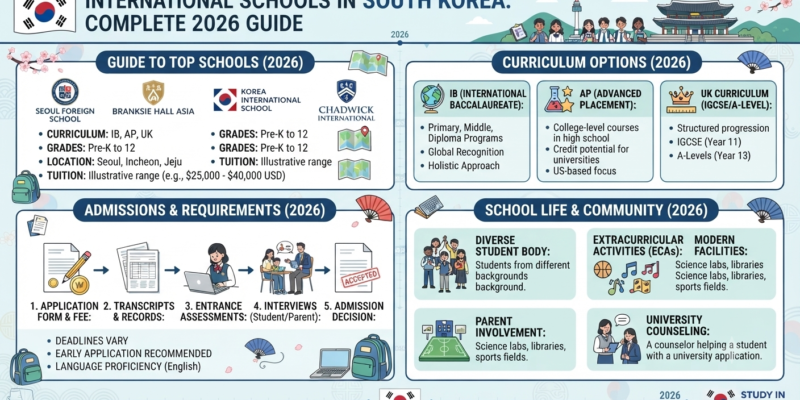
International schools in Korea generally follow one of the following curriculum frameworks, and understanding the differences can help parents choose the best long-term academic path for their child.
American Curriculum
Schools following the American curriculum typically offer Advanced Placement courses in the final years of high school, along with a broad, flexible subject selection. This curriculum is popular among families planning to send their children to universities in the United States or Canada.
British Curriculum
The British system, which includes IGCSEs and A Levels, is structured around specialization in fewer subjects during the final two years, making it a strong option for students with clear academic interests, particularly those aiming for universities in the United Kingdom.
International Baccalaureate
The IB Diploma Programme is offered by several premium international schools in Korea and is highly regarded for its rigorous, well-rounded approach, combining academics with community service, extended essays, and a theory of knowledge component. IB graduates are competitive applicants for universities across the globe, including in India, Europe, and North America.
Typical Fee Structure
Tuition fees at international schools in South Korea vary significantly depending on the school’s reputation, location, and curriculum, but families should generally expect substantial annual costs, particularly at the secondary school level. In addition to tuition, most schools charge separate fees for admission processing, capital development, technology, extracurricular activities, and school buses.
Families should also budget for uniforms, textbooks, and occasional overseas trips organized by the school for academic or cultural exchange purposes. It is advisable to request a full breakdown of fees directly from each shortlisted school before making a final decision, since published tuition figures do not always include all additional charges.
For families also planning their overall monthly budget in Korea, our detailed resource on the monthly cost of living for international students and expats is a useful reference alongside school fee planning.
Admission Process for International Schools
The admission process at most international schools in Korea generally follows a similar pattern, though exact steps and timelines vary by institution.
Step 1: Initial Inquiry and Application Submission Parents typically begin by submitting an online application along with the child’s academic records, birth certificate, passport copies, and visa documentation.
Step 2: Entrance Assessment Many schools require an entrance test or assessment in English and mathematics, particularly for students entering from a non-English medium background, to determine appropriate grade placement.
Step 3: Interview Some schools, especially at the secondary level, conduct interviews with both the student and parents to assess academic readiness and cultural fit.
Step 4: Offer and Enrollment Once accepted, families are required to pay a deposit or admission fee to secure the seat, followed by full tuition payment before the academic year begins.
Since popular international schools often have limited seats and waiting lists, especially for younger grades, it is recommended to apply well in advance of your planned relocation date.
Choosing the Right City for International Schooling
Seoul remains the primary hub for international schools in South Korea, given its large expat population and concentration of embassies, multinational corporations, and international business districts. However, other cities such as Busan, Incheon, and Jeju Island also host well-regarded international schools, particularly those catering to specific regional economic zones.
Families relocating to Seoul should also consider proximity to their workplace, transportation links, and neighborhood amenities when choosing between schools located in different districts of the city. Our comprehensive overview of Schools across Seoul covering international and public options can help narrow down location-based choices.
For families weighing whether to settle in the capital or explore other cities, our guide on life in South Korea for Indian families and students offers broader context on daily living conditions across different regions.
Language Support and Korean Integration
While international schools primarily teach in English, most reputable institutions also offer Korean language classes as part of the curriculum, recognizing the value of local language skills for children who may spend several years growing up in the country. This dual exposure helps children build friendships within the local community while maintaining strong academic performance in their primary curriculum language.
Parents concerned about their child’s long-term adjustment should ask prospective schools about their approach to cultural integration, buddy systems for new students, and counseling support for children transitioning from a different education system.
Visa Considerations for School-Going Children
Children accompanying parents on a work or business visa typically receive a dependent visa, which allows enrollment in international schools without requiring a separate student visa. However, specific documentation, including proof of the parent’s visa status and the school’s enrollment confirmation letter, is usually required during the visa application process.
Families should coordinate closely with both their employer’s relocation team and the chosen school’s admissions office to ensure all visa and enrollment paperwork aligns with the academic calendar. For families whose children may later pursue higher education independently in Korea, our detailed guide on the student visa process for Indian applicants provides useful groundwork for understanding Korea’s broader visa framework.
Accommodation Near International Schools
Many expat families choose to live in neighborhoods close to their child’s chosen school to minimize commute times, particularly in a city like Seoul where traffic can be significant during peak hours. Popular expat residential areas often cluster around specific international school campuses, creating a supportive community of families navigating similar relocation experiences.
If you are still finalizing your housing plans, our guide on apartment options in Seoul for expats and students offers helpful direction for families searching for accommodation close to top schools.
Extracurricular Activities and Campus Facilities
Top international schools in Korea typically invest heavily in extracurricular programming, including competitive sports, performing arts, robotics, debate, and community service initiatives. Campus facilities at premium institutions often rival those found in Western countries, featuring modern science labs, performing arts theaters, indoor swimming pools, and dedicated early childhood learning centers.
Parents should request a campus tour, either in person or virtually, before finalizing their decision, since facility quality can vary meaningfully even among schools offering the same curriculum framework.
Balancing Cost and Quality
While premium international schools in Korea can be expensive, several mid-tier and community-based international schools offer solid academic outcomes at a more manageable cost, particularly for families on a fixed relocation budget. It is worth comparing multiple schools across different price points rather than assuming that higher fees always translate to a better educational outcome for your specific child.
Speaking with current parent communities, checking university placement records, and reviewing accreditation status from recognized bodies are all practical ways to evaluate a school’s true value beyond its published fee structure.
Frequently Asked Questions
Can Indian families enroll their children in international schools in South Korea? Yes, many international schools accept children of Indian families on valid work, business, or dependent visas, though each school sets its own eligibility criteria, so direct confirmation with the admissions office is recommended.
What curriculum is most recognized for university admissions abroad? The American, British, and International Baccalaureate curriculums are all widely recognized internationally, and the best choice depends on which country’s university system the family is targeting long term.
Are international school fees in South Korea higher than in India? Generally, yes. International school fees in Korea, particularly in Seoul, tend to be higher than comparable international schools in major Indian cities, so families should budget accordingly.
Do international schools in Korea teach the Korean language? Most international schools include Korean language classes as part of their curriculum, helping children build local language skills alongside their primary academic program.
How early should families apply for international school admission in Korea? It is advisable to begin the application process at least six months to a year before the planned relocation date, since popular schools often have limited seats and waiting lists.
Final Thoughts
Choosing the right international school in South Korea is one of the most significant decisions for expat and Indian families relocating to the country. With a range of curriculum options, fee structures, and campus locations available, taking time to research and compare schools thoroughly will help ensure a smooth academic transition for your child.
For personalized guidance on relocating to Korea, including school selection, visa processing, and accommodation planning, our study in South Korea team is here to support your family’s journey every step of the way.