


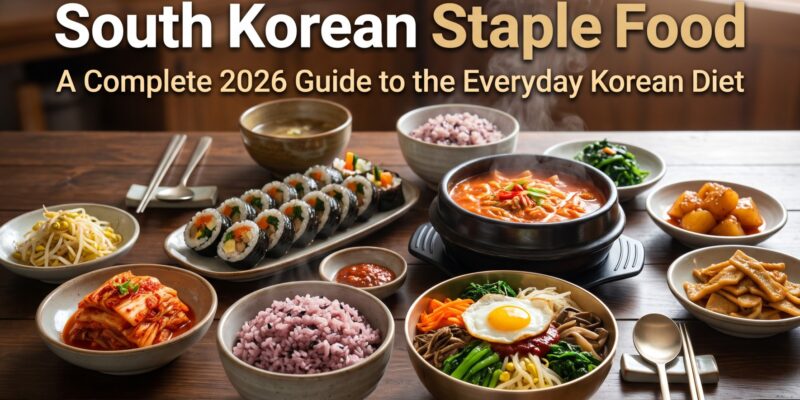
South Korean Staple Food: A Complete 2026 Guide to the Everyday Korean Diet
Ask anyone who has visited Seoul or Busan what stayed with them the longest, and food usually comes up before the palaces or the K-pop posters. But beyond the Korean BBQ grills and viral street snacks that show up on social media, there is a quieter, everyday layer of South Korean staple food that actually keeps the country running: rice, fermented vegetables, soybean pastes and simple soups that appear on nearly every table, every single day.
This guide breaks down the staple foods of South Korea the way a local household actually eats them, not just the dishes tourists photograph. If you are preparing to study in South Korea or simply curious about Korean food culture, this is the foundation worth learning first.
What Counts as a South Korean Staple Food
A staple food is something eaten routinely, in large quantity, forming the backbone of a region’s diet rather than an occasional treat. In South Korea, that role belongs to three things working together: steamed rice, fermented condiments like kimchi and doenjang, and a rotating set of small side dishes called banchan. Meat, seafood and noodles fill in around this base, but the base itself rarely changes.
Understanding this structure also makes sense of broader Korean food culture, where meals are shared, side dishes are refilled without extra charge at most local restaurants, and almost every dish traces back to one of these core staples.
Rice: The Foundation of Every Korean Meal
Short grain white rice, known as bap, sits at the center of the table for breakfast, lunch and dinner alike. It is slightly sticky, mildly sweet, and designed to be eaten with chopsticks alongside wetter dishes like soup or stew. Koreans have historically measured wealth and hospitality by how much rice a household could offer a guest, and that symbolic weight has not fully faded even as diets diversify.
Rice also forms the backbone of several standalone dishes that count among South Korea’s most recognizable exports:
- Bibimbap, a bowl of rice topped with seasoned vegetables, often meat, a fried egg and gochujang, mixed together before eating
- Gimbap, rice and fillings rolled in dried seaweed, popular as a portable lunch and student snack
- Kimchi bokkeumbap, kimchi fried rice made from leftover rice and kimchi, an everyday way to avoid food waste
- Juk, a soft rice porridge served to the sick, the very young, or anyone wanting something gentle on the stomach
Kimchi: South Korea’s Most Essential Fermented Staple
If rice is the base, kimchi is the constant companion. This spicy fermented side dish, most commonly made from napa cabbage and radish seasoned with chili pepper, garlic, ginger and salted seafood, appears at nearly every Korean meal regardless of what else is being served. Its roots stretch back roughly two thousand years, and the tradition of making kimchi in large community batches each autumn, known as kimjang, is recognized on UNESCO’s Intangible Cultural Heritage list.
Kimchi is not a single dish either. It branches into an entire family of its own:
- Kimchi jjigae, a hot stew built from aged kimchi, tofu and pork or seafood
- Kimchijeon, a savory kimchi pancake
- Kimchi mandu, dumplings filled with chopped kimchi and meat
- Kimchi ramen, instant or fresh noodles simmered with kimchi for extra tang
Students relocating for coursework or exchange programs often ask how kimchi fits into daily student life in South Korea, and the honest answer is that it becomes background noise almost immediately. Cafeteria trays, home-cooked meals and even some fast food combos include a small side of kimchi by default.
Fermented Pastes: Gochujang, Doenjang and Ganjang
Three fermented pastes and sauces quietly flavor most Korean cooking, and no serious discussion of Korean pantry staples is complete without them.
- Gochujang, a thick, sweet and spicy red chili paste made from fermented soybeans and glutinous rice, used in stews, marinades and as a dip
- Doenjang, a fermented soybean paste similar in spirit to miso, forming the base of the staple stew doenjang jjigae
- Ganjang, Korean soy sauce, which seasons soups, marinades and dipping sauces across nearly every regional cuisine in the country
These three ingredients explain why Korean food tastes distinctly different from neighboring Japanese or Chinese cuisine even when the techniques look similar on the surface.
Soups and Stews: Guk and Jjigae
No traditional Korean meal is considered complete without a liquid component, broadly split into lighter guk (soup) and heartier jjigae (stew). These dishes round out the plate of rice and banchan, and several of them count as staples in their own right:
- Doenjang jjigae, the everyday soybean paste stew mentioned above
- Kimchi jjigae, the kimchi-based stew already covered
- Miyeokguk, a seaweed soup traditionally eaten on birthdays and by new mothers for its nutritional value
- Sundubu jjigae, a soft tofu stew served bubbling hot in a stone pot
- Tteokguk, a rice cake soup eaten on Lunar New Year, symbolically adding a year of age
Banchan: The Side Dishes That Round Out Every Plate
Banchan refers to the small shared side dishes placed around the rice bowl at the center of a Korean table. Beyond kimchi, a typical spread might include seasoned bean sprouts, braised potatoes, pickled radish, stir fried fish cakes or seasoned spinach. The exact lineup changes by season, region and household, but the format stays constant: several small plates eaten in rotation with rice, never finished alone.
This format mirrors how Korean culture approaches hospitality more broadly, a theme also covered in the site’s broader look at Korean culture and traditions.
Noodles and Street Food Staples
While rice dominates formal meals, noodle dishes and street food fill the gaps between them and deserve a place in any list of South Korean staple food.
- Japchae, glass noodles stir fried with vegetables and often beef, served at celebrations and casual meals alike
- Jjajangmyeon, wheat noodles in a thick black bean sauce, a Korean adaptation of a Chinese dish that is now considered comfort food in its own right
- Tteokbokki, chewy rice cakes simmered in a spicy-sweet red sauce, one of the most popular street snacks in the country
- Odeng or eomuk, skewered fish cakes simmered in broth, commonly sold from street carts, especially during the colder months and festivals like the Boryeong mud festival season
Building a Korean Pantry: The Essential Staples to Stock
Anyone trying to cook Korean food at home, including students living independently abroad, can start with a short list of pantry staples rather than chasing every ingredient at once:
- Short grain rice
- Gochujang (red chili paste)
- Doenjang (soybean paste)
- Soy sauce (ganjang)
- Gochugaru (Korean red chili flakes)
- Sesame oil
- Garlic and ginger
- A jar of ready-made kimchi
These eight items cover the base of nearly every recipe mentioned in this guide. For students and travelers who also want to know where to buy these ingredients once settled in, the site’s guide to South Korean stores and local markets is a useful next read, and it pairs well with general tips on daily life in South Korea for newcomers budgeting their groceries.
A Typical Daily Meal Structure
Put together, a traditional Korean meal, whether breakfast, lunch or dinner, usually follows the same shape:
- A bowl of steamed rice
- A soup or stew (guk or jjigae)
- Kimchi, almost without exception
- Two to four additional banchan side dishes
- A main protein that changes by meal, from grilled fish in the morning to meat or seafood in the evening
This repeating structure is exactly why rice, kimchi and fermented pastes qualify as true staples rather than just popular dishes: they show up regardless of what else is on the table.
Frequently Asked Questions
What is the main staple food of South Korea? Short grain white rice is the main staple, served at nearly every meal alongside kimchi and a rotating set of banchan side dishes.
Why is kimchi considered a South Korean staple food? Kimchi appears at almost every Korean meal, is prepared in large seasonal batches through the kimjang tradition, and serves as the base ingredient for many other staple dishes like kimchi jjigae and kimchi fried rice.
What do Koreans eat for breakfast, lunch and dinner? A typical Korean meal repeats the same basic structure across all three: steamed rice, a soup or stew, kimchi and two to four banchan side dishes, with the main protein varying by time of day.
What are the basic ingredients in a Korean pantry? A basic Korean pantry keeps short grain rice, gochujang, doenjang, soy sauce, sesame oil, garlic, gochugaru and a jar of kimchi on hand at all times.
Is Korean food always spicy? No. While gochujang and gochugaru add heat to many dishes, staples like steamed rice, miyeokguk and tteokguk are mild, and spice level varies widely by household and region.
Planning to experience these staple foods firsthand while studying abroad? Explore our complete guide on how to study in South Korea for Indian students to get started.