

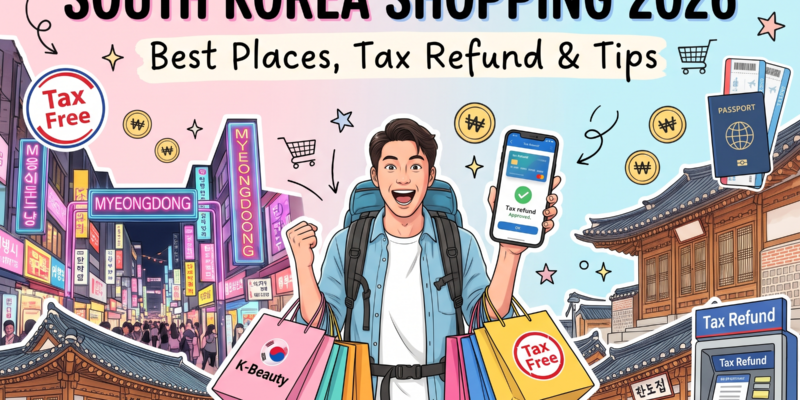
South Korea shopping is one of the main reasons travelers and students fall in love with the country. In a single day you can browse a glass-fronted K-beauty flagship in Myeongdong, hunt for street fashion in Hongdae, haggle in a century-old market, and finish with midnight wholesale shopping in Dongdaemun. This guide explains where to shop in South Korea, what to buy, how the tourist tax refund works, how much to budget in rupees, and how to avoid common mistakes.
It is written for Indian travelers and international students, so you will also find practical notes on payments, baggage rules and student shopping for a first apartment. Prices, refund thresholds and sale dates change often, so treat the figures here as planning guidance and confirm details at the store or with the Korea Customs Service before you buy.
South Korea Shopping at a Glance: Where to Go for What
| You want | Best place to shop | Why it works |
|---|---|---|
| K-beauty and skincare | Myeongdong, Olive Young stores | Huge selection, frequent promotions, many tax free counters |
| Trendy fashion at low prices | Dongdaemun, Hongdae | Wholesale malls, indie labels, late night hours |
| Traditional crafts and gifts | Insadong, Namdaemun Market | Tea, ceramics, stationery, souvenirs |
| Luxury and premium brands | Apgujeong, Cheongdam, department stores | Flagships, duty free access |
| One stop mall day | COEX and Starfield, Lotte World Mall | Shopping, food and entertainment together |
| Cheap daily essentials | Daiso, convenience stores, large marts | Low prices, easy to find |
Best Places for Shopping in South Korea by City and Budget
Where you shop matters as much as what you buy. Seoul is the center of most trips, but Busan and Jeju add very different experiences.
Seoul Shopping Districts: Myeongdong, Dongdaemun, Hongdae and Gangnam
Myeongdong is the best known stop for K-beauty, street food and tourist-friendly service. Brand flagships, multi-brand stores and sheet mask shops sit side by side, and staff are used to foreign visitors. Many shops here are set up for tax free receipts, which is why first-time visitors often start in Myeongdong.
Dongdaemun is the fashion engine of the city. Wholesale and retail malls sell clothing, bags, shoes and accessories, and many buildings stay open late into the night. The Dongdaemun Design Plaza anchors the area and is worth a look even if you are not buying.
Hongdae is the choice for indie fashion, accessories, vintage pieces and student-friendly prices. Weekend street performances and small boutiques make browsing part of the entertainment. Nearby Seongsu has become a hub for pop-up stores and trend-led brands.
Gangnam and Garosu-gil are better for premium brands, concept stores and polished cafes. Underground arcades near major Gangnam stations are a budget-friendly alternative, especially for casual clothes and accessories.
For a deeper look at one mall that mixes shopping, dining and entertainment, read our COEX Seoul complete guide.
Traditional Markets and Souvenir Shopping in Insadong and Namdaemun
Namdaemun is among Korea’s oldest and busiest traditional markets, selling clothing, kitchenware, food and everyday goods. Insadong focuses on tea houses, calligraphy tools, ceramics and handicrafts, making it a reliable place for gifts. Bargaining is possible in traditional markets but not in department stores or brand shops.
Busan and Jeju Shopping: Seomyeon, Nampo-dong, Centum City and Duty Free
In Busan, Seomyeon and Nampo-dong offer street fashion and snacks, while Centum City is known for a very large department store. Jeju’s duty free shops attract outbound travelers who want to buy cosmetics, fashion or spirits before departure. If you are planning a stay in Busan, see our guide to the best hotels in Busan to choose a base near the shopping areas.
For a broader overview of brands, malls and local markets, our South Korea stores guide lists major retail names and where to find them.
What to Buy in South Korea: Cosmetics, Fashion, Snacks and Souvenirs
Knowing your priorities saves both time and money. The categories below are consistently the most popular with visitors.
K-Beauty and Skincare Shopping in South Korea
K-beauty is the headline category. Olive Young is Korea’s largest health and beauty chain, with branches across the country and a flagship in Myeongdong. It stocks local brands and imported products side by side, and its sale periods draw repeat foreign visitors. Prices often match or beat brand flagship stores, and many branches offer an instant tax refund counter or kiosk.
Smart buying tips for skincare:
- Test products on your hand, but remember skin reacts differently over time, so buy small sizes of new serums first.
- Check expiry dates, especially on discounted stock.
- Pack liquids in checked baggage when possible, because cabin bags are limited to small containers.
- If you want to understand why this industry is so influential, read about K-beauty standards and Korean beauty culture.
Korean Fashion and Street Style Shopping
Korean fashion mixes minimalist basics, oversized layers and bold street looks. Dongdaemun and Hongdae are the best places for affordable pieces, while online platforms like Musinsa are popular for local brands. Sizes can run smaller than Indian sizing, so try items on when you can and read exchange rules before paying.
Korean Snacks, Groceries and Food Gifts
Instant noodles, seaweed snacks, honey butter chips, tea, ginseng products and sauces make easy gifts. Large supermarkets and convenience stores are cheaper than airport shops, and many carry vacuum-packed or travel-friendly versions. Check customs rules for the food items you plan to carry home, since some meat, dairy and fresh produce are restricted.
Souvenirs, Stationery and Famous Korean Products
Stationery, character goods, hanbok accessories, traditional tea sets and K-pop merchandise are popular souvenir categories. Our list of famous Korean products you can buy and bring home goes through the most reliable picks, and the guide to famous things in South Korea helps you match purchases to the experiences you enjoyed.
South Korea Tax Refund for Tourists: How Tax Free Shopping Works
South Korea charges a 10 percent value added tax on most goods, and eligible tourists can claim part of it back. After service fees, shoppers commonly recover a smaller percentage than the full 10 percent, with figures such as 5 to 8 percent often quoted by refund operators. Rules change, so verify the current thresholds before shopping.
Who Qualifies for the Korea Tourist Tax Refund
Eligibility generally covers foreign visitors who have stayed in Korea for less than six months, and purchases usually need to leave the country within three months of the sale date. Many tax free shops set a minimum spend per receipt, and recent guides commonly cite roughly 30,000 won. Always carry your passport, because stores will scan it.
Instant Tax Refund vs Airport Refund in South Korea
There are two main methods:
- Instant refund at the store. At participating shops such as Olive Young and many department stores, the tax is deducted at checkout, and you carry the goods out of the country. Limits on the per purchase amount apply, so ask staff before paying.
- Refund after purchase. You pay the full price, keep the tax free receipt, and process the refund through a kiosk or counter at the airport before departure.
Arrive early at the airport, because refund counters and customs checks can create queues, and you may need to show unused goods for certain items.
Tax Free vs Duty Free in South Korea
Tax free means you get the VAT portion refunded at regular stores. Duty free shops are different: they sell goods without certain taxes to travelers who are about to leave the country, often with pickup at the airport. Duty free can be cheaper for some luxury goods, while tax free shopping is more flexible for everyday items. Compare both before committing to a big purchase.
South Korea Shopping Prices in Rupees: Budget Planning for Indian Travelers
A simple way to plan is to convert from won to rupees with the live rate before you set out. As an example only, if one won equals 0.06 rupees, then 30,000 won equals 1,800 rupees. Check a current rate on the day you shop, using our guide to the Korean won to Indian rupee rate and our explainer on the value of one rupee in South Korea for quick mental math.
| Item | Typical price range in won | Notes |
|---|---|---|
| Sheet mask (single) | 1,500 to 3,000 | Packs are cheaper per piece |
| Sunscreen or moisturizer | 10,000 to 30,000 | Sale periods can lower prices |
| Daiso household items | 1,000 to 5,000 | Good for student essentials |
| Street food snack | 2,000 to 6,000 | Common in Myeongdong and markets |
| T-shirt in Dongdaemun | 10,000 to 30,000 | Higher in department stores |
| Casual shoes | 40,000 to 120,000 | Brand and sale dependent |
These are rough ranges seen in typical tourist areas and can vary widely by season and brand. For wider trip budgeting, read our full guide to South Korea in Indian rupees and the Korean won explained overview.
Best Time for Shopping in South Korea: Sale Seasons and Festivals
Timing can cut your bill significantly. Common sale windows include seasonal clearance at department stores, brand promotions around public holidays, online events such as Black Friday and November shopping festivals, and Olive Young sale periods several times a year. Dates change each year, so check store announcements before booking flights.
Weather also affects the experience. Summer is hot and humid, so shopping in malls and underground arcades is more comfortable, while winter brings clearance sales but requires warm layers. Our guide to the Korean winter season covers what to pack, and the list of public holidays in South Korea shows which days stores run special offers or close early.
Online Shopping in South Korea: Coupang, Musinsa, Olive Young Global and More
Online shopping is a major part of Korean retail. Coupang is known for fast delivery, Musinsa for fashion, Kurly for fresh groceries, and Olive Young has a global store for overseas buyers. Many domestic sites ask for a Korean phone number or payment method, so international students often set these up after arrival. Global versions of major platforms are easier for short-term visitors. Compare shipping fees and returns before you order.
Shopping in South Korea for International Students: Groceries, Furniture and Second Hand
Students need a different shopping list from tourists. Start with bedding, kitchen basics and storage from Daiso and large marts, then add groceries from supermarkets and convenience stores. Second-hand marketplaces and local community apps are popular for furniture and appliances, and they can cut setup costs dramatically. If you are still looking for a place to live, see our guide to apartments for rent in South Korea and plan your spending with the monthly cost of living in South Korea.
How to Pay and Bargain While Shopping in South Korea
International Visa and Mastercard cards are accepted at most malls, department stores and chains, and cash is useful in traditional markets and small stalls. Contactless and mobile payment are widely used. Bargaining is common in traditional markets, but polite and gentle; at fixed-price stores and malls, prices are firm. Always confirm the price and any tax before paying, and keep your receipts for tax refund and return purposes.
South Korea Shopping Tips, Scams and Return Policy
- Compare prices across at least two stores for expensive items.
- Check tax free eligibility before you reach the cashier, not after.
- Be careful with counterfeit goods in some market stalls and with unusually cheap electronics.
- Return and exchange policies can be strict for tourists, so ask about them at checkout and keep tags and packaging.
- Avoid carrying large amounts of cash, and watch your bag in crowded areas. For wider travel safety, read whether South Korea is safe for Indians.
- Learn basic etiquette, such as polite greetings and not touching products with dirty hands. Our guide to Korean etiquette and manners explains more.
Bringing Your South Korea Shopping Back to India: Customs and Baggage Rules
Indian customs rules allow a duty-free baggage allowance for eligible returning travelers, commonly cited as 50,000 rupees for items carried as baggage, but you should confirm the latest limit on the official customs website before you fly. Gold, electronics and large quantities of goods can attract duty. Keep invoices handy, avoid restricted food items, and consider airline baggage weight limits before buying heavy goods. If you need flights for a shopping trip, compare India to South Korea ticket prices so you can plan your baggage allowance as well as your budget.
One Day South Korea Shopping Itinerary in Seoul
- Morning: start at Myeongdong for K-beauty and a tax free skincare haul, followed by a Korean breakfast.
- Afternoon: head to Insadong for souvenirs and tea, then walk to a nearby market for street snacks.
- Evening: visit Dongdaemun for fashion and late night malls.
- Night: enjoy the lights, and for ideas on after-dark views, see our guide to South Korea night view.
If you are building a full trip, use our 7 day South Korea itinerary, compare luxury hotels in Seoul or guest houses in South Korea, and read the complete trip to South Korea from India guide. Visa details are covered in our South Korea visa for Indian passport holders article.
FAQs About South Korea Shopping
What is the best place for shopping in South Korea?
Myeongdong is best for K-beauty and tourist-friendly shopping, Dongdaemun for fashion and late night malls, Hongdae for indie style, and Insadong for traditional souvenirs.
How does the tax refund work in South Korea?
Foreign tourists can reclaim part of the 10 percent VAT on purchases at tax free shops. You can get an instant refund at participating stores or claim at an airport kiosk or counter, and you must carry your passport and keep the receipts.
Is shopping in South Korea cheap?
It depends on the category. Daiso items, street food and market clothing are cheap, while branded fashion and luxury goods cost about the same as elsewhere. Sales and tax refunds can lower prices further.
What should I buy in South Korea?
Popular purchases include skincare and cosmetics, fashion, stationery, tea, snacks and K-pop merchandise.
Can I bargain in South Korea?
You can bargain gently in traditional markets, but not in malls, department stores or brand shops.
Do Indian cards work in South Korea shops?
International Visa and Mastercard cards are accepted in most malls and chains, and cash is useful in markets. Check with your bank about foreign transaction fees before you travel.
What is the best time for shopping in South Korea?
Seasonal clearance periods, Olive Young sales and online festivals offer the best discounts. Check current sale calendars before your trip.
Conclusion: Plan Your South Korea Shopping Trip with Confidence
South Korea shopping rewards travelers who plan a little. Choose districts that match your goals, use tax free counters, convert prices to rupees before you buy, and respect customs and baggage rules on the way home. Whether you are visiting for a week or settling in for a degree, the best approach is to compare, ask questions and keep your receipts. For guidance on studying or traveling in Korea, contact the Study in South Korea team or explore more of the Korean culture section and our overview of must-visit places in South Korea.