


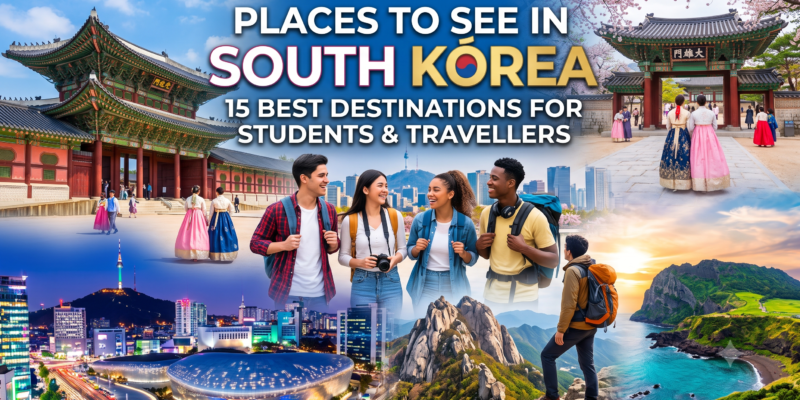
South Korea packs ancient palaces, neon cities, volcanic islands, misty mountains and beach towns into a country smaller than many Indian states. That compact size is exactly why the places to see in South Korea are so easy to combine in a single trip, or to explore slowly over a semester of study.
Whether you are planning a holiday from India, preparing for university life in Seoul, or hunting for weekend trips between classes, this guide covers the best places to visit in South Korea, what makes each one special, and how to plan your visit.
Quick Overview: Top Attractions in South Korea
| Region | Must-see highlights |
|---|---|
| Seoul | Gyeongbokgung Palace, Bukchon Hanok Village, N Seoul Tower, Myeongdong, Hongdae |
| Gyeonggi | DMZ, Suwon Hwaseong Fortress, Nami Island |
| Busan | Haeundae Beach, Gamcheon Culture Village, Haedong Yonggungsa Temple |
| Jeju | Hallasan, Seongsan Ilchulbong, Manjanggul Lava Tube |
| Gyeongju | Bulguksa Temple, Daereungwon Tombs |
| Gangwon | Seoraksan National Park |
| Jeonbuk | Jeonju Hanok Village |
1. Gyeongbokgung Palace, Seoul
The grandest of Seoul’s royal palaces, Gyeongbokgung dates back to the Joseon dynasty and sits in front of the mountains in the heart of the city. Arrive for the changing of the royal guard ceremony, and consider renting a hanbok (traditional Korean dress), since wearing one often gets you free entry to major palaces. Entry fees are modest, usually just a few thousand won.
2. Bukchon Hanok Village, Seoul
Between Gyeongbokgung and Changdeokgung palaces, Bukchon is a hillside neighbourhood of traditional Korean houses. The alleys give some of the best photo spots in Seoul. Remember that people live here, so keep your voice low and follow the posted visiting hours. To learn more about customs and etiquette, visit our K-culture section.
3. N Seoul Tower on Namsan Mountain
Take the cable car or hike up Namsan to reach the tower, then enjoy sweeping views over the Han River and the skyline, especially at sunset. Couples attach “love locks” at the base, and the night lighting is spectacular. For tickets, hours and tips, read our N Seoul Tower visitor guide.
4. Myeongdong and Hongdae
For shopping, street food and K-beauty, head to Myeongdong. For nightlife, indie music and student energy, go to Hongdae, near Hongik University. If you enjoy malls and exhibitions, add COEX in Seoul to your list. Our full Seoul South Korea travel guide covers more neighbourhoods and an itinerary.
5. The DMZ (Demilitarized Zone)
One of the most unusual tourist places in the world, the DMZ lies close to Seoul and divides the Korean peninsula. Tours usually include observation points, tunnels and the Joint Security Area, subject to security conditions. Book in advance and carry your passport. To understand the background, read our guide to the North Korea and South Korea border and DMZ.
6. Suwon Hwaseong Fortress
A UNESCO World Heritage Site about an hour from Seoul by train, Hwaseong is a walkable 18th-century fortress wall with gates, towers and traditional archery demonstrations. It makes an easy half-day trip for students living in the capital.
7. Nami Island
Famous for tree-lined avenues and its starring role in popular Korean dramas, Nami Island is best in autumn for golden leaves and in winter for snow. You reach it by a short ferry ride. If you plan a visit in the cold months, our South Korea winter season guide explains what to wear and expect.
8. Haeundae Beach, Busan
South Korea’s second-largest city, Busan, is a port city with beaches, seafood markets and mountain views. Haeundae is the most famous beach, perfect in summer and lively during festivals. Nearby, you can ride the Blue Line Park coastal train and sample fresh seafood at Jagalchi Market. Need somewhere to stay? Check the best hotels in Busan.
9. Gamcheon Culture Village, Busan
A hillside district of pastel houses and winding stairways, Gamcheon is often called the Machu Picchu of Busan. Pick up a stamp-trail map at the entrance, and wear comfortable shoes because the lanes are steep.
10. Haedong Yonggungsa Temple
Most Korean temples sit in the mountains, but this one stands on the sea cliffs. Sunrise visits are quiet and beautiful, and the contrast of waves and temple roofs makes it one of the most photogenic places to see in South Korea.
11. Jeju Island
Called Korea’s Hawaii, Jeju Island is a volcanic island with waterfalls, lava tubes, beaches, tangerine orchards and the country’s highest peak, Hallasan. Must-sees include:
- Seongsan Ilchulbong (Sunrise Peak), a crater rising from the sea
- Manjanggul Lava Tube, one of the longest lava tunnels
- Hallasan National Park, with hiking trails for different levels
- Haenyeo (women divers) shows and seafood restaurants
Jeju is reachable by short domestic flights from Seoul and Busan, so it fits both short trips and long weekends. In spring, canola flowers turn the island yellow, which we cover in our spring in South Korea guide.
12. Gyeongju: The Museum Without Walls
The capital of the ancient Silla kingdom, Gyeongju is full of royal tombs, temples and pagodas. Highlights include Bulguksa Temple and the Seokguram Grotto, both UNESCO listed, and Daereungwon, a park of grass-covered tomb mounds. Visit at dusk when ponds like Donggung Palace and Wolji reflect the lights.
13. Seoraksan National Park
Located in Gangwon Province, Seoraksan offers rocky peaks, hot springs, temples and cable car rides. Autumn foliage here is among the best in Korea, usually peaking between October and early November. Trails range from gentle walks to challenging climbs.
14. Jeonju Hanok Village
Jeonju is the home of bibimbap and a centre of traditional culture. The village has over 700 hanok buildings, plus street snacks, craft shops and a lively food scene. Try the local makgeolli (rice wine) if you are of legal age.
15. Boryeong and the Summer Festivals
If you travel in July, check out the Boryeong Mud Festival, a lively beach event with mud pools, slides and music. Read more in our Boryeong Mud Festival guide.
Best Time to Visit South Korea
South Korea has four distinct seasons, so the best time depends on what you want to do:
- Spring (March to May): cherry blossoms, mild weather and festivals
- Summer (June to August): beaches and festivals, but with heat, humidity and a monsoon spell
- Autumn (September to November): clear skies and bright foliage, often considered the best season
- Winter (December to February): snow, ski resorts and hot-spring trips, but very cold
If you are travelling from India, October and April are popular because the weather is comfortable and scenery is at its best. Our guide to the rain season in South Korea helps you avoid heavy downpours.
Getting Around South Korea
Public transport is outstanding:
- KTX high-speed trains link Seoul with Busan in roughly 2.5 to 3 hours
- Subways operate in Seoul, Busan, Daegu, Daejeon, Gwangju and Incheon
- Express and intercity buses reach nearly every town
- T-money cards work on subways, buses and many taxis
- Domestic flights connect Seoul with Jeju quickly
Download a Korean map app such as Naver Map or KakaoMap, since Google Maps has limited walking and transit directions in Korea.
Travelling from India: Quick Planning Tips
- Check your visa requirements. Most Indian citizens need a visa for tourism. Start with our South Korea visa guide for Indian passport holders, and see whether the South Korea e-visa for Indians applies.
- Compare flights. Fares differ by city and season. See our trip to South Korea from India guide for routes and tips.
- Pick a stay. Budget travellers can look at a South Korea guest house guide, while others can compare hotel booking options in Korea.
- Plan your days. Our 7-day South Korea itinerary gives a day-by-day route for first-time visitors.
- Know the safety basics. Read about whether South Korea is safe for Indians before you go.
Sample 7-Day Route Using These Places
- Days 1 to 3: Seoul (Gyeongbokgung, Bukchon, N Seoul Tower, Myeongdong, Hongdae)
- Day 4: DMZ tour or Suwon Hwaseong Fortress
- Days 5 to 6: Busan (Haeundae, Gamcheon, Haedong Yonggungsa)
- Day 7: Return to Seoul by KTX and fly home, or add a flight to Jeju if you have extra days
Tips for Students Exploring Korea
Students can explore a lot on a small budget. Many museums and palaces offer discounts, regional passes reduce travel costs, and weekend trips to places like Suwon, Nami Island and Gyeongju are affordable. Join university clubs and international student groups to share transport and costs. Visit our student life section for more on balancing study and travel, and read how to study in South Korea if you are considering a longer stay. You may also like our list of famous things in South Korea to build the rest of your bucket list.
Etiquette and Cultural Tips
- Remove your shoes in homes, some restaurants and temples
- Use two hands when giving or receiving items from elders
- Do not tip; it is not expected
- Keep quiet on public transport
- Respect temple rules, including dress and photography limits
More guidance is available in our K-manners section.
Frequently Asked Questions
What are the top places to see in South Korea for first-time visitors?
Seoul’s palaces and neighbourhoods, Busan’s coast, Jeju Island and Gyeongju are the most popular first-timer destinations because they cover culture, nature and modern city life.
How many days do you need to see South Korea?
Seven days is enough for Seoul and Busan. Ten to fourteen days lets you add Jeju, Gyeongju and Seoraksan at a comfortable pace.
Which is better to visit, Seoul or Busan?
Seoul offers palaces, shopping and nightlife, while Busan offers beaches, seafood and a relaxed port atmosphere. Most travellers do both.
When is the best time to visit Jeju Island?
Spring and autumn are comfortable for hiking and sightseeing. Summer suits beaches, while winter brings snow on Hallasan.
Is South Korea expensive for Indian tourists?
Costs vary. Seoul and Jeju hotels can be pricey, but street food, public transport and guesthouses are affordable. Plan ahead and compare options.
Final Thoughts
From palace gates in Seoul to volcanic cliffs on Jeju, the places to see in South Korea offer something for every kind of traveller. Choose a season, pick two or three regions, and let efficient transport do the rest.
Planning to live in Korea rather than just visit? Contact our team for help with admissions, visas and student life.
Disclaimer: Opening hours, ticket prices, tour rules and seasonal conditions change. Verify details with official sources before you travel.