


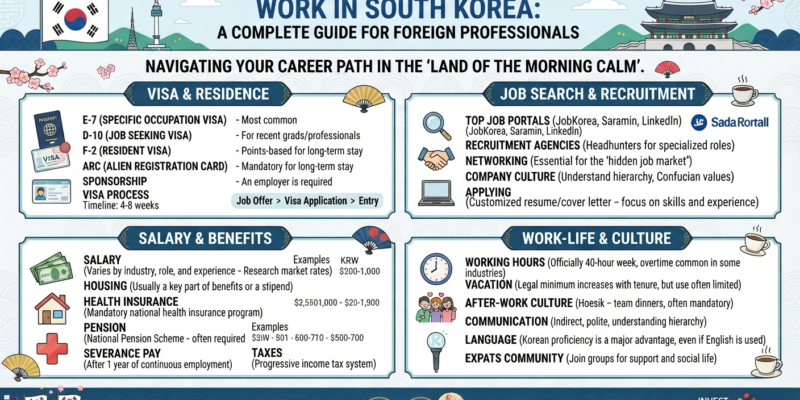
South Korea has emerged as one of the leading destinations in Asia for skilled professionals, students, and foreign workers seeking new career opportunities. With its advanced technology sector, strong manufacturing base, and growing demand for foreign talent, working in South Korea has become an increasingly attractive path for Indians looking to build an international career. This guide covers everything you need to know before making the move, from visa requirements to salary expectations and job hunting strategies.
Why South Korea Attracts Foreign Workers
South Korea’s economy is built on a foundation of technology, manufacturing, and innovation, home to global giants in electronics, automobiles, and shipbuilding. The country has increasingly opened its labor market to foreign professionals, particularly in fields like information technology, engineering, research, and education.
Beyond the professional opportunities, many foreign workers are drawn to Korea’s efficient infrastructure, safety standards, and cultural richness. Understanding daily life in the country beforehand can make the transition smoother, and this guide to life in South Korea for Indians and students offers useful context on what to expect beyond just the workplace.
Types of Work Visas in South Korea
Foreign nationals looking to work in South Korea typically need a specific type of work visa depending on their job category, qualifications, and industry. These range from visas for professional and specialized roles to those for skilled and general labor positions. The application process usually requires a confirmed job offer, relevant qualifications, and sometimes language proficiency depending on the role.
For students who plan to transition from studying to working in Korea, it is important to first understand the requirements of a student visa for Indian applicants, since many professionals begin their journey in Korea as international students before shifting to a work visa after graduation.
Those planning a longer term stay, potentially leading to permanent residency, should also familiarize themselves with the broader citizenship and naturalization requirements in South Korea, which outlines the pathway from temporary visa status to long term residency.
Popular Job Sectors for Foreign Workers
South Korea’s economy offers opportunities across a wide range of industries. Technology and engineering roles remain among the most in demand, particularly given the country’s strong semiconductor, electronics, and automotive industries. Education is another major sector, with many foreign professionals working as English or foreign language instructors across schools and private academies.
This comprehensive overview of the best jobs available for foreign workers in South Korea breaks down the most accessible and rewarding career paths for newcomers, including entry level and specialized positions.
For Indian professionals specifically, there are dedicated resources exploring career pathways tailored to their qualifications and interests. This guide on jobs in Korea for Indians covers everything from application strategies to workplace expectations specifically relevant to the Indian job seeking community.
Finding the Right Employer
Identifying reputable companies is a crucial part of the job search process. South Korea is home to numerous multinational corporations as well as strong domestic companies across various sectors, from technology to consumer goods. Researching potential employers before applying can help you understand company culture, benefits, and career growth opportunities.
This directory of companies operating across South Korea is a valuable resource for job seekers trying to identify potential employers that align with their skills and career goals.
Understanding Salary Expectations
Before accepting a job offer, it is essential to understand how compensation works in South Korea. Salaries vary significantly by industry, experience level, and location, with cities like Seoul generally offering higher wages alongside a higher cost of living.
To get a realistic sense of entry level compensation, this guide on minimum wage and monthly income standards in South Korea explains the baseline figures that apply across most industries.
For a broader understanding of earning potential across different professions and experience levels, this detailed breakdown of median income and salary trends in South Korea offers valuable context for negotiating job offers and planning your finances after relocation.
Managing the Cost of Living While Working
Salary alone does not tell the full story, since cost of living plays a major role in how far your income actually stretches. Rent, transportation, food, and healthcare expenses all vary depending on the city and lifestyle choices you make.
This detailed breakdown of the monthly cost of living in South Korea is particularly useful for foreign workers trying to budget accurately before and after their move.
Understanding currency conversion is equally important when planning your finances, especially if you are transferring savings or supporting family back in India. This guide comparing Korean currency with the Indian Rupee can help with financial planning across both countries.
Accommodation Options for Working Professionals
Finding suitable housing is one of the first practical challenges for anyone relocating to South Korea for work. Options range from shared housing and guesthouses for those just starting out, to more permanent apartment rentals for long term professionals.
For those exploring initial affordable housing options, this guide to guesthouses in South Korea is useful for the early settling in period, while professionals seeking upgraded living arrangements may eventually look into options like luxury apartments in Seoul once their career and finances are more established.
Language and Cultural Adaptation
While many multinational companies in Korea operate in English, having at least basic Korean language skills significantly improves both job prospects and daily life integration. Understanding workplace etiquette, hierarchy, and communication norms is equally important, since Korean corporate culture often differs from what many Indian professionals may be used to.
Building familiarity with local customs before arrival can ease this transition considerably, and many professionals find that the adjustment period becomes much smoother once they understand both the professional and social expectations of their new environment.
Transitioning From Student to Professional
A significant number of foreign workers in South Korea begin their journey as international students before entering the workforce. This path allows individuals to build language skills, local networks, and an understanding of Korean work culture while still studying.
If you are considering this route, understanding the full process of applying for education programs is a useful first step. This guide on studying in South Korea after 12th grade outlines how students can begin this journey early, eventually transitioning into employment after graduation.
Long Term Career Growth in Korea
Once established, many foreign professionals choose to build long term careers in South Korea, taking advantage of the country’s strong economy, stable job market, and quality of life. Career growth often depends on continuous skill development, language proficiency, and building strong professional networks within your industry.
Over time, many workers also begin considering long term residency or citizenship options, which involve additional requirements around duration of stay, language proficiency, and integration into Korean society.
Final Thoughts on Working in South Korea
Working in South Korea offers a compelling mix of professional growth, cultural experience, and financial opportunity for Indian professionals and other foreign workers. From understanding visa categories and salary structures to finding the right employer and managing daily living costs, careful preparation is key to a successful transition.
Whether you are exploring your first job opportunity in Korea or planning a long term career move, having access to reliable, updated information makes all the difference.