


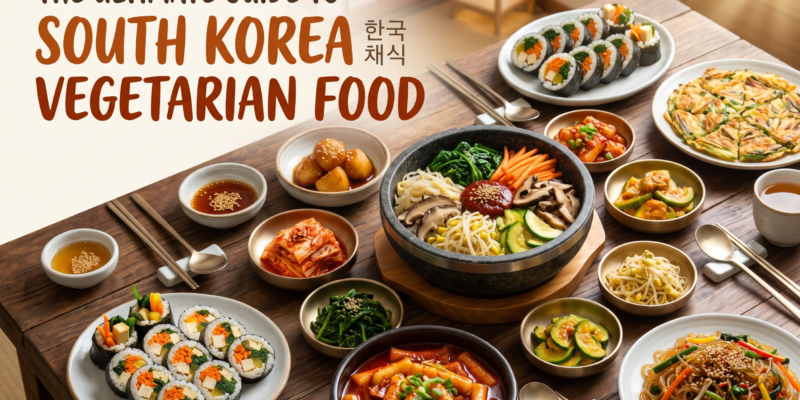
South Korea Vegetarian Food: The Complete Guide to Vegetarian Korean Dishes, Temple Food and Street Snacks
South Korea vegetarian food is far more varied than most first-time visitors expect. Korean cuisine is famous for grilled pork belly, fried chicken and beef broths, so many Indian travelers and students worry they will go hungry. The reality is more encouraging. Korean meals are built around rice, seasonal vegetables, tofu, mushrooms, noodles, pancakes and fermented side dishes, which means a large share of the table is plant based already. The challenge is not finding vegetables. The challenge is spotting the hidden fish sauce, anchovy stock, egg and meat that sneak into dishes that look vegetarian.
This guide explains vegetarian food in South Korea from the ground up. You will learn which vegetarian Korean dishes are safe, which popular dishes need modification, how Korean temple food works, where to find vegetarian street food in Korea, which Seoul restaurants are worth planning around, and exactly what to say when ordering. It is written for Indian vegetarians, Jain travelers, vegans and international students who want to eat well in South Korea without stress.
Quick Answer: Can You Be Vegetarian in South Korea?
Yes, you can eat vegetarian in South Korea, but it takes planning. Korean restaurants often treat “vegetarian” as “no visible meat,” so broths, sauces and fermented side dishes may still contain fish or shrimp. Dedicated vegetarian restaurants, Buddhist temple food restaurants, street snacks like hotteok and sweet potatoes, and Korean side dishes called namul are the most reliable options. Learning five or six Korean phrases and carrying a short ingredient list in Korean solves most problems.
Is South Korea Vegetarian Friendly? The Real Picture of Vegetarian Food in South Korea
South Korea is not a vegetarian country, and honesty helps you plan better. Meat features heavily in restaurant culture, especially barbecue, stews and late night chicken. However, the vegetarian and vegan scene has grown steadily. Surveys and industry estimates widely cited in travel media suggest that around half a million South Koreans identify as vegan and a few million more are vegetarian or flexitarian. Seoul’s city government has also published a vegetarian dining guide listing hundreds of restaurants with meatless options, and Michelin has recognized vegetarian and vegan kitchens in the capital.
Three layers of vegetarian eating exist in Korea:
- Traditional plant based cooking, including Buddhist temple food and countryside vegetable dishes.
- Modern vegetarian and vegan cafes, mostly in Seoul, Busan and university neighborhoods.
- Everyday Korean food that can be ordered vegetarian with the right requests.
If you are still planning your trip, read our trip to South Korea from India travel guide first, then come back here to build the food side of your plan.
Vegetarian, Vegan, Jain and Pescatarian Meanings in Korea
Words mean different things in Korea than in India. Understanding this saves you from accidental meals.
| Term you may use | How Korean restaurants often interpret it | What to clarify |
|---|---|---|
| Vegetarian | No meat, but fish stock, shrimp paste and egg may be included | Ask for no fish, no anchovy, no shrimp, no egg |
| Vegan | Increasingly understood in Seoul, less so in small towns | Confirm no dairy, egg, honey or animal broth |
| Jain | Almost unknown | Explain no onion, no garlic, no root vegetables, and rely on temple food |
| Pescatarian | Easily understood | Confirm broth and sauces |
| Lacto vegetarian | Needs explaining | Dairy is minor in Korean cooking, so it is usually easy |
Indian visitors should know that many Korean dishes use garlic heavily, so strict Jain or no onion garlic diets are the hardest to follow. Buddhist temple food is the closest match, which we cover below.
Hidden Non Vegetarian Ingredients in Korean Food to Watch For
Most accidents with vegetarian food in South Korea happen because of ingredients you cannot see. Keep this list in mind.
- Anchovy stock (myeolchi yuksu): the default base for many stews, soups and even tteokbokki sauce.
- Beef broth (sogogi yuksu): common in noodle soups and some rice cake soups.
- Fish sauce (aekjeot) and salted shrimp (saeujeot): traditionally used in kimchi, so standard kimchi is often not vegetarian.
- Egg (gyeran): fried egg tops bibimbap and appears in gimbap, pancakes and street snacks.
- Pork or beef in fillings: dumplings (mandu), japchae, bindaetteok and gimbap may contain meat.
- Bonito flakes (gasuobushi): used in some Japanese influenced dishes and sauces.
- Seafood in pancakes: haemul pajeon contains squid or shrimp, while buchujeon and kimchi jeon may be safer.
A simple habit helps: ask three questions for every dish, “Is the broth meat or fish based, is there egg, and are there meat or seafood pieces inside?”
Best Vegetarian Korean Dishes You Can Order Across South Korea
The dishes below are the backbone of vegetarian Korean dishes. Each one comes with what to order and what to ask.
Sanchae Bibimbap: Mountain Vegetable Rice Bowl
Bibimbap is the most recognizable Korean rice bowl, and it is easy to make vegetarian. Rice is topped with seasoned vegetables, mushrooms, sprouts and spicy gochujang paste, then mixed. Ask for “gogi ppae” (without meat) and request no egg if you avoid it. The mountain vegetable version, sanchae bibimbap, is common near hiking areas and in temple restaurants. The region of Jeonju is celebrated for its bibimbap tradition, so it is a natural food stop for vegetarians planning a trip beyond Seoul.
Japchae: Sweet Potato Glass Noodles With Vegetables
Japchae uses chewy glass noodles made from sweet potato starch, stir fried with spinach, carrots, onions and mushrooms in a sesame soy sauce. Many restaurants add beef, so confirm that it is made without meat. Vegetarian japchae is a fine choice for Indian palates because it is mildly sweet and not very spicy.
Pajeon, Buchujeon and Kimchi Jeon: Korean Vegetable Pancakes
Jeon are pan fried pancakes. Pajeon is made with spring onions, buchujeon with Korean chives and kimchi jeon with fermented cabbage. Avoid haemul pajeon because it includes seafood. Bindaetteok, the mung bean pancake, is popular at traditional markets but often contains pork, so ask before ordering.
Doenjang Jjigae and Sundubu Jjigae: Korean Stews to Modify Carefully
Soybean paste stew (doenjang jjigae) and soft tofu stew (sundubu jjigae) are comfort foods. Many versions use anchovy stock or include seafood and pork. Some restaurants will prepare a vegetable stock version if you ask politely, and dedicated vegetarian restaurants serve them by default. Treat these as “ask first” dishes.
Kongguksu: Cold Soy Milk Noodles for Summer
Kongguksu is a chilled noodle dish in a creamy, salted soy milk broth, usually topped with cucumber. It is naturally vegetarian in most kitchens and a refreshing option during the hot months. If you travel then, our South Korea in July weather and festival guide helps you plan around the heat.
Gimbap: Korean Rice Rolls You Can Customize
Gimbap looks like sushi but is filled with rice, pickled radish, spinach, carrot and burdock. Standard versions include egg, ham or imitation crab. Ask for “yachae gimbap” (vegetable gimbap) and request no egg or ham. Convenience stores often sell packaged versions, so read ingredient labels carefully.
Tteokbokki: Spicy Rice Cakes and the Broth Problem
Tteokbokki is chewy rice cakes in a sweet and spicy red sauce. The rice cakes are vegetarian, but the sauce frequently uses anchovy broth and the dish often includes fish cakes. Look for stalls or restaurants that clearly offer a vegetable broth version.
Dubu Dishes: Tofu Prepared Several Ways
Tofu (dubu) appears pan fried, braised in soy sauce (dubu jorim) and as kimchi dubu. Dubu jorim is a good protein rich side for vegetarians if the sauce does not include fish stock. Many Indian travelers appreciate tofu as a paneer alternative in a country where paneer is rare.
Namul and Banchan: Korean Vegetable Side Dishes
Korean meals arrive with small shared dishes called banchan. Seasoned spinach (sigeumchi namul), soybean sprouts (kongnamul muchim), fernbrake and eggplant (gaji namul) are usually plant based. The kimchi is the main item to question, because standard kimchi contains fish or shrimp products. Ask whether the kimchi is “vegan kimchi” or “chaesik kimchi.”
Quick Reference Table of Vegetarian Korean Dishes
| Dish | Korean name | Usually vegetarian? | What to ask |
|---|---|---|---|
| Mixed rice bowl | Bibimbap | Often, with changes | No meat, no egg if needed |
| Glass noodles | Japchae | Sometimes | No beef |
| Green onion pancake | Pajeon | Yes, if not seafood | No seafood |
| Kimchi pancake | Kimchi jeon | Depends on kimchi | Fish sauce free kimchi |
| Cold soy milk noodles | Kongguksu | Yes | Usually none |
| Vegetable rice roll | Yachae gimbap | Yes, if no egg or ham | No egg, no ham, no crab |
| Spicy rice cakes | Tteokbokki | Depends on broth | Vegetable broth |
| Soybean paste stew | Doenjang jjigae | Depends on broth | Vegetable broth |
| Braised tofu | Dubu jorim | Often | No fish stock |
| Seasoned vegetables | Namul | Yes | Usually none |
Korean Temple Food: The Original Vegetarian Cuisine of South Korea
Korean temple food is the most reliable answer to the question of where to find true vegetarian food in South Korea. It comes from Buddhist monastic tradition, where cooking follows a strict plant based approach with no meat or fish. Traditional temple cooking also avoids the “five pungent vegetables” such as garlic, onion, chives and leeks, which makes it especially interesting for Jain and no onion garlic travelers. Dishes rely on seasonal wild vegetables, mushrooms, tofu, grains, fermented soybean sauces, roots and nuts.
A temple food meal usually arrives as many small plates, prepared to show natural flavors and balance. In Seoul, restaurants such as Balwoo Gongyang near the Jogyesa temple area, along with other temple food kitchens in the Insadong neighborhood, serve multi course menus. Opening hours, reservation rules and menus change, so confirm details before you go. Many travelers also join temple stay programs, which include a vegetarian temple meal as part of the experience.
For Indian visitors who want to connect food with spiritual travel, read our guide on the Hindu population and temple community in South Korea to understand how Indian communities and religious spaces fit into Korean life.
Vegetarian Street Food in South Korea: Safe Snacks and Smart Choices
Street food is where many vegetarians feel most limited, yet several snacks are reliably plant based or easy to modify.
- Hotteok: a griddled sweet pancake filled with brown sugar, cinnamon and nuts. Popular in winter and widely available.
- Gungoguma: roasted sweet potatoes sold from carts or small shops in cold months.
- Bungeoppang: a fish shaped pastry usually filled with sweet red bean paste. The shape is fish, but the filling is typically bean.
- Gyeran ppang: egg bread, suitable for ovo vegetarians.
- Yachae twigim: deep fried vegetables such as sweet potato, pumpkin and green chili. Check that the frying oil and batter are not shared with seafood items, which is common in some stalls.
- Roasted chestnuts and corn: simple, filling and found around tourist districts.
- Tteokbokki without fish cake: possible at stalls that can confirm the broth.
Night markets and busy shopping streets are the best hunting grounds. Plan an evening food crawl alongside our South Korea night view guide, and combine it with browsing from our South Korea shopping guide when you visit markets in Myeongdong, Namdaemun or Dongdaemun.
Vegetarian Korean Snacks, Desserts and Drinks Worth Trying
Korean sweets and drinks are friendlier to vegetarians than the savory menu.
- Patbingsu: shaved ice topped with sweet red bean, rice cakes and fruit.
- Yakgwa and hangwa: traditional honey and sesame based cookies and confections. Confirm if you avoid honey as a vegan.
- Sikhye: a sweet rice drink, served cold.
- Sujeonggwa: a cinnamon and ginger punch.
- Traditional teas: citron tea (yuja cha), jujube tea (daechu cha) and barley tea (boricha).
- Tteok: chewy rice cakes in many flavors, sold in traditional shops.
Snack hunters should also explore the vegetarian friendly souvenirs listed in our guide to famous South Korea products to buy and bring home, where teas, rice snacks and seaweed products often make the best gifts.
Best Vegetarian Restaurants in Seoul: Where to Eat Plant Based Korean Food
Seoul has the widest range of vegetarian restaurants in South Korea. Think in categories so you can choose according to budget and mood.
- Fine dining plant based kitchens: Michelin has listed Légume as a vegan restaurant with a star and Base is nice as a vegetarian Bib Gourmand pick. Book early because popular places fill quickly.
- Temple food restaurants: multi course set meals focused on traditional Buddhist cooking, mainly around Insadong and Jogyesa.
- Vegan cafes and bakeries: common near university areas such as Hongdae and Itaewon.
- Restaurants with vegetarian menus: casual Korean restaurants that mark vegetarian options.
- Indian restaurants: concentrated in Itaewon and other expat zones, useful when you want familiar flavors or Jain friendly adjustments.
Seoul’s municipal government also released a vegetarian dining guide with an online map listing hundreds of restaurants, which is a helpful starting point for finding options near your hotel. For general dining beyond vegetarian kitchens, see our best restaurants in Seoul dining guide for food lovers and students.
Where you stay affects how easy dinner will be. Our luxury hotels in Seoul guide and South Korea guest house guide for budget travelers help you pick neighborhoods close to food streets and vegetarian cafes.
Vegetarian Food in Busan, Jeonju, Jeju and Other Korean Cities
Outside Seoul, vegetarian choices shrink but do not disappear.
- Busan: coastal cuisine is seafood heavy, so rely on temple food near mountain temples, vegetarian cafes in tourist districts and hotel restaurants. Our best hotels in Busan guide helps you find stays near areas with more dining variety.
- Jeonju: known as a food city with strong bibimbap and side dish traditions, which makes vegetarian modification easier.
- Jeju: emphasizes seafood and pork, but vegetable dishes, tangerine products and cafes are easy to find in the main tourist areas.
- Small towns: stock up on gimbap, fruit, nuts, instant noodles with vegetarian labeling and convenience store snacks as a backup.
For deciding where to base yourself, compare options in our best cities in South Korea guide for students and travelers.
Essential Korean Phrases for Vegetarians: How to Order Vegetarian Food in Korea
Showing a short phrase on your phone is often more effective than explaining in English. Practice these and screenshot them before you travel.
| English | Korean | Romanization |
|---|---|---|
| I am vegetarian | 저는 채식주의자예요 | Jeoneun chaesikjuuijayeyo |
| Without meat, please | 고기 빼 주세요 | Gogi ppae juseyo |
| No fish or seafood | 생선이랑 해산물 빼 주세요 | Saengseonirang haesanmul ppae juseyo |
| No egg, please | 계란 빼 주세요 | Gyeran ppae juseyo |
| Without anchovy broth | 멸치 육수 없이 해 주세요 | Myeolchi yuksu eopsi hae juseyo |
| Is there meat in this? | 이거 고기 들어갔어요? | Igeo gogi deureogasseoyo? |
| No garlic or onion | 마늘이랑 양파 빼 주세요 | Maleurirang yangpa ppae juseyo |
Pronunciation guidance is approximate, and a translation app can help you confirm menu items. Also remember that staff may say a dish is vegetarian because it has no visible meat, so ask about broth directly.
South Korea Vegetarian Food Tips for Indian Travelers and Jain Diners
Indian travelers have a few extra considerations.
- Carry backups: pack roasted snacks, dry fruits, instant mixes and protein bars for long travel days. Check airline and customs rules before bringing food.
- Use apps and photos: show photos of what you cannot eat, especially fish and eggs.
- Choose temple food for strict diets: it is the closest to no onion garlic eating.
- Book hotels with kitchenettes if needed: this lets you cook basic meals. Our South Korea hotel booking guide explains what to look for.
- Expect conversations: staff are usually friendly and willing to try if you are patient.
- Check safety and etiquette: our guide on whether South Korea is safe for Indians covers practical comfort tips for first time visitors.
If your visit is part of a romantic trip, see the South Korea honeymoon package guide and plan one or two vegetarian fine dining nights around the itinerary.
Vegetarian Food for Indian Students in South Korea
Students stay for months or years, so daily routines matter more than one off meals.
- Learn grocery basics: tofu, mushrooms, sweet potatoes, eggs, rice, noodles, seasonal vegetables and soy products are cheap and easy to cook.
- Check labels: instant noodles, sauces and snacks often include fish or meat extract. Look for vegetarian or vegan labeling, and use a translation app on ingredient lists.
- Use campus cafeterias wisely: side dishes and rice are easy, but main items often include meat, so build meals from namul, tofu and rice.
- Cook Indian style: many students recreate dal, vegetable curries and rotis with ingredients from large supermarkets and specialty import shops.
- Budget carefully: food is one of the largest monthly costs. See our cost of living in South Korea breakdown for international students before you plan monthly spending.
- Understand the transition: our life in South Korea guide for Indians and students covers adjustment topics beyond food.
Prospective students can also read our how to study in South Korea guide for Indian students for admissions and planning information alongside food preparation.
South Korea Vegetarian Food Budget in Indian Rupees
Prices change, so treat any figure you find online as a rough guide and confirm current rates. As a general pattern, street snacks and convenience store items cost the least, casual vegetarian restaurants sit in the middle, and temple food course meals and Michelin recognized kitchens cost the most. Currency conversion makes a big difference when planning, so use a current rate from our Korean won to Indian rupee conversion guide or the detailed South Korea in Indian rupees guide before you set a daily food budget.
Seasonal Vegetarian Foods in South Korea Through the Year
Korean cooking follows the seasons strongly, which helps vegetarians.
- Spring: wild greens, namul and fresh vegetable dishes dominate temple and home cooking. See our spring in South Korea guide for blossom season timing.
- Summer: cold noodles, chilled soy milk soup, cucumber dishes and shaved ice are everywhere.
- Autumn: mushrooms, chestnuts, persimmons and pears are in season.
- Winter: hotteok, roasted sweet potatoes, hot stews and warm teas become the best street snacks. Our South Korea winter season guide explains what to expect and how to dress.
Sample 3 Day Vegetarian Food Itinerary in Seoul
This is a flexible plan, not a fixed schedule.
Day 1: Traditional Seoul. Start with a Korean breakfast of rice, namul and tofu at a vegetarian friendly restaurant. Spend the afternoon in Insadong and the Jogyesa area, and have a temple food dinner. Finish with sikhye or traditional tea.
Day 2: Markets and street snacks. Take a morning market walk and try hotteok, roasted sweet potato and vegetable twigim. Lunch on yachae gimbap or bibimbap without meat. Dinner at a modern vegan or vegetarian restaurant in Hongdae or Itaewon.
Day 3: Cafes and fine dining. Have brunch at a plant based cafe, then explore a shopping district. If your budget allows, book a vegetarian tasting meal at a recognized Seoul restaurant. For landmarks to pair with these meals, see our list of places to see in South Korea and the 7 day South Korea itinerary for first time visitors.
Common Mistakes Vegetarians Make in South Korea
- Assuming kimchi is vegetarian without checking for fish sauce or shrimp.
- Ordering stews without asking about anchovy or beef broth.
- Trusting the word “vegetarian” without describing exactly what you avoid.
- Skipping reservations at popular vegetarian and temple restaurants.
- Eating only convenience store food because ingredient labels are hard to read, when a translation app can solve this.
- Forgetting that fried street snacks may share oil with seafood.
Learn More About Korean Food and Culture
South Korea vegetarian food connects to larger topics in Korean life. For the everyday basics that form most meals, read our guide to South Korean staple food. For a broader cultural introduction that includes cuisine, places and people, see famous things in South Korea. If you are planning flights and logistics, start with the India to South Korea flight ticket booking guide and confirm entry rules in the South Korea visa for Indian passport guide.
Frequently Asked Questions About South Korea Vegetarian Food
Is it hard to find vegetarian food in South Korea?
It is manageable in Seoul and other large cities and harder in small towns. Temple food restaurants, vegetarian cafes, street snacks and side dishes provide dependable choices, while ordinary restaurants require specific requests.
Is kimchi vegetarian in South Korea?
Traditional kimchi usually contains fish sauce or salted shrimp, so it is not vegetarian by default. Some restaurants and packaged brands offer vegan kimchi, and you should ask or read the label.
What are the best vegetarian Korean dishes for beginners?
Beginners often like bibimbap without meat, vegetable gimbap, pajeon, japchae without beef, kongguksu, tofu dishes and namul side dishes.
Is Korean temple food always vegetarian and vegan?
Traditional temple food is plant based and excludes meat and fish. Some menus may include dairy or honey in desserts or drinks, so vegans should confirm.
Can Jain travelers eat in South Korea?
It is difficult but possible. Temple food is the best fit because it traditionally avoids garlic and onion. Jain travelers should also plan for self catering and carry backup food.
Is street food in South Korea safe for vegetarians?
Many snacks like hotteok, roasted sweet potatoes, bungeoppang and vegetable twigim are vegetarian, but shared oil and hidden broths can be an issue. Choose stalls where you can see the preparation.
Is tteokbokki vegetarian?
The rice cakes are vegetarian, but sauce broths and fish cakes often are not. Ask for a vegetable broth version or choose a vegetarian restaurant.
How do I say I am vegetarian in Korean?
Say “Jeoneun chaesikjuuijayeyo” and add “gogi ppae juseyo” for without meat. Also mention fish, seafood and egg if you avoid them.
Are there vegetarian options for Indian students in South Korea?
Yes. Students can cook with tofu, mushrooms, vegetables, rice, noodles and eggs, use campus and market side dishes, and eat at vegetarian friendly restaurants. Reading ingredient labels is the key habit.
Which season is best for vegetarian food in South Korea?
Spring for wild greens, summer for cold noodles, autumn for mushrooms and chestnuts, and winter for hotteok and sweet potatoes. Every season has good options.
Conclusion: Enjoy South Korea Vegetarian Food With Confidence
South Korea vegetarian food rewards travelers who prepare. Learn the hidden ingredients, memorize a few phrases, use temple food and vegetarian restaurants as anchors, and fill the gaps with street snacks, namul and tofu dishes. Whether you are a short term visitor, a honeymooner or an Indian student planning a longer stay, you can eat well, stay true to your diet and discover a side of Korean cuisine that many tourists miss.