


South Korea Traditional Food: 25 Must-Try Korean Traditional Dishes, Hansik Culture and Eating Guide for Indians (2026)
South Korea traditional food is built on steamed rice, fermented sauces, seasonal vegetables and slow-cooked soups. If you are planning to study, work or travel in Korea, understanding traditional Korean food is the fastest way to understand daily life there. Meals are shared, side dishes keep coming, and almost every dish has a story tied to a season, a region or a festival.
This guide covers the best traditional Korean dishes, the logic of a hansik (Korean traditional cuisine) table, regional specialties, street food, drinks, dining etiquette, realistic food prices in KRW, and practical tips for vegetarian, halal and spice-sensitive eaters from India. You will also find links to related guides on this site for budgeting, travel and student life.
What Is Traditional Korean Food? Understanding Hansik and Korean Food Culture
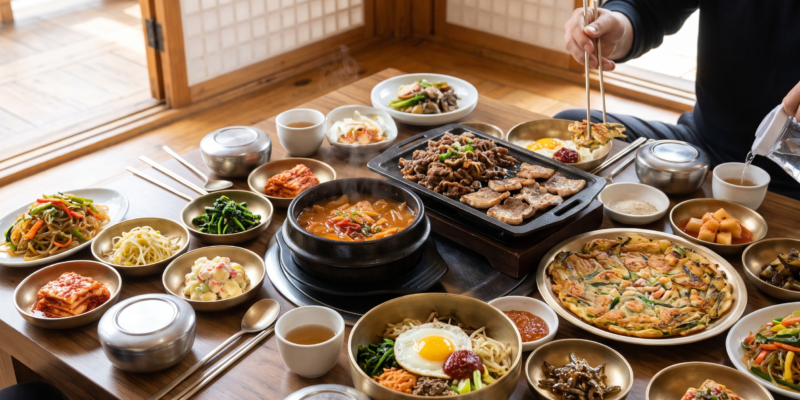
Hansik is the Korean word for traditional Korean cuisine. A classic hansik meal is organized around a bowl of cooked rice, a soup or stew, and a spread of small side dishes called banchan. Korean traditional dishes are seasoned mainly with soy sauce (ganjang), soybean paste (doenjang), red pepper paste (gochujang), red pepper flakes (gochugaru), sesame oil, garlic and ginger.
Three ideas shape South Korea traditional food:
- Fermentation: Kimchi, doenjang, gochujang, ganjang and jeotgal (salted seafood) are all fermented, and they give Korean cooking its deep savory flavor.
- Balance: Meals aim to balance colors, textures and tastes, with spicy, salty, sweet, sour and bitter notes sharing one table.
- Sharing: Stews, grilled meat and side dishes are placed in the middle of the table, and everyone eats together.
For a wider look at what the country is known for, read our guide to famous things in South Korea across culture, food and places. If you want to know what Koreans eat every single day, the page on South Korean staple food is the best companion to this article.
Traditional Korean Meal Structure: Rice, Soup, Banchan and the Korean Table Setting
Bap and Guk: Korean Rice and Soup as the Foundation of a Traditional Meal
Rice (bap) is the center of the Korean table, usually short-grain and slightly sticky. It is served with a soup (guk) or a thicker stew (jjigae). In many homes, the same soup base is reused through the week with different ingredients.
Banchan Side Dishes: The Small Plates That Define Korean Traditional Dining
Banchan are free refills at most restaurants. Typical examples include:
- Kimchi (fermented napa cabbage or radish)
- Kongnamul muchim (seasoned soybean sprouts)
- Sigeumchi namul (seasoned spinach)
- Gamja jorim (soy-braised potatoes)
- Myeolchi bokkeum (stir-fried dried anchovies)
- Gyeran-mari (rolled omelet)
Banchan change with the season, so a summer table looks different from a winter one.
Cheopbansang and Surasang: Royal Court Cuisine and Traditional Korean Table Settings
Royal court cuisine (gungjung eumsik) of the Joseon era is the most elaborate form of Korean traditional food. The king’s table, called surasang, was served with many dishes arranged around rice and soup, and the number of side dishes is often described as twelve. Today, some Seoul restaurants serve a simplified royal-style course, which is an excellent way to try traditional Korean dishes in one sitting.
Kimchi and Fermented Foods: The Heart of South Korea Traditional Food
Types of Kimchi: Baechu Kimchi, Kkakdugi, Chonggak and More
Kimchi is the best-known Korean traditional food and appears at nearly every meal. Common types include:
| Kimchi type | Main ingredient | Typical flavor |
|---|---|---|
| Baechu kimchi | Napa cabbage | Spicy, tangy, savory |
| Kkakdugi | Cubed radish | Crunchy, spicy |
| Chonggak kimchi | Small whole radish | Sharp, crisp |
| Oi sobagi | Stuffed cucumber | Fresh, light |
| Dongchimi | Radish in brine | Cool, mild, non-spicy |
Kimjang: The Kimchi-Making Tradition Recognized by UNESCO
Kimjang is the late-autumn season when families and communities make large batches of kimchi to last through winter. UNESCO added kimjang, the making and sharing of kimchi in the Republic of Korea, to its list of Intangible Cultural Heritage in 2013. If you are in Korea in November, you may see kimjang events in cities and villages.
Doenjang, Gochujang and Ganjang: The Three Korean Fermented Sauces
Doenjang (soybean paste) flavors stews and dipping sauces. Gochujang (red pepper paste) brings heat and a little sweetness to bibimbap and tteokbokki. Ganjang (soy sauce) seasons soups, marinades and vegetables. Learning these three words will help you read menus and grocery labels with confidence.
25 Best Traditional Korean Dishes to Try in South Korea
Korean Rice Dishes: Bibimbap, Kimbap, Kimchi Fried Rice and Gukbap
1. Bibimbap. Rice topped with seasoned vegetables (namul), egg, gochujang and often beef, mixed together before eating. Jeonju is famous for its version, and the dish is a safe first order for newcomers.
2. Kimbap. Seaweed rice rolls filled with vegetables, egg, pickled radish and sometimes ham, tuna or beef. It is cheap, portable and a student favorite.
3. Kimchi bokkeumbap. Fried rice made with aged kimchi, often topped with a fried egg.
4. Gukbap. Rice served in hot soup. Busan’s dwaeji gukbap, made with pork broth, is a well-known regional version.
5. Juk. Korean rice porridge, eaten when someone is unwell or for a gentle breakfast. Jeonbokjuk (abalone porridge) is a Jeju specialty.
Korean Barbecue and Meat Dishes: Bulgogi, Galbi, Samgyeopsal and Dakgalbi
6. Bulgogi. Thinly sliced beef marinated in soy sauce, sugar, garlic and sesame oil, then grilled or pan-cooked. It is mildly sweet and rarely very spicy.
7. Galbi. Marinated beef or pork short ribs, grilled at the table and often eaten wrapped in lettuce.
8. Samgyeopsal. Thick slices of pork belly grilled at the table and served with ssamjang (a dipping paste), garlic, lettuce and perilla leaves.
9. Dakgalbi. Spicy stir-fried chicken with cabbage, sweet potato and rice cakes, strongly linked with Chuncheon.
10. Andong jjimdak. Braised chicken with glass noodles and vegetables in a soy-based sauce, linked with Andong city.
11. Tteok-galbi. Minced short rib patties grilled and glazed, popular in Gwangju and Jeolla-do cooking.
Korean Soups and Stews: Kimchi Jjigae, Sundubu Jjigae, Doenjang Jjigae, Samgyetang and Seolleongtang
12. Kimchi jjigae. A bubbling stew of aged kimchi, pork or tuna, tofu and onion.
13. Sundubu jjigae. Soft tofu stew, usually spicy, cooked in a stone pot and served with a raw egg you crack in yourself.
14. Doenjang jjigae. A savory stew built on soybean paste with tofu, zucchini and potatoes. This is a true home-style Korean traditional dish.
15. Samgyetang. A whole young chicken stuffed with glutinous rice, ginseng and jujubes, simmered in a clear broth. Koreans traditionally eat it during the hottest days of summer, known as boknal.
16. Seolleongtang. A milky ox bone soup, seasoned at the table with salt, pepper and chopped spring onion.
17. Haejangguk. Known as hangover soup, it is a hearty beef or ox-blood broth popular in the morning.
Korean Noodle Dishes: Japchae, Naengmyeon, Kalguksu and Jajangmyeon
18. Japchae. Sweet potato starch noodles stir-fried with vegetables, sesame oil and soy sauce. It is a festival and birthday dish, and many versions are mildly sweet instead of spicy.
19. Naengmyeon. Cold buckwheat noodles in a chilled broth (mul naengmyeon) or in a spicy sauce (bibim naengmyeon). It is a summer favorite.
20. Kalguksu. Hand-cut wheat noodle soup, comforting on rainy days.
Korean Snacks, Rice Cakes and Street Food: Tteokbokki, Hotteok, Bungeoppang
21. Tteokbokki. Chewy cylindrical rice cakes in a sweet and spicy gochujang sauce, usually with fish cakes. A soy-based royal version, gungjung tteokbokki, is also served in some restaurants.
22. Hotteok. A pan-fried sweet pancake filled with brown sugar, cinnamon and nuts. It is a winter street food favorite.
23. Bungeoppang. Fish-shaped pastry filled with sweet red bean paste, sold in cold months.
24. Songpyeon. Half-moon rice cakes steamed over pine needles and eaten at Chuseok, filled with sesame, chestnut or sweet bean.
25. Tteokguk. Sliced rice cake soup eaten on Seollal (Lunar New Year), traditionally linked with gaining a year of age.
Quick Comparison Table of Popular Korean Traditional Dishes with Price Ranges
Prices below are rough 2026 restaurant and street ranges in Korean won (KRW) and vary by city, location and venue.
| Dish | Korean name | Typical ingredients | Flavor | Approx. price (KRW) | Easy for vegetarians? |
|---|---|---|---|---|---|
| Bibimbap | 비빔밥 | Rice, namul, egg, gochujang | Savory, mild to spicy | 9,000 to 13,000 | Yes, ask for no meat |
| Kimbap | 김밥 | Rice, seaweed, vegetables, egg | Mild | 3,000 to 5,000 | Often, choose vegetable kimbap |
| Tteokbokki | 떡볶이 | Rice cakes, gochujang, fish cake | Sweet and spicy | 4,000 to 7,000 | Usually contains fish cake or fish stock |
| Bulgogi | 불고기 | Marinated beef | Sweet, savory | 12,000 to 18,000 | No |
| Samgyeopsal | 삼겹살 | Pork belly | Smoky, rich | 15,000 to 20,000 per serving | No |
| Sundubu jjigae | 순두부찌개 | Soft tofu, seafood or pork | Spicy, hot | 9,000 to 12,000 | Rarely, broth often has seafood |
| Samgyetang | 삼계탕 | Chicken, rice, ginseng | Light, herbal | 15,000 to 20,000 | No |
| Japchae | 잡채 | Glass noodles, vegetables | Sweet, nutty | 8,000 to 14,000 | Often, ask for no meat |
| Naengmyeon | 냉면 | Buckwheat noodles, cold broth | Tangy, cool | 11,000 to 15,000 | Usually has beef broth |
Check the current exchange rate on our KRW to INR rate guide before you budget, because rates change often.
Regional Specialties: Traditional Food of Seoul, Jeonju, Busan, Jeju, Andong and Gangwon
Korean food varies by region, and a road trip is a delicious way to taste the difference.
- Seoul: Royal-style courses, seolleongtang, naengmyeon and the widest variety of every dish in the country.
- Jeonju: Known as a food capital, with bibimbap and a huge banchan culture.
- Busan: Seafood, dwaeji gukbap, eomuk (fish cake) and street snacks near the markets.
- Jeju Island: Black pork, abalone porridge, fresh seafood and tangerine-based treats.
- Andong: Andong jjimdak and traditional fermented rice drinks.
- Gangwon-do: Dakgalbi in Chuncheon and squid dishes on the east coast.
If you are choosing a base city, our overview of the best cities in South Korea for students, travelers and expats shows how food culture differs by location. For a Busan stay close to the seafood markets, see the guide to the best hotels in Busan.
Seasonal and Festival Traditional Korean Food: Seollal, Chuseok, Boknal and Dongji
Korean traditional food follows the calendar, so the same city tastes different in every month.
| Season or occasion | Traditional food | Why it matters |
|---|---|---|
| Seollal (Lunar New Year) | Tteokguk, jeon | Rice cake soup welcomes the new year |
| Chuseok (autumn harvest festival) | Songpyeon, jeon, japchae | Shared harvest and family tables |
| Boknal (hottest summer days) | Samgyetang | A hot soup believed to restore energy |
| Dongji (winter solstice) | Patjuk (red bean porridge) | Linked with warding off bad luck |
| Late autumn | Kimjang kimchi | Kimchi made for the winter ahead |
To plan around these dates, check the list of national holidays in South Korea and the dedicated page on South Korea public holidays, since many restaurants close or change hours during Seollal and Chuseok. Weather also affects what you will want to eat, so our guides to winter in South Korea, spring in South Korea and the rainy monsoon season help you match meals to conditions.
Traditional Korean Drinks and Desserts: Makgeolli, Soju, Sikhye, Sujeonggwa and Tteok
Drinks are part of South Korea traditional food culture, and several are non-alcoholic.
- Makgeolli: A lightly sparkling, milky rice wine, traditionally paired with jeon (savory pancakes).
- Soju: A clear distilled or diluted spirit, common at group dinners.
- Sikhye: A sweet, chilled rice drink with rice grains floating in it, popular after meals.
- Sujeonggwa: A cinnamon and ginger punch served cold, often with dried persimmon.
- Omija-cha and barley tea (boricha): Herbal teas served hot or cold.
- Tteok and hangwa: Rice cakes and traditional confections served at festivals and tea houses.
Alcohol laws and social drinking customs matter if you are a student or new arrival, so read our life in South Korea guide for Indians and students for broader context.
Korean Dining Etiquette: How to Eat Traditional Korean Food Politely
Following a few simple customs will make meals smoother, especially when you eat with Korean friends, classmates or colleagues.
- Wait for the eldest person at the table to lift their spoon or chopsticks first.
- Use the spoon for rice and soup, and chopsticks for side dishes.
- Never stand chopsticks upright in a bowl of rice, because it resembles incense used in memorial rites.
- Pour drinks for others, not for yourself, and use two hands when pouring for an elder.
- Receive a drink or a dish with both hands as a sign of respect.
- Finish what you take, since leaving a lot of food on the plate can be seen as wasteful.
- Do not blow your nose at the table, and keep phone use minimal during group meals.
For the wider social rules that go with these habits, see the guide to South Korea school rules and campus etiquette.
Vegetarian, Vegan and Halal Traditional Korean Food for Indian Students and Travelers
This is one of the biggest practical concerns for Indian readers, and many competitor guides skip it completely.
Vegetarian Korean Food in South Korea: What to Order and What to Avoid
Korean cuisine is meat and seafood heavy, and fish stock or fish sauce is often hidden inside dishes that look vegetarian. Kimchi itself is commonly made with fish sauce or salted shrimp. Plan ahead using these tips:
- Order bibimbap without meat and egg if needed, and say you do not eat meat or fish stock.
- Choose vegetable kimbap, japchae without meat, jeon made with vegetables and tofu dishes.
- Ask whether a stew uses anchovy broth (myeolchi yuksu), which is very common.
- Learn short phrases from our guide to South Korea in the Korean language so you can explain your diet clearly.
Temple Food in Korea: Vegan Sachal Eumsik
Korean temple food is fully plant-based and traditionally avoids garlic, onions, scallions, chives and leeks. It is one of the most reliable ways to eat traditional Korean food without meat or fish, and many temples offer meals and templestay programs. Seoul also has restaurants specializing in temple cuisine.
Halal Korean Food: Where to Look and What to Check
Pork and alcohol appear in many traditional Korean dishes, so halal diners should be careful. Seoul’s Itaewon area has several halal-certified restaurants, and some Korean-style dishes are available with halal beef or chicken. Always confirm certification and preparation details directly with the restaurant, because listings change.
Finding Indian Food and Familiar Comfort Meals Abroad
If you miss home flavors, the Indian community in cities such as Seoul is a helpful network. Our page on the Hindu population in South Korea, the Indian community and temples lists community resources that often include food recommendations. Understanding whether South Korea is safe for Indians will also help you feel comfortable exploring local restaurants and markets.
Korean Street Food and Traditional Markets: Where to Eat Cheap and Authentic
Traditional markets (sijang) are the best places to try Korean street food and regional snacks at low prices. Gwangjang Market in Seoul is known for mayak kimbap, bindaetteok (mung bean pancakes) and fresh noodles. Namdaemun Market and Dongdaemun Market are also popular for snacks, and night markets add extra variety after dark.
Street food tips for first-timers:
- Carry small cash or a transport card, since some stalls do not accept cards.
- Start with mild items such as hotteok, kimbap or grilled sweet potatoes.
- Ask for “less spicy” (덜 맵게, deol maepge) if you are sensitive to chili.
- Eat near the stall, because Korean street culture often expects you to finish before walking away.
After sunset, pair a snack walk with a visit to South Korea’s best night view spots, or look through our list of places to see in South Korea to plan food stops around major sights.
South Korea Traditional Food on a Student Budget: Where and How to Eat Cheaply
For international students, food can take a large share of the monthly budget, but Korea offers many low-cost options.
- University cafeterias: Often serve full meals at a low set price.
- Gimbap shops and snack bars (bunsik): Quick meals such as kimbap, ramyeon, tteokbokki and fried rice.
- Convenience stores: Triangle kimbap, instant rice bowls and hot meals for emergencies.
- Hansik buffets and set-lunch menus: Office-area restaurants offer cheaper lunch sets than dinner menus.
- Cooking at home: Rice, eggs, tofu, kimchi and seasonal vegetables are very affordable at local grocery stores.
Use the complete breakdown of the cost of living in South Korea per month to plan your monthly food budget accurately. If you are still deciding on a course, start with the guide on how to study in South Korea for Indian students, and if you will live off-campus, see the article on apartments for rent in South Korea for students and workers so you can check kitchen access.
Traditional Korean Food Souvenirs: What to Buy and Bring Back from South Korea
Many Korean food items travel well and make excellent gifts. Popular choices include packaged kimchi (vacuum sealed), roasted seaweed (gim), red ginseng products, traditional teas, rice cake snacks and gochujang or doenjang in small tubs. Always check customs rules for your destination before packing food. For more ideas, browse our list of popular South Korea products you must buy and bring home, and read the South Korea shopping guide for where to find them.
How to Plan a Traditional Korean Food Trip from India
A food-focused trip is easy to organize around the main cities. A simple outline looks like this:
- Seoul (3 to 4 days): Royal-style meal, Gwangjang Market, samgyeopsal dinner, naengmyeon or seolleongtang.
- Jeonju (1 day): Bibimbap and the traditional village area.
- Busan (2 days): Seafood markets, dwaeji gukbap, street snacks.
- Jeju (2 days): Black pork, abalone porridge, tangerine treats.
You can combine this with our 7-day South Korea itinerary for first-time visitors or the broader trip to South Korea from India travel guide. If you are traveling as a couple, check the South Korea honeymoon package guide for romantic dining ideas, and make sure your paperwork is ready using the South Korea visa for Indian passport holders guide. For stays, compare options in the guide to luxury hotels in Seoul or save money with a South Korea guest house. Food lovers should also read our list of the best restaurants in Seoul for food lovers and students.
Healthy Eating and Nutrition in Traditional Korean Cuisine
Traditional Korean meals are often rich in vegetables, fermented foods and lean proteins. Rice, soup and vegetable-heavy banchan make a balanced plate, and fermented items such as kimchi are valued for their probiotic content. Sodium can be high because of soy sauce, pastes and pickled foods, so people watching salt intake should choose milder soups and avoid drinking all of the broth. If you have allergies, learn the Korean words for peanuts, shellfish, soy and sesame, because sesame oil and soy appear in a very large share of dishes.
Frequently Asked Questions About South Korea Traditional Food
What is the traditional food of South Korea?
The traditional food of South Korea is hansik, a cuisine built around steamed rice, soup or stew, kimchi and many small side dishes (banchan). Iconic traditional Korean dishes include kimchi, bibimbap, bulgogi, japchae, tteokbokki, kimchi jjigae and samgyetang.
What are the top 5 traditional Korean foods for first-time visitors?
For a first visit, try bibimbap, bulgogi, kimbap, kimchi jjigae and japchae. They are widely available, balanced in flavor and easier on spice-sensitive eaters than dishes such as sundubu jjigae.
Is traditional Korean food very spicy?
Not always. Many traditional dishes, such as bulgogi, japchae, galbitang, samgyetang and dongchimi, are mild. Spicy dishes usually use gochugaru or gochujang, and you can often ask for a less spicy version.
Is traditional Korean food suitable for vegetarians?
It can be, but you need to be careful. Many dishes use fish sauce, anchovy broth or meat, and kimchi often contains seafood ingredients. Korean temple food is fully plant-based and is the most reliable vegetarian option.
Is halal food available in South Korea?
Yes, especially in Seoul’s Itaewon area, where several restaurants offer halal-certified food. Always confirm certification directly, because traditional dishes often include pork or alcohol.
How much does traditional Korean food cost?
Street snacks and kimbap usually cost a few thousand won, a bibimbap or stew meal often falls around 9,000 to 13,000 KRW, and Korean barbecue is usually more per person. Prices vary by city and venue.
What is the most famous traditional Korean dish?
Kimchi is the most famous traditional Korean food, with bibimbap and bulgogi usually named just behind it in international recognition.
What do Koreans eat on Seollal and Chuseok?
On Seollal, Koreans traditionally eat tteokguk, a rice cake soup. On Chuseok, songpyeon, jeon and japchae are common, and families share them during holiday gatherings.
Conclusion: Why South Korea Traditional Food Is Worth Learning Before You Go
South Korea traditional food tells the story of the country through rice, fermentation, seasons and sharing. Whether you are a student searching for affordable meals, a traveler building a food itinerary, or a family planning a first trip, knowing the main traditional Korean dishes, etiquette rules and dietary options will make every meal easier and more enjoyable. Start with bibimbap and kimchi jjigae, add one regional specialty in each city you visit, and keep exploring our guides on South Korea to prepare for every part of your journey.